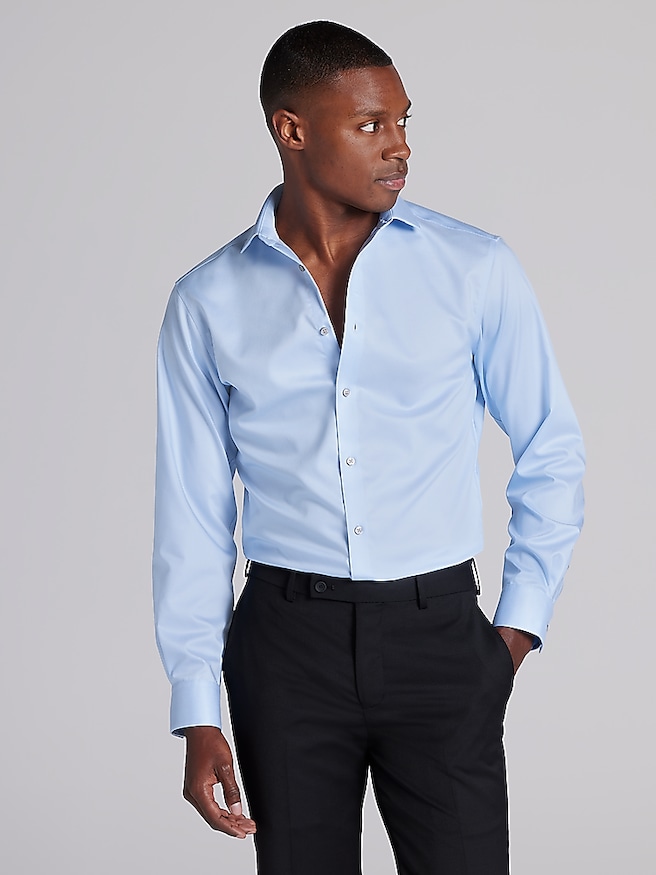
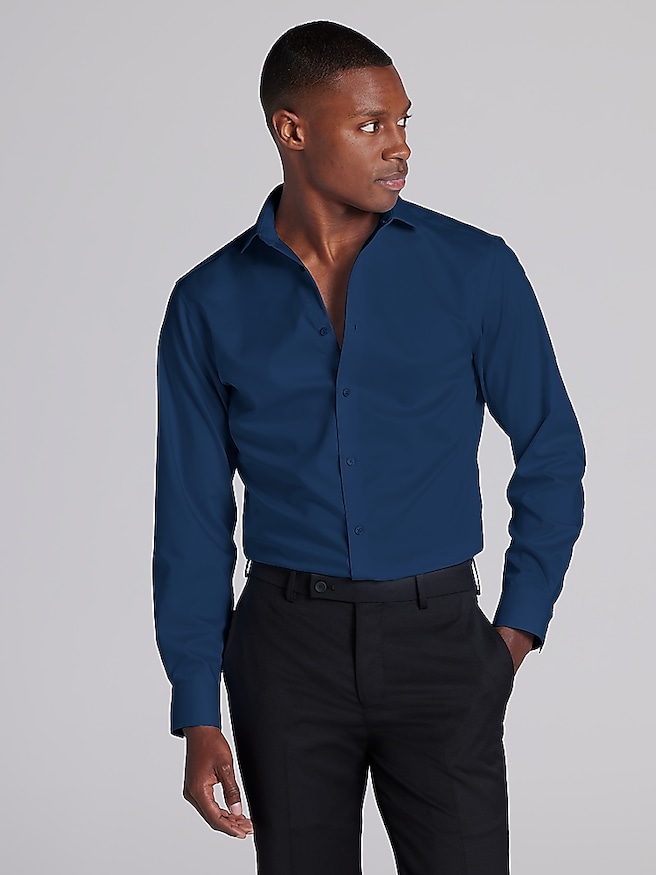
Stylish blue shirts bring color to a wardrobe without making an outfit feel complicated. Blue spans everything from pale sky tones that sit quietly beneath a suit to rich navy shades with enough depth to anchor a casual look. Light blue creates a crisp contrast with charcoal trousers, while medium blue works easily with khaki chinos, gray denim, or an unstructured sport coat. Navy offers a darker alternative that feels especially sharp beside stone, tan, and light gray. The effect depends as much on texture and pattern as on shade: a smooth, solid shirt reads differently from a textured Oxford, a fine stripe, or a small check. Subtle patterns add dimension beneath a plain jacket, while a solid blue shirt gives a patterned tie or sport coat room to stand out. For outfits centered on tailored clothing, Mens Blue Dress Shirts complement suits and dress trousers without limiting the outfit to a single occasion. A pale blue dress shirt with a charcoal suit works for a client presentation, a wedding reception, or a milestone dinner, with the tie and accessories setting the level of formality. More relaxed blue button-downs suit office days without a jacket, lunches with friends, and evenings when a T-shirt feels too informal. Collar shape helps distinguish these looks. A spread collar creates space for a substantial tie knot, while a point collar offers a narrower frame. Button-down collar points keep a softer collar neatly positioned and generally lend the shirt a more relaxed character. For black-tie events, the dress code takes priority, since a blue shirt does not automatically replace the traditional shirt expected with a tuxedo. Across less formal settings, blue makes it easy to build an outfit around familiar trousers and shoes while still giving the overall look a clear sense of intention.
Fabric gives a blue shirt much of its personality, influencing its drape, surface, comfort, and care requirements. Cotton is a familiar choice for its soft feel and ability to absorb moisture, but the weave changes how that cotton looks and behaves. Poplin typically has a smooth, relatively flat surface that works well beneath tailored clothing. Twill has a subtle diagonal structure and often a fluid drape, while Oxford cloth brings a more visible basket-weave texture that suits everyday button-down styles. Chambray creates a softly varied blue through its woven yarns, offering a casual effect without necessarily having the weight or construction of denim. Linen has a distinctive slubbed surface and natural creasing that contributes to a relaxed appearance rather than a perfectly pressed finish. Blends can introduce stretch, shape retention, or easier maintenance, depending on their composition and construction. A small amount of stretch may make reaching across a desk or sitting through a long dinner more comfortable, but it cannot compensate for a shirt that is too tight. Good fit begins with shoulder seams sitting close to the shoulder edge and enough room across the chest for the fabric to lie smoothly. Pulling between buttons usually signals insufficient room, while excessive fabric at the sides can bunch beneath a jacket. A trim cut follows the torso more closely; a roomier cut allows additional ease through the chest and waist. Neither should restrict ordinary movement. With the collar buttoned, the neck should feel comfortable rather than pinched, and sleeves should reach the wrist without covering the hand. Shirt length matters, too: longer tails help a dress shirt stay tucked during a full day of sitting and standing, while a shorter, balanced hem generally looks neater untucked. For anyone wearing a jacket, a smooth sleeve and comfortable armhole help reduce bunching. Clean stitching, securely attached buttons, and neatly finished seams also matter, particularly when a shirt will become part of a regular work rotation.
The most useful blue shirt is one that suits the way it will actually be worn. For someone moving between desk work and face-to-face meetings, a light or medium blue shirt with understated details can bridge both settings with a simple change of jacket. A fine blue stripe adds interest to solid trousers without demanding elaborate accessories. For a dinner out, a dark blue shirt with gray pants and clean leather shoes creates a composed look without a tie. When pairing blue with blue, a noticeable difference in shade or texture keeps the outfit from looking accidentally mismatched: a pale blue shirt beneath a deep navy jacket is an easy example. With jeans, a smooth woven shirt offers contrast against denim, while a casual textured shirt can work when its color is distinct from the pants. Care habits help preserve these differences in color, texture, and shape. The care label should determine whether a shirt is machine washable, requires a particular drying method, or needs professional cleaning. Separating light blue shirts from dark garments helps reduce the risk of dye transfer, and treating marks promptly according to the label can prevent stains from becoming harder to remove. Avoiding unnecessary heat can help protect fibers and finishes; taking a washable shirt out promptly and smoothing the collar, placket, and cuffs can also reduce wrinkling. Non-iron and wrinkle-resistant finishes may simplify upkeep, but they do not eliminate the need to follow washing and drying directions. Occasional checks for loose buttons and worn stitching allow small repairs before they interrupt an otherwise dependable shirt’s use. Blue shirts can also make thoughtful gifts for a graduate beginning a professional wardrobe, someone taking on a new role, or a person who appreciates practical clothing. Knowing the recipient’s neck size, sleeve length, preferred fit, and typical dress code makes that choice more personal. A familiar shade and a fabric suited to the recipient’s routine are more likely to earn regular wear than an unusual detail chosen only for novelty.