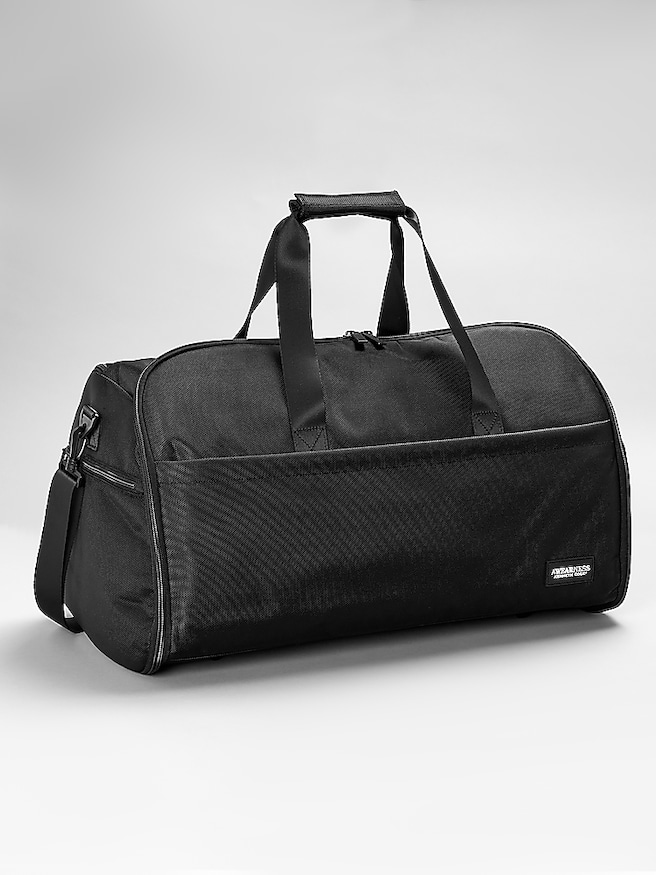
Stylish bags combine a considered silhouette with the space and organization everyday routines demand. A structured briefcase brings a crisp finish to tailored clothing, while a streamlined backpack keeps essentials close without occupying a hand. Totes offer an open, easygoing shape for daily errands and office essentials; crossbody bags keep a smaller load within reach; and duffel bags provide room for a change of clothes or an overnight stay. Each shape has a distinct role, but the most useful choice feels connected to both the contents inside and the clothing around it. A smooth leather bag with restrained hardware complements a suit or sport coat without competing with the fabric. Textured canvas or matte nylon pairs naturally with chinos, denim, knitwear, and casual jackets. Black, brown, navy, and charcoal are versatile starting points, with the overall shape often making more of an impression than a prominent logo. Proportion matters as much as color: an oversized carryall can overwhelm a light daily load, while an overfilled compact bag loses its shape and makes essentials harder to reach. Enough room for a laptop, charger, notebook, and personal accessories should still leave the closure working comfortably. Exterior measurements alone do not establish whether a computer will fit, since padding, seams, and the shape of the opening can reduce usable space. Handle length and strap placement also affect how a bag feels throughout the day. A shoulder strap should allow the bag to rest securely without forcing an awkward posture, and handles should feel comfortable when the bag is packed. For someone moving between a train platform, an office lobby, and a client meeting, that balance of appearance and practicality is especially valuable. A bag should look composed beside a desk, sit comfortably against the body in transit, and make the small transitions of a busy day feel less cumbersome. Clean lines and well-proportioned details give an everyday accessory a polished presence without making it feel too formal for off-duty plans.
Materials influence a bag’s character, weight, maintenance needs, and long-term performance. Leather offers a substantial feel and can develop a patina with use, though its appearance and care requirements vary by finish. Smooth surfaces tend to look more formal, while pebbled textures can make minor marks less noticeable. Suede has a softer, more tactile appearance and benefits from careful handling to preserve its nap. Canvas brings visible texture and a relaxed character, with tightly woven constructions suited to regular handling. Nylon and polyester can offer lighter-weight alternatives, particularly when keeping the empty bag’s weight down is a priority. Water resistance, when specified, should not be confused with waterproof protection; seams, zipper openings, and untreated sections can still allow moisture through. Whatever the exterior material, construction details help determine how well a bag handles repeated use. Even stitching, securely anchored straps, reinforced attachment points, and smoothly operating closures are worth attention. The areas where handles meet the body carry considerable stress, especially when a bag holds a computer or other dense belongings. A stable base can help maintain the silhouette, while a lining that lies neatly inside makes small belongings easier to retrieve without catching on loose folds. Hardware should feel appropriate to the bag’s size rather than adding unnecessary weight. Care begins with the material-specific instructions, since a cleaner suited to one surface may discolor or damage another. Emptying crumbs and debris, wiping compatible surfaces with a soft cloth, and addressing spills promptly can help preserve the interior and exterior. Leather conditioners and protective treatments should be used only when recommended for that finish and tested in an inconspicuous area first. Suede generally calls for tools made for its texture rather than routine wiping with a damp cloth. Between uses, storing a bag clean, dry, and away from direct sunlight helps protect its appearance. Light support inside a structured bag can help it retain its shape, while avoiding overpacking reduces strain on closures and seams.
Interior organization gives stylish bags much of their everyday value. A padded device compartment can separate a laptop from keys and chargers, although padding does not eliminate the need for careful handling. Zippered pockets provide a defined place for small valuables, and an accessible outer pocket can simplify reaching a transit pass or phone without opening the main compartment. Too many compartments can be as frustrating as too few if they leave no flexible space for larger belongings. A useful layout reflects an actual routine: a notebook that lies flat, a charger that does not scratch a screen, and a water bottle held apart from paperwork when a suitable compartment is included. For hands-free commuting, Stylish Backpacks offer a familiar shape that can look polished with tailored separates as well as casual clothing. Broad, adjustable straps and a close, balanced fit can make a packed bag more comfortable to carry, especially when heavier belongings sit near the back rather than pulling outward. A briefcase favors direct access and a professional profile, while a crossbody suits days when only a wallet, phone, keys, and a few small essentials are needed. A tote offers flexible packing space, though an open top provides less enclosure than a fully zipped design. For short trips, a duffel’s opening can make folded clothing easy to arrange, and a separate pouch helps keep toiletries away from clean fabric. Travel plans also make practical details meaningful: a luggage sleeve can help secure a bag over a rolling suitcase handle, but airline size limits still require checking against the bag’s packed dimensions. As a gift, a well-chosen bag can mark a graduation, a new job, a birthday, or another personal milestone. The recipient’s usual load, preferred carrying style, and wardrobe colors provide more useful clues than novelty alone. Understated finishes and purposeful storage give the bag room to become part of an established routine, whether that means daily office travel, weekend outings, or occasional overnight stays.