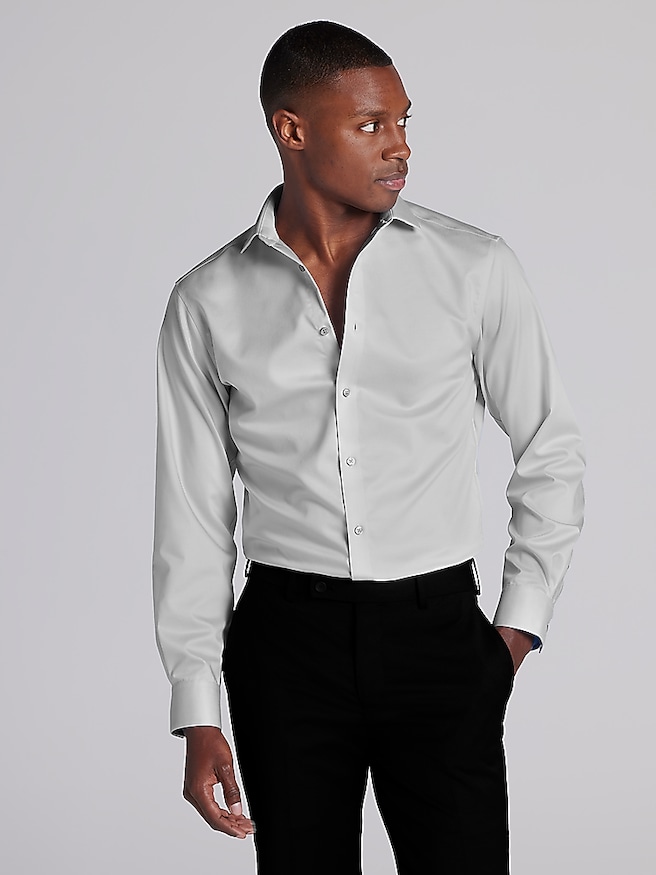
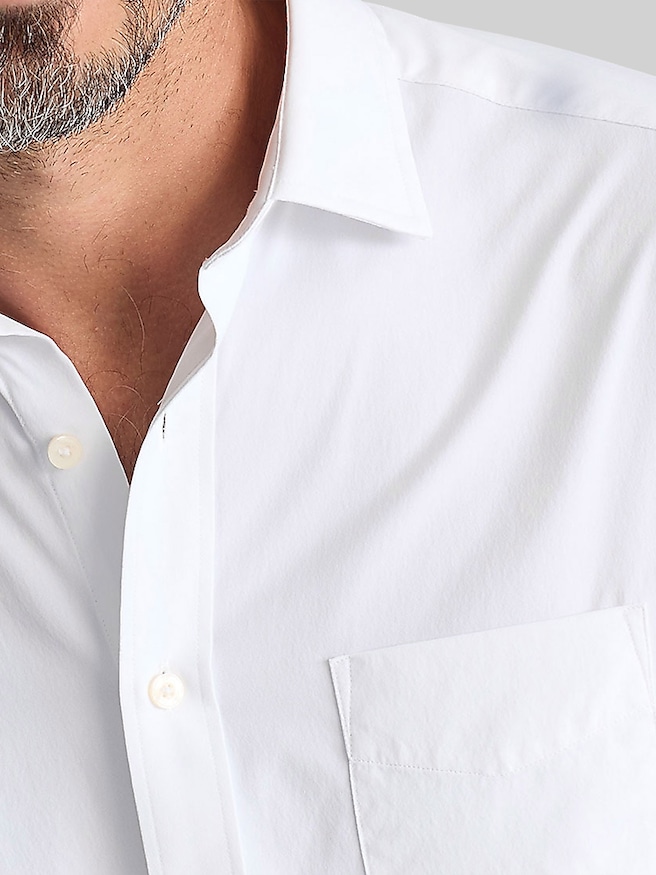
Stretch casual shirts combine the familiar look of a button-front shirt with fabric that allows more freedom of movement. That flexibility can make a noticeable difference when reaching for a bag, sitting through a long meeting, or driving to dinner without changing clothes first. Unlike a rigid woven shirt, a stretch style has some give, though the amount and direction depend on its construction. Cotton blends with a small percentage of elastane or spandex often retain the soft feel and textured appearance of cotton while adding flexibility. Blends that include polyester or nylon may offer a smoother surface, quicker drying, or improved resistance to wrinkles, depending on the fabric and finish. Some shirts get their flexibility from a knit structure or an engineered weave rather than an added stretch fiber. Fiber percentages alone do not tell the whole story: fabric weight, construction, and recovery—the ability to return to shape after stretching—also affect how a shirt feels throughout the day. Two-way stretch generally allows give along one axis, while four-way stretch allows movement both across and along the fabric. Those terms describe flexibility, not fit, and neither guarantees moisture management or wrinkle resistance. Look for those features in the individual garment description when they matter for commuting or travel. The visual details remain just as important as the performance features. A button-down collar keeps its points secured for a tidy, easygoing appearance, while an open spread collar creates a less structured neckline. Subtle checks, narrow stripes, textured solids, and small-scale patterns bring variety without making an outfit difficult to coordinate. Short sleeves create a relaxed silhouette, while long sleeves offer more styling options, including a neatly folded cuff. The appeal is straightforward: the shirt still looks like a shirt, but it is better suited to a day that involves more than standing still.
A good fit gives stretch fabric room to work without asking it to compensate for a shirt that is too small. Shoulder seams should sit close to the natural edge of the shoulders, and the chest should lie smoothly when the shirt is buttoned. Pulling between buttons, a collar that presses into the neck, or horizontal tension across the back usually signals a sizing or cut issue rather than a need for more stretch. Try the movements that happen during an ordinary day: reach forward as though holding a steering wheel, bend at the elbows, and sit down. The shirt should move comfortably without the hem climbing excessively or the sleeves binding around the upper arms. A slim fit follows the torso more closely, while a regular or relaxed fit generally leaves additional room through the chest and waist; exact proportions vary by design. Shoppers comparing Small Casual Shirts can use chest, neck, and sleeve measurements to narrow the choice, then check the size chart rather than assuming every small has the same dimensions. Length matters, too. A shirt intended to be worn untucked typically has a shorter hem that finishes around the upper to middle portion of the pants fly. A longer, more pronounced shirttail usually stays tucked more securely. For a casual office, a stretch button-front shirt with chinos and leather shoes offers a composed look without the formality of a full suit. With dark jeans and clean sneakers, the same general style feels appropriate for lunch, a casual date, or an afternoon gathering. Under an unstructured jacket, a smoother fabric and a collar that sits neatly beneath the lapels help keep the layers from looking crowded. Patterns are easiest to combine when the pants provide a quieter backdrop. A checked shirt with solid chinos, for example, lets the pattern stand out without competing with another strong design.
Care and construction influence how well stretch casual shirts hold their shape after repeated wear. Start with the care label, since a cotton-rich woven shirt and a synthetic performance blend may need different treatment even when they look similar on a hanger. Many washable stretch fabrics benefit from a gentle cycle and moderate handling, but the garment’s instructions should determine water temperature, drying method, and whether ironing is appropriate. Excessive dryer heat can be hard on elastic fibers, while an iron that is too hot may damage certain synthetic fabrics. If tumble drying is permitted, removing the shirt promptly can help limit creasing; if air drying is recommended, smooth the collar, placket, and cuffs before leaving it to dry. Use stain treatments that are compatible with the fabric, and avoid assuming that bleach or fabric softener is suitable. Some performance finishes require particular care to preserve their intended function. Between wears, check high-contact areas such as the inside collar and cuffs so marks can be treated before they become difficult to remove. For durability, look beyond the stretch claim to even stitching, secure buttons, neatly finished seams, and a placket that lies flat. Fabric should recover after a gentle stretch rather than remain distorted, although that simple check is not a substitute for the garment’s stated care and performance information. These details matter for someone who wears casual shirts several days a week, packs them for business trips, or wants a dependable option for dinners and family get-togethers. A stretch casual shirt can also make a practical birthday, graduation, or Father’s Day gift when the recipient’s measurements and preferences are known. A familiar fit, a pattern that works with existing pants, and manageable care requirements are more useful than an unfamiliar feature chosen only for novelty. The most wearable choice balances comfortable movement with the right proportions, a pleasing fabric feel, and details that suit the way it will actually be worn.