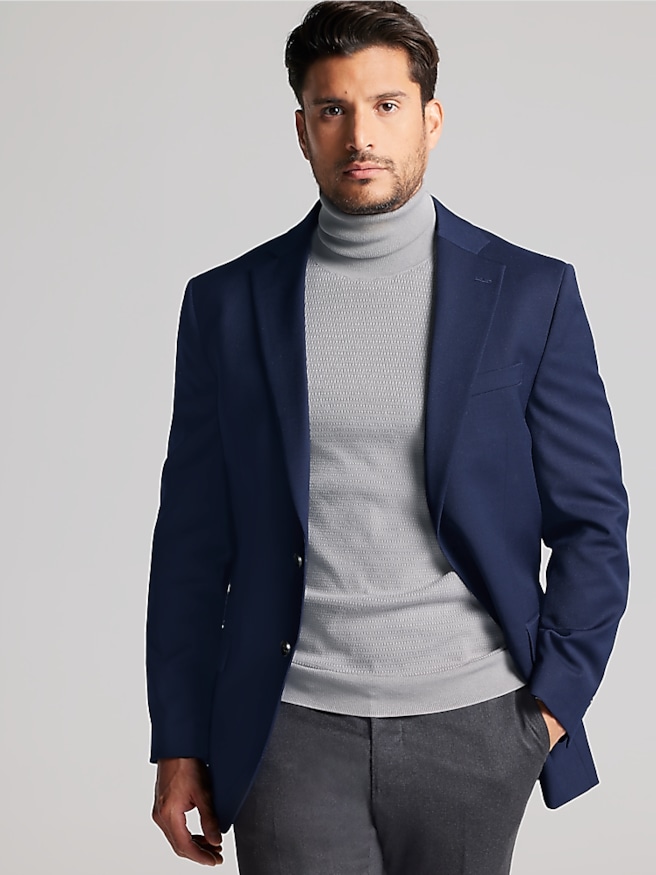
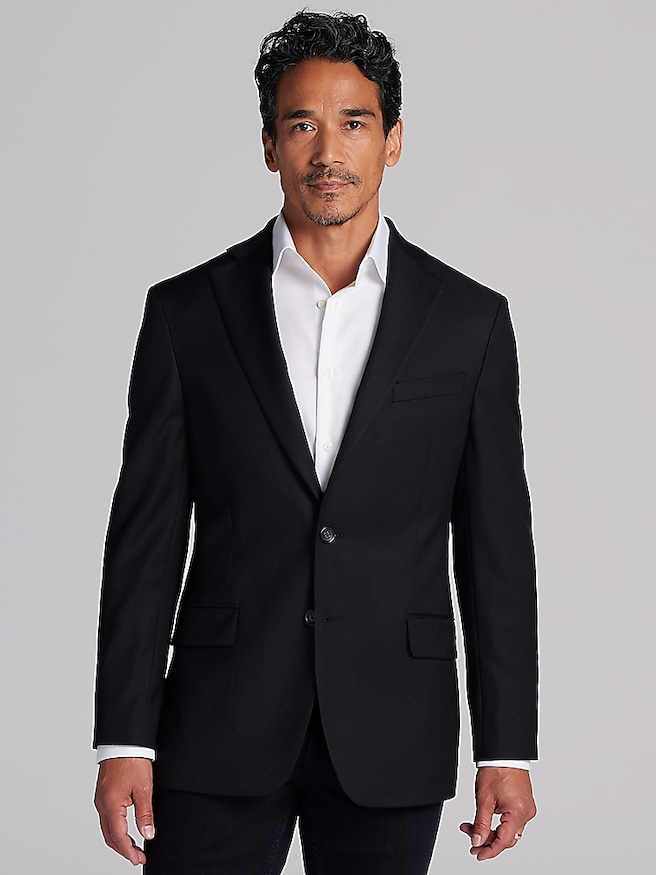
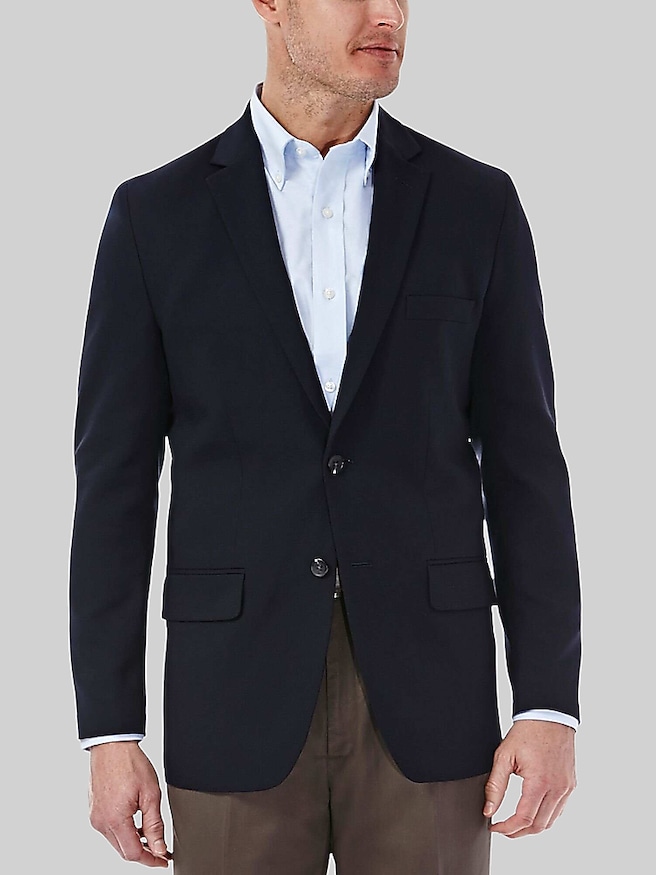
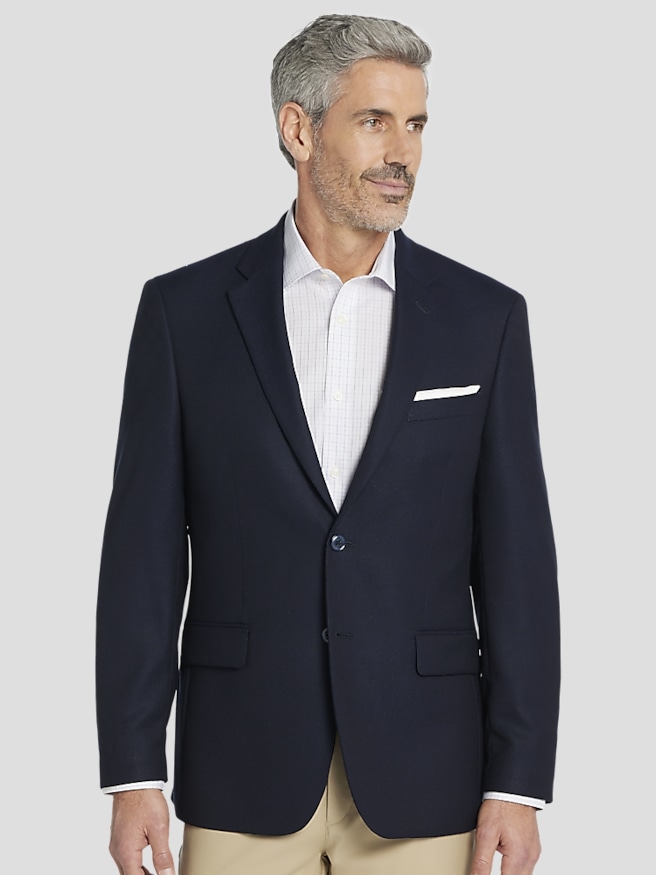
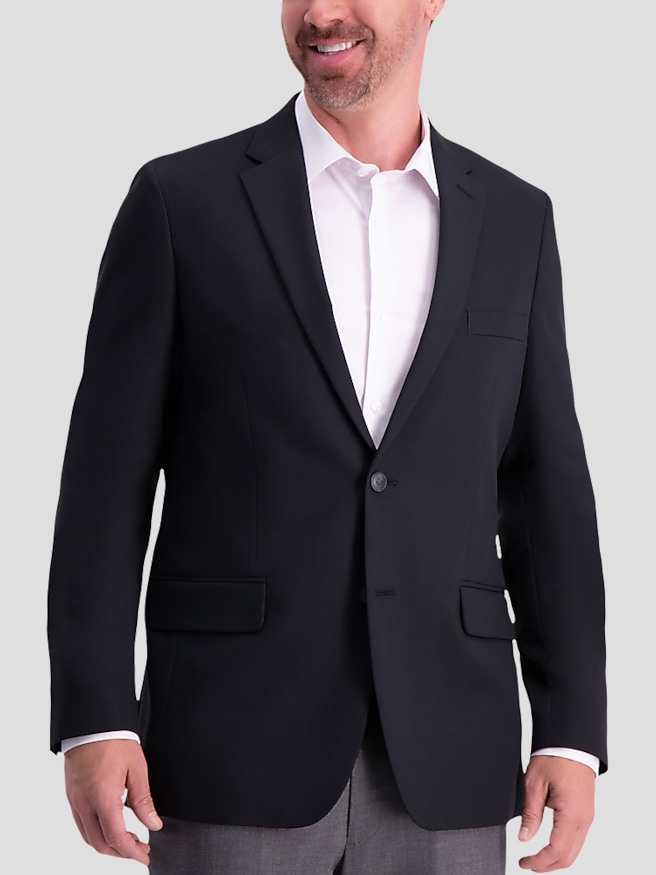
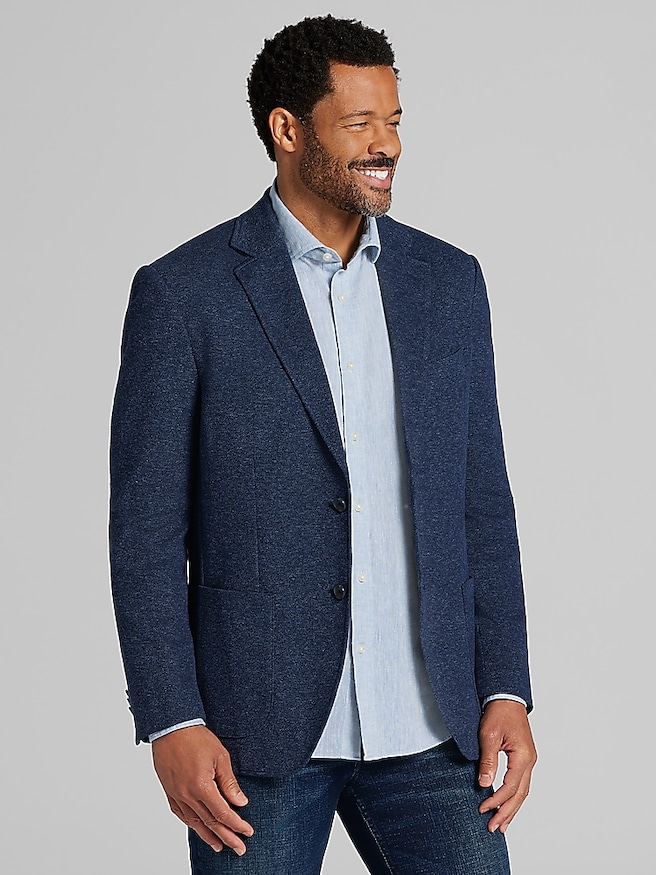
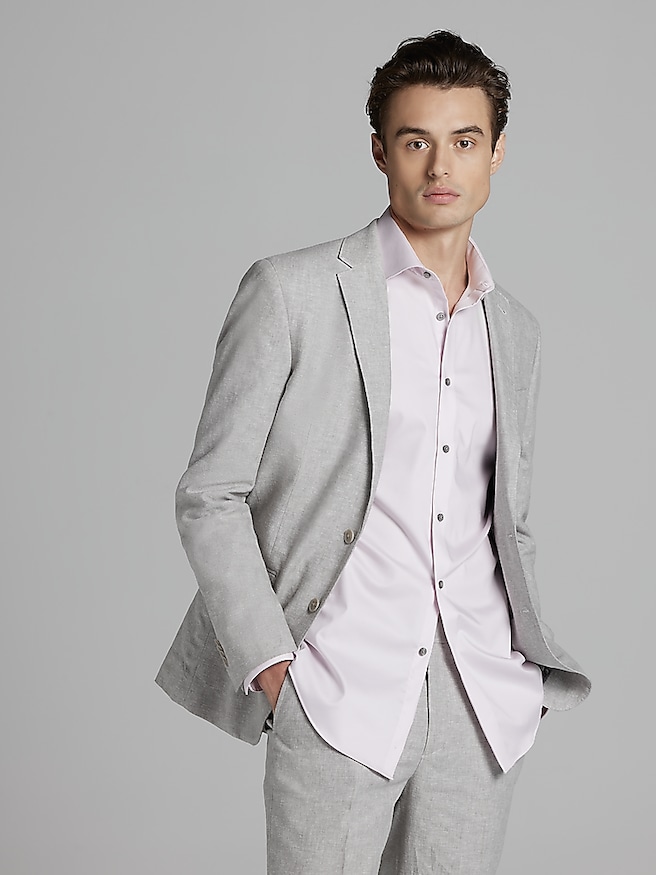
Stretch blazers for men combine the tailored appearance of a blazer with fabric that gives during everyday movement. That flexibility can make a noticeable difference when reaching for a bag, sitting through a presentation, or spending several hours at a celebration. Unlike a jacket that relies entirely on a roomy cut for comfort, a stretch blazer can sit close to the body while allowing some movement through the shoulders, back, and elbows. The fabric and construction determine how that balance feels. Wool blends can provide a refined surface and natural drape, while cotton blends often have a more relaxed character. Polyester and rayon blends can offer a smooth finish, with elastane or spandex added for stretch and recovery. Some knit fabrics also gain flexibility from their construction, giving them a softer feel than a firmly woven cloth. Two-way stretch generally gives along one axis, while four-way stretch gives along both the length and width of the fabric. Those descriptions explain the direction of movement, not the amount of stretch or the overall quality of the blazer. Fabric weight, lining, and internal structure matter just as much. A fully lined jacket can slide smoothly over a dress shirt, although the lining also needs enough ease or flexibility to avoid restricting movement. Partial lining and softer construction can create a less rigid feel, while structured shoulders and a shaped chest produce a more defined outline. Neither approach is automatically better; the distinction is whether the desired look leans toward a polished office jacket or an easygoing layer. Stretch also does not automatically mean wrinkle-free, machine-washable, or suitable for every dress code. Those qualities depend on the complete garment. The appeal is a familiar tailored silhouette with a little more freedom, whether the day involves a desk, a client lunch, or dinner after work.
Fit gives a stretch blazer its shape; flexibility should support that fit rather than compensate for a jacket that is too small. Shoulder seams should sit near the natural shoulder edge, with the fabric lying smoothly instead of collapsing or pulling sharply across the upper back. When the blazer is buttoned, the lapels should rest against the chest and the front should close without pronounced lines radiating from the button. A close fit can still leave enough room for a full breath and a comfortable seated position. Slim cuts generally follow the torso more closely, while more relaxed cuts provide additional room through the chest and waist, though fit labels vary. An athletic build may need extra space across the chest and upper arms without excess fabric at the waist. Taller proportions call for attention to jacket and sleeve length, not simply a larger chest size. Trying the intended shirt or fine-gauge sweater beneath the blazer gives a clearer sense of how the layers work together. A sleeve that shows a small amount of shirt cuff can create a neat finish, and the jacket hem should look balanced with the wearer’s torso and trousers. Stretch blazers work particularly well in wardrobes that move between business casual and social occasions. A smooth navy or charcoal fabric pairs easily with dress pants and a button-front shirt for a meeting, while a textured knit can feel more natural with chinos and a simple crewneck. Dark, clean-finished jeans can also work where the setting permits a more casual approach. For a school dance, Men's Homecoming Stretch Blazers can be paired with dress pants, a crisp shirt, and a tie when a blazer suits the event’s dress code. Fabric texture and contrast help the combination look intentional: trousers that clearly complement the jacket often look more cohesive than a near match that resembles an incomplete suit. More formal invitations may still call for a matching suit or other specified attire.
Care and durability depend on more than the stretch fiber listed on the label. A well-made stretch blazer needs fabric that recovers after movement, seams that remain smooth, and construction that holds its shape through repeated wear. Persistent bagging at the elbows, rippling around seams, or a front edge that no longer lies flat can affect the appearance even when the jacket still feels comfortable. Following the care label helps protect both the outer fabric and the structure inside. Some stretch blazers are machine-washable, but others require professional cleaning; a washable fabric alone does not mean the finished garment belongs in a washing machine. When machine washing is permitted, the specified cycle, water temperature, and drying method matter. High heat can damage elastane and may distort linings, adhesives, or shaped components. Between cleanings, a broad, supportive hanger helps maintain the shoulders, while time outside a crowded closet allows the fabric to air. Emptying pockets after wear reduces unnecessary strain and helps preserve clean lines around the hips and chest. A soft garment brush may suit some woven fabrics, while delicate knits need handling appropriate to their surface. Any steaming or pressing should follow the label, since excessive heat can leave shine or alter the fabric. For travel, wrinkle resistance can be useful, but no blazer is immune to creasing when compressed tightly in a bag. Giving the jacket space and hanging it after unpacking can help maintain its appearance. These practical qualities make stretch blazers appealing to commuters, frequent travelers, professionals who alternate between sitting and standing, and anyone who prefers tailoring with less restriction. They can also make thoughtful gifts for a graduate starting a career or someone building a versatile dress wardrobe, especially when measurements and fit preferences are known. The most useful choice balances comfortable movement with a shape, texture, and care routine that suit the wearer’s everyday life.