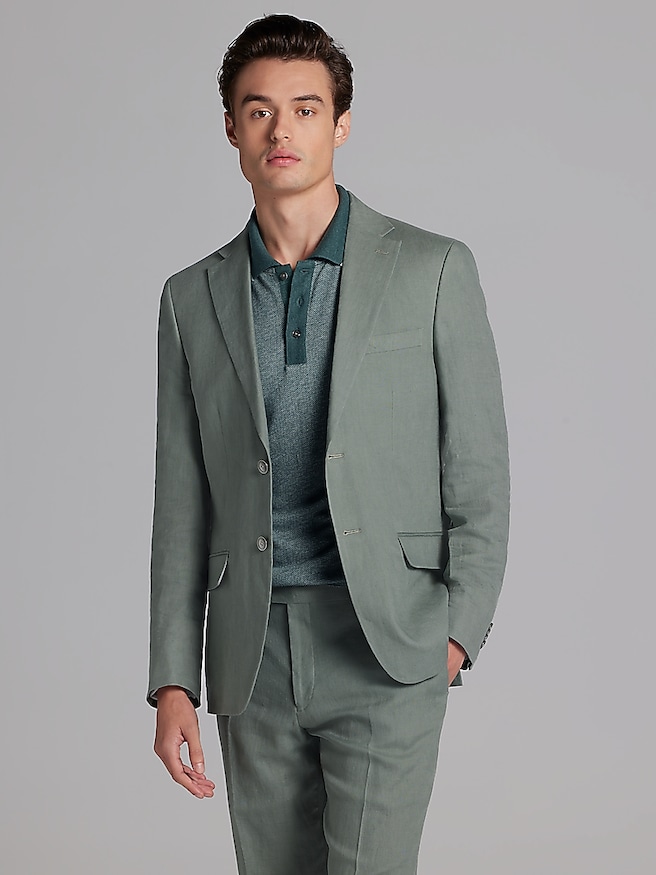
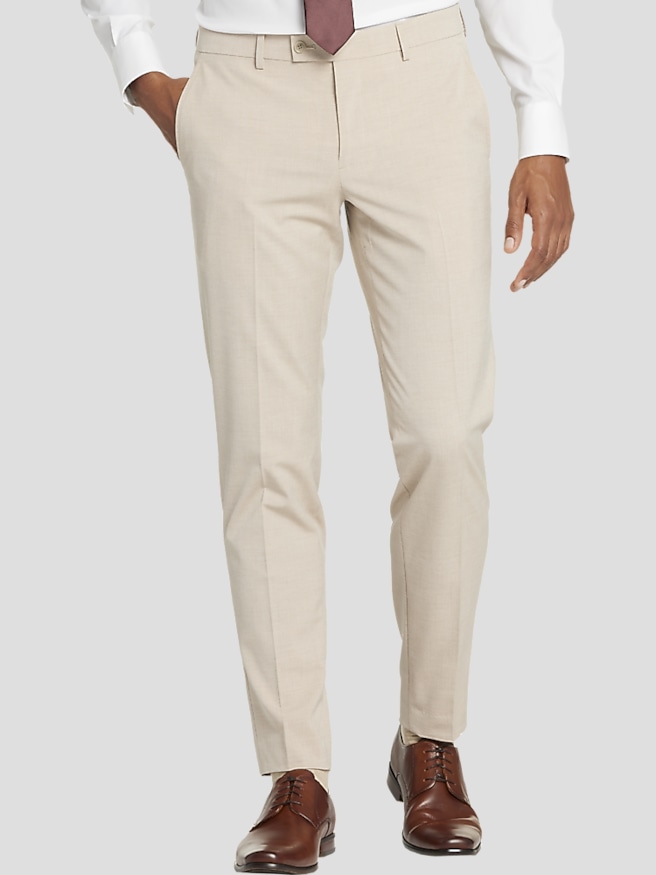
Spring groom attire brings together wedding-day formality, comfortable tailoring, and colors that feel at home beside garden greenery, pale florals, and sunlit ceremony spaces. Lightweight suits in light gray, dusty blue, sage, sand, and tan offer a softer alternative to dark evening attire, while navy remains a versatile choice for ceremonies that continue into a formal reception. The right look reflects the setting as much as the season: a softly structured suit feels natural at a courtyard celebration, while a more defined shoulder and smooth fabric finish suit a traditional ballroom. For a black-tie wedding, a tuxedo preserves the occasion’s dress code rather than relying on a lighter color to express spring style. Fabric makes an equally important distinction. Tropical wool is a lightweight suiting fabric with an open weave that encourages airflow while maintaining a polished drape. Linen has an airy feel and visible texture, with natural creasing that complements relaxed outdoor celebrations. Cotton and cotton blends can provide a crisp, less formal appearance, although their weight and construction influence how comfortable they feel over a long day. Hopsack’s basketlike weave introduces subtle texture, while seersucker’s puckered surface gives tailoring a distinctive, easygoing character. Neither texture automatically makes a suit suitable for every wedding; the invitation’s dress code and the couple’s plans remain the best points of reference. Jacket construction also matters. A partially lined jacket may feel less enclosed than a fully lined style, though comfort depends on the complete garment rather than the lining alone. For a groom standing through an outdoor ceremony, sitting for dinner, and spending hours on the dance floor, breathable fabric and room to move are practical parts of looking composed. Spring wedding suits work best when color, cloth, and structure support the celebration without making the outfit feel like a costume. A pale neutral can feel just as intentional as a deeper blue when its proportions and finishing details are considered.
Fit gives spring groom attire its shape, whether the overall effect is relaxed, classic, or sharply tailored. A jacket should sit cleanly across the shoulders without extending noticeably beyond them, and its collar should rest against the shirt rather than pulling away at the back of the neck. With the jacket buttoned, the front should lie smoothly instead of forming a pronounced X around the closure. These small details become especially visible in ceremony portraits and seated photographs. Slim, tailored, and classic fits describe broad silhouettes, not a hierarchy of how dressed up an outfit looks; the strongest choice follows the wearer’s proportions and allows comfortable movement. Trousers need enough room through the seat and thigh for sitting, stepping onto a platform, and dancing without pulling at the pockets. A slight break at the shoe creates a traditional finish, while little or no break can give a lighter suit a cleaner, more contemporary line. An overly short hem, however, may expose more sock than intended when the groom sits down. Shirt fit deserves the same attention, particularly at the collar and cuffs. A breathable cotton dress shirt provides a familiar foundation, with a collar that accommodates a tie comfortably and sleeves that show a narrow edge beneath the jacket. White offers a crisp contrast against sage, tan, and blue, while a subtle ivory tone can create a softer combination when coordinated thoughtfully with the wedding palette. Accessories add personality without needing to repeat every color in the flowers or table settings. A muted silk tie, a restrained floral pattern, or a textured weave can connect the outfit to spring without overwhelming it. A pocket square generally looks more considered when it complements the tie rather than reproducing it exactly. A small boutonniere can introduce a botanical accent while leaving the lapel’s shape visible. For wedding parties, coordinated colors and a consistent level of formality create cohesion; the groom can stand apart through a distinct tie, waistcoat, or boutonniere instead of an entirely unrelated outfit.
Footwear and finishing details help spring wedding attire feel complete from the first photograph to the final dance. Brown leather dress shoes often complement tan, light gray, and softer blue suits, while deeper brown or oxblood can add definition to a muted palette. Black dress shoes provide a more formal finish, especially with dark tailoring, and tuxedos call for footwear appropriate to their evening dress code. The ceremony surface matters, too: smooth leather soles can feel slippery on polished floors, and damp grass may leave marks on delicate finishes. Shoes that have been worn indoors before the wedding are less likely to introduce unexpected stiffness during a long reception. Socks with enough length to cover the calf maintain a neat line when seated, and a belt, when worn, should relate closely to the shoes in color and finish. Beyond the wedding day, understated tailoring can serve at anniversary dinners, milestone celebrations, and other dressed-up occasions, making durable construction and sensible care worthwhile considerations. Tightly finished seams, secure buttons, and a lining that does not strain during movement support repeated wear, although fabric weight alone does not determine quality or longevity. Linen’s wrinkles are part of its character; wool typically recovers well from light creasing when given time to rest on a supportive hanger. Care labels remain the authority for cleaning and pressing, particularly for blended fabrics and structured jackets. After wear, empty pockets, allow the suit to air out, and use a broad hanger that supports the shoulders. Professional cleaning is appropriate when the care label requires it, but unnecessary cleaning after every brief wear can add avoidable wear. A breathable garment bag helps protect tailoring between occasions without trapping moisture. For celebrations expected to involve more sustained heat, Groom Outfit For Summer Weddings offers a related seasonal focus. The lasting appeal of spring groom attire lies in that balance of occasion and ease: a defined silhouette, fabric suited to the setting, and personal details that still feel comfortable after the portraits are finished.