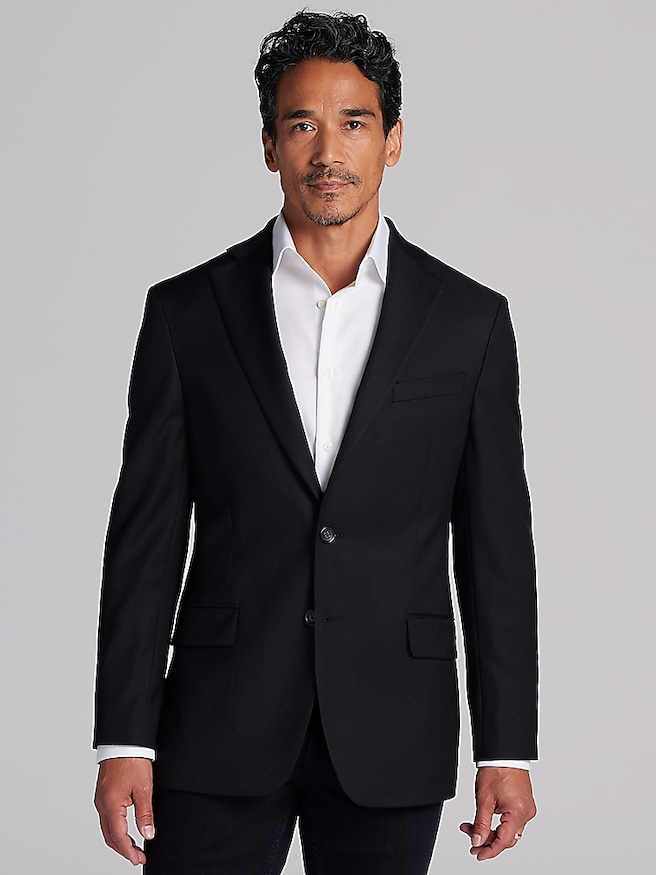
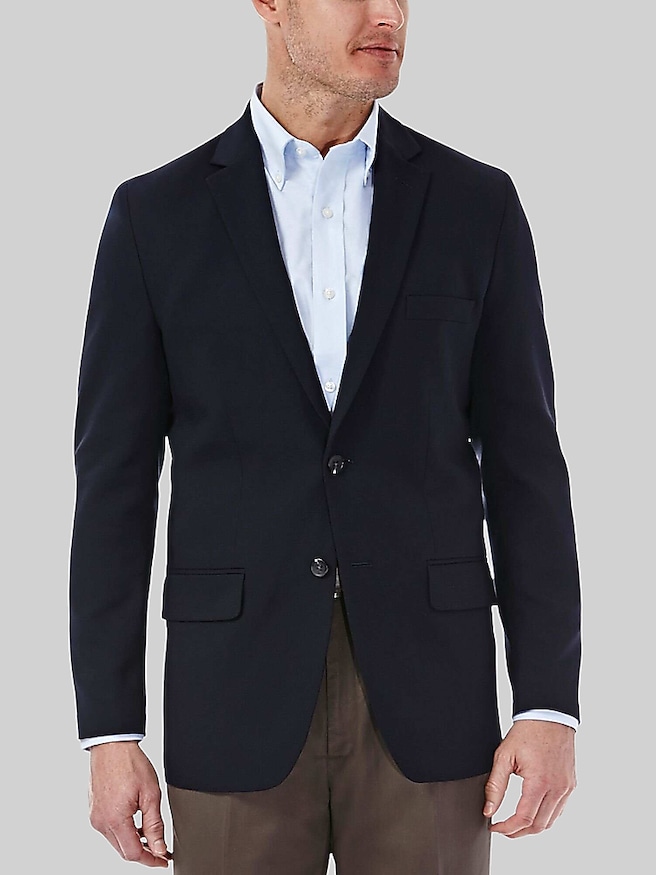
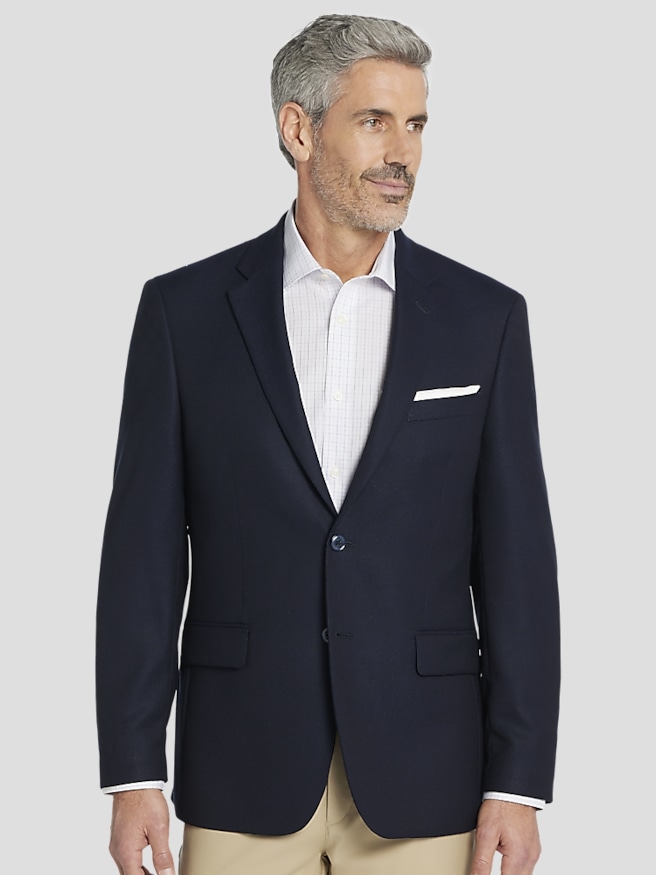
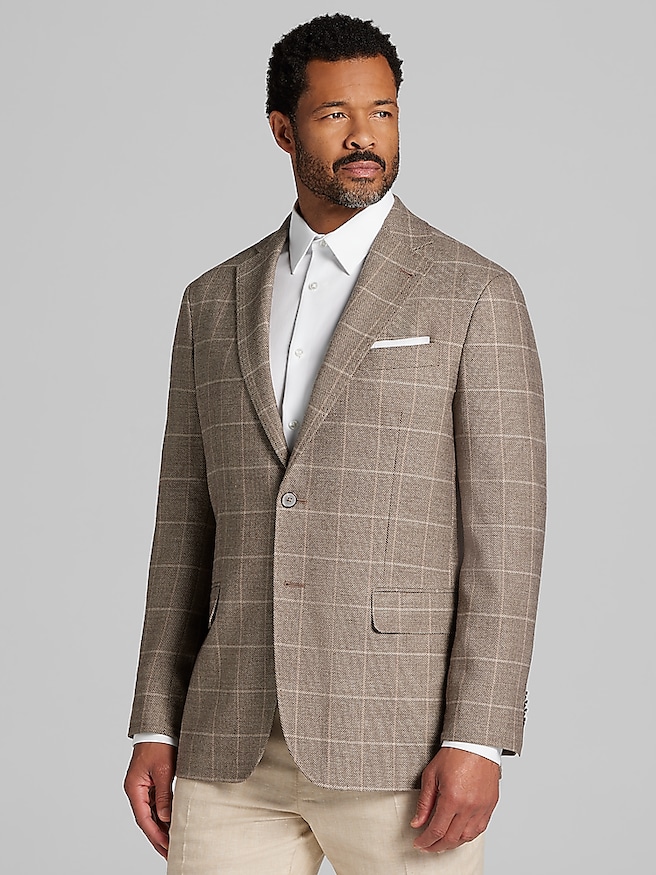
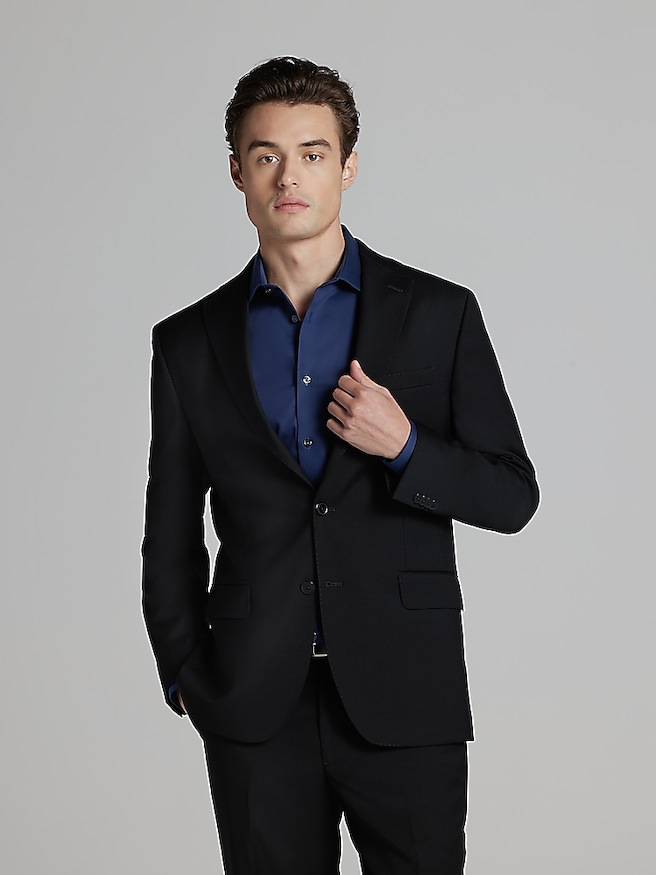
Sport coats for jeans bring the shape of tailoring to the clothes that already feel familiar. A jacket over denim can make a casual office outfit look more considered, give a dinner reservation the right sense of occasion, or add polish to an afternoon gathering without calling for a full suit. The appeal is in the balance: a defined shoulder and lapel above the straightforward texture of jeans. Sport coats often have more visible texture, relaxed construction, or distinctive patterns than suit jackets, which helps them look intentional alongside denim rather than separated from a matching pair of trousers. Navy, brown, gray, and olive offer plenty of possibilities, but the relationship between the fabrics matters as much as the color. A softly textured brown jacket over dark indigo jeans creates clear contrast, while a gray herringbone can give black denim depth without making the outfit feel busy. Small checks and subtle windowpanes add interest when the shirt and jeans stay simple. Dark washes with minimal fading usually create a dressier impression; lighter washes and visible wear make the overall look more casual. Neither approach needs to feel forced, provided the jacket has enough ease and texture to sit comfortably with the denim. A knit polo and loafers can suit a relaxed dinner, while an Oxford shirt and leather boots work well for a workplace where denim is welcome. A plain crewneck shirt can also belong under a sport coat when the neckline sits neatly and the fabric holds its shape. These combinations are useful for men who move between settings throughout the day and want one outfit to feel appropriate in several places. They also offer an alternative for anyone who enjoys a jacket but rarely has reason to wear matching trousers. The result should look composed without disguising the easygoing character that makes jeans appealing in the first place.
Fabric and construction determine much of how a sport coat wears with denim. Wool can provide a soft drape and natural resilience, while cotton often has a more relaxed surface and may develop gentle creasing with wear. Linen has a distinctive slubbed texture and an easy, rumpled character; blends can combine some of these qualities, depending on their fiber content and construction. The fabric label is useful, but the feel and movement of the finished jacket matter, too. A brushed surface, an open weave, or a subtle basket texture can complement the visible grain of denim more naturally than a very smooth, glossy cloth. Less padding and a softer chest often produce a relaxed outline, although some structure can be helpful when a sharper appearance is the goal. The best sport coats for men balance that visual character with a fit that feels comfortable while standing, sitting, and reaching across a table. Shoulder seams should sit close to the natural shoulder, and the lapels should lie smoothly rather than bow away from the chest. With the jacket buttoned as intended, the front should close without a pronounced pull or deep creases radiating from the button. Enough room through the back and upper arms makes everyday movement easier without requiring an oversized body. Jacket length deserves attention alongside the rise and cut of the jeans: a very short coat can exaggerate a long torso, while excessive length can overwhelm a shorter frame. Slim jeans do not require a tight jacket, and straight-leg denim does not demand a boxy one. A consistent sense of proportion is more useful than matching fit labels. Sleeve length should leave the hands free and, with a long-sleeve dress shirt, allow a small amount of cuff to show. For men whose shoulders, chest, and waist do not fall into one standard size, alterations may improve the balance. Sleeve and waist adjustments are often more straightforward than major changes to the shoulders, making the initial fit through the upper body especially important.
The smaller details help distinguish a sport coat that works easily with jeans from one that feels too formal for the rest of the outfit. Patch pockets have a relaxed appearance, while flap pockets can bridge casual and dressier settings. A notch lapel is versatile, and understated buttons tend to keep attention on the fabric and fit. Vents should hang neatly when standing and allow the jacket to move when sitting. Practical durability comes from a combination of suitable fabric, sound seams, secure buttons, and enough room to avoid constant strain at the elbows, back, and closure. A heavier fabric is not automatically tougher, just as a softer jacket is not necessarily delicate; weave, fiber quality, construction, and use all play a part. Repeated friction from a shoulder bag or a rough chair can affect the surface over time, so it helps to notice where the jacket receives the most wear. Between outings, a shaped hanger supports the shoulders, and some space in the closet helps prevent crushing. Emptying the pockets keeps them from stretching or distorting the front. A gentle clothing brush may lift surface dust from suitable fabrics, while stains and deeper cleaning should be handled according to the care label. Machine washing or applying high heat without checking those instructions can change the shape, finish, or dimensions of a tailored garment. These considerations also matter when choosing a sport coat as a gift. Familiarity with the recipient’s usual jacket size, preferred fit, and denim colors is more useful than choosing a bold pattern simply for impact. Someone who wears dark jeans and simple shirts may appreciate quiet texture, while someone comfortable mixing patterns may enjoy a more expressive check. Whether chosen for everyday office wear, dinners, celebrations, or a more polished casual wardrobe, a sport coat earns its place through repeated use: comfortable enough to reach for readily, distinctive enough to bring something more to a familiar pair of jeans.