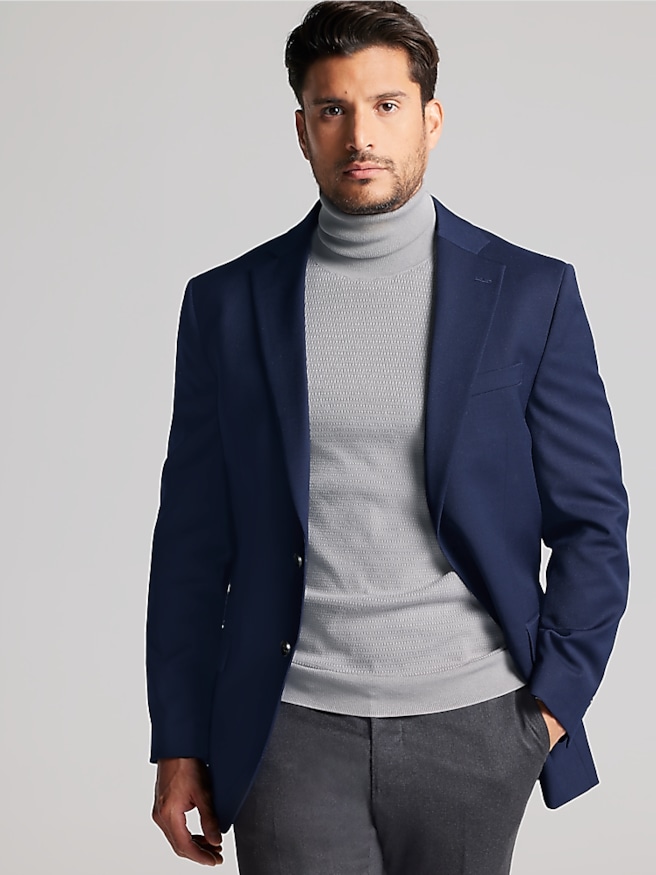
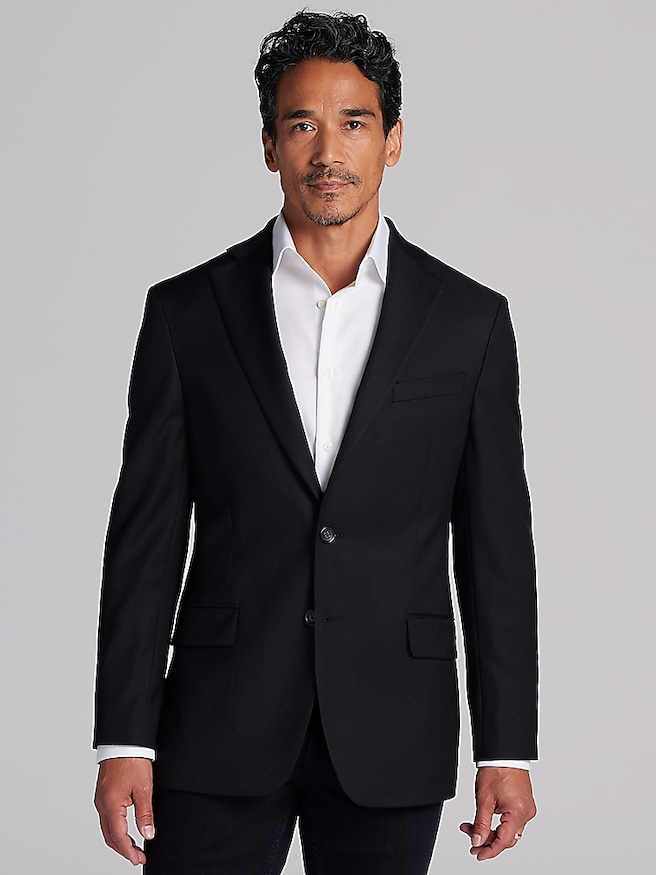
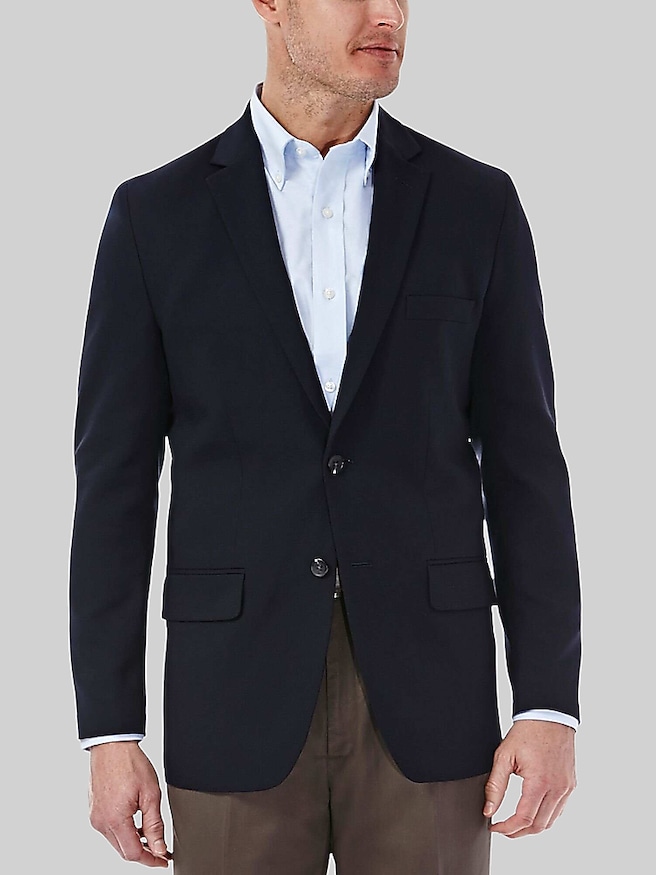
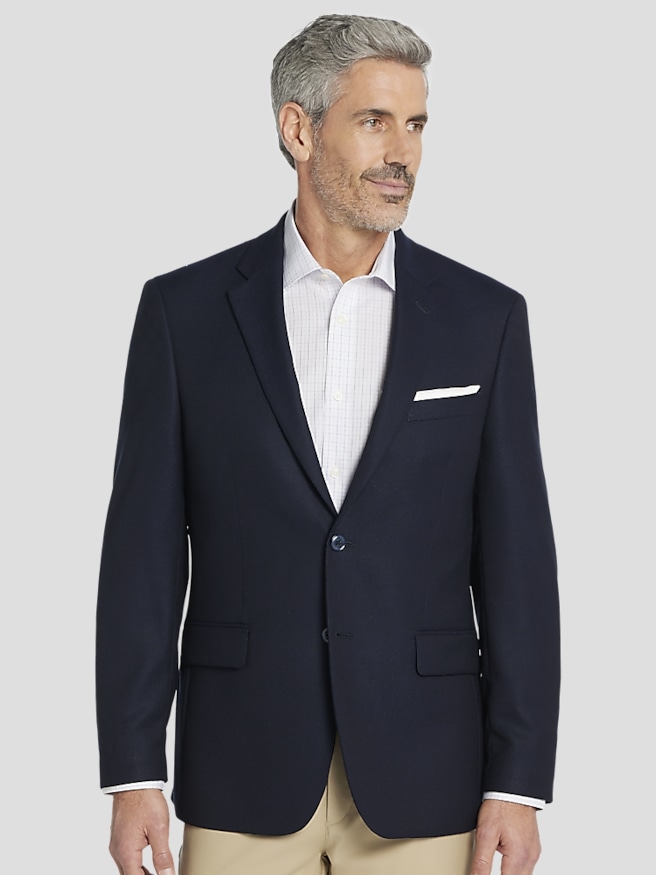
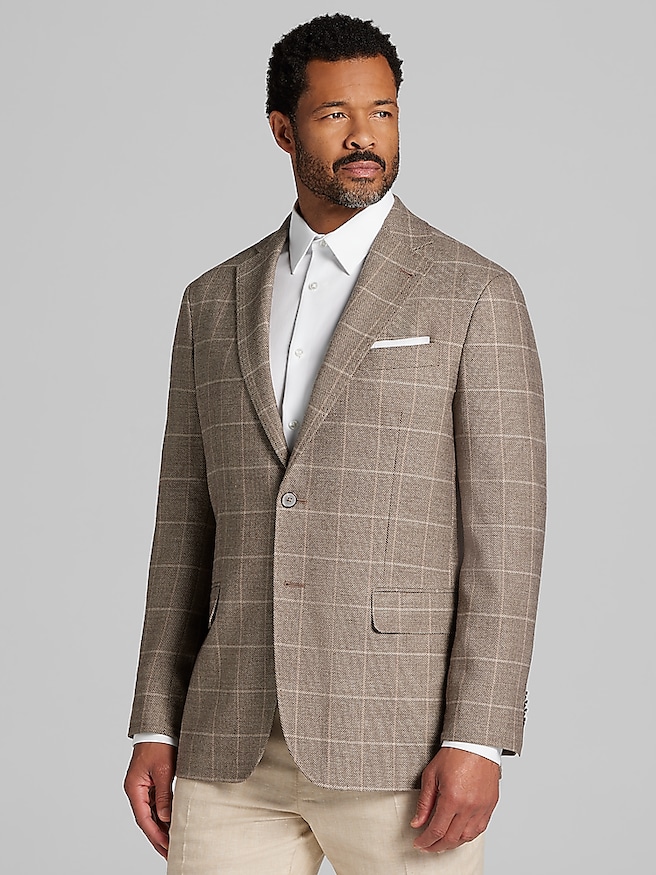
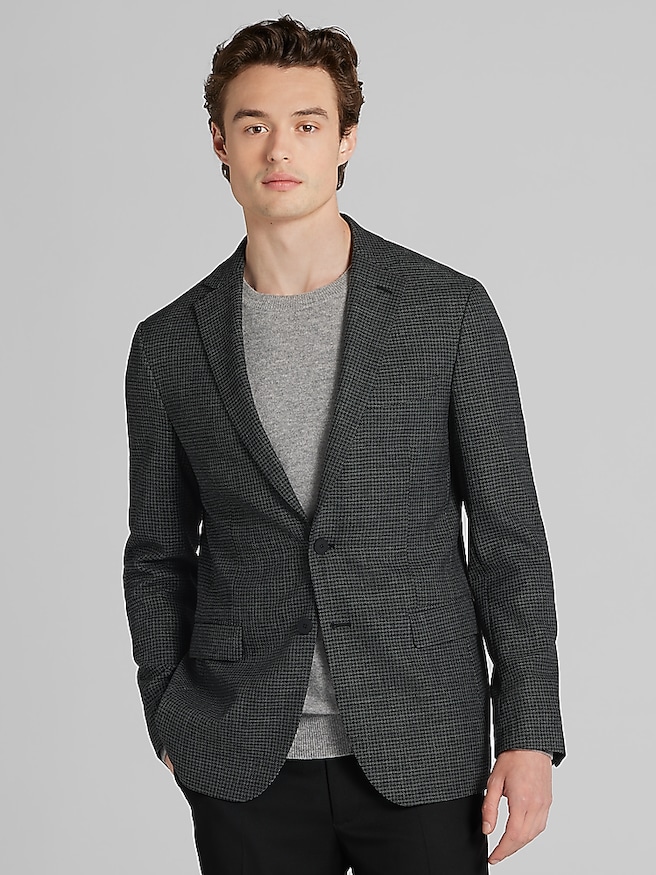
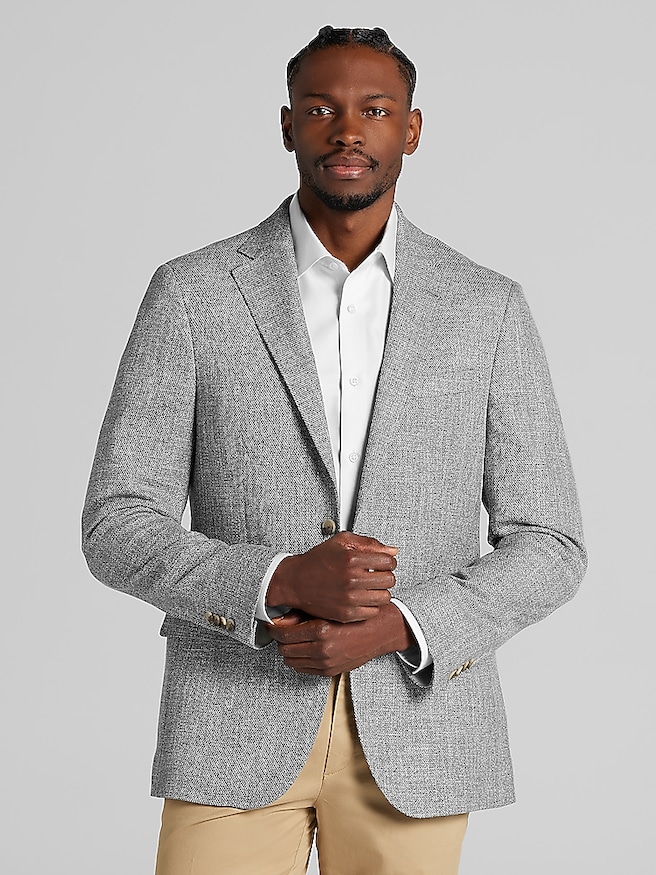
A sport coat and shirt pairing brings structure to everyday dressing without the formality of a matching suit. The jacket gives the shoulders definition and adds texture, while the shirt sets the tone: crisp cotton feels ready for a client meeting, a soft Oxford cloth button-down suits a family dinner, and a substantial knit tee lends a relaxed finish to an evening out. The most balanced combinations usually place a simple shirt beneath a textured or patterned sport coat, letting one element carry the visual interest. White, light blue, and other understated shirt colors work naturally with checks, herringbone, and speckled weaves because they give the eye a quiet place to land. A subtle stripe or small-scale shirt pattern can also complement a jacket when the patterns vary noticeably in size and share a color. Navy, gray, brown, and muted earth tones offer plenty of room for coordinating trousers without making the outfit look like an incomplete suit. A blue sport coat over a white shirt, for example, feels clean against charcoal trousers, while a brown textured jacket and pale blue shirt bring warmth to dark denim. For combinations built around a darker foundation, a Sport Coat For Black Pants provides another direction for a polished outfit with clear contrast between the jacket and trousers. These combinations suit office days, dinner reservations, school celebrations, and gatherings where a full suit would feel overly formal. They can also work for some wedding guest dress codes, provided the invitation calls for separates rather than formal attire. A tie, pocket square, or leather belt can shift the mood, but the relationship between coat and shirt does most of the work. A collar that sits neatly beneath the lapels and a shirt surface that stays smooth through the chest make the whole outfit feel considered, even when the finishing touches are minimal. That versatility makes these separates useful for someone building a first professional wardrobe as well as someone refreshing familiar occasion clothes.
Fabric affects how a sport coat and shirt look together, how comfortably they layer, and how well they hold up to repeated wear. Wool sport coats offer natural resilience and can provide comfortable warmth during the cooler months, though the actual feel depends on the cloth's weight, weave, and lining. A lightly textured wool jacket has enough surface interest to enliven a plain shirt without needing a bold pattern. Cotton jackets tend to have a more relaxed appearance and may develop visible creases with wear, while fabric blends can combine qualities such as softness, shape retention, and stretch. A jacket's lining and construction matter alongside its fiber content: lighter internal structure generally feels more easygoing, while greater structure creates a more defined silhouette. Beneath the jacket, cotton poplin gives a dress shirt a smooth, crisp surface, Oxford cloth adds a visible basket weave, and twill provides subtle diagonal texture with a soft drape. Brushed cotton can feel especially comfortable on cool mornings, although a thicker shirt needs enough space inside the jacket sleeves. When the occasion suits a tee rather than a collar, a substantial, opaque knit generally creates a cleaner foundation than a thin undershirt. A fine-gauge merino knit can offer a similarly streamlined layer with understated texture. Fabric weight alone does not determine quality; an even knit, a stable neckline, and a smooth fit matter just as much. The shirt should sit flat rather than bunch beneath the coat, and its neckline should keep its shape instead of stretching or collapsing. For a commute followed by hours at a desk, breathable layers and room to move can matter more than a sharply sculpted appearance. For a dinner where the jacket stays on, a smooth shirt front and comfortable collar become especially noticeable. Durable construction shows up in secure buttons, even stitching, tidy seams, and fabric that recovers reasonably well after movement. High-friction areas such as shirt cuffs, elbows, and jacket pocket edges deserve attention, particularly when the same separates are part of a regular weekly rotation.
Fit gives a sport coat and shirt their finished appearance, whether the outfit leans businesslike or casual. Jacket shoulders should follow the body's natural line without pronounced overhang or tight ridges, and the lapels should lie smoothly rather than bow away from the chest. With the jacket fastened, the front should close comfortably without deep pulling around the button. Enough room through the upper back and sleeves allows everyday movements such as reaching for a bag, taking a seat, or greeting someone without the entire jacket shifting out of place. The shirt needs its own balance of ease and shape: excess fabric can gather at the waist, while an overly narrow chest or sleeve can restrict movement and strain the buttons. A dress shirt collar should feel comfortable when closed, with points that sit neatly under the jacket rather than bunching against the lapels. A small amount of shirt cuff visible below the jacket sleeve creates a clean transition, though the exact amount depends on proportions and preference. Tucked shirts generally give tailored trousers a tidier finish; an untucked shirt works best when its shorter hem is designed for that purpose and does not hang below the jacket. For gifts marking a graduation, a new job, or a milestone birthday, versatile colors and a known size make these pieces more useful, especially when the recipient's usual dress code is part of the choice. Thoughtful care helps preserve both fit and appearance. Each garment's care label should determine cleaning methods, since wool jackets, washable shirts, and stretch blends may need distinct treatment. A broad, supportive hanger helps a sport coat maintain its shoulders, while airing it between wears and gently brushing away surface dust can reduce unnecessary cleaning. Shirts benefit from prompt attention to collar and cuff marks, appropriate wash temperatures, and pressing suited to the fabric. Leaving breathing room in the closet and avoiding overfilled jacket pockets also help these separates stay ready for the next workday, celebration, or evening out.