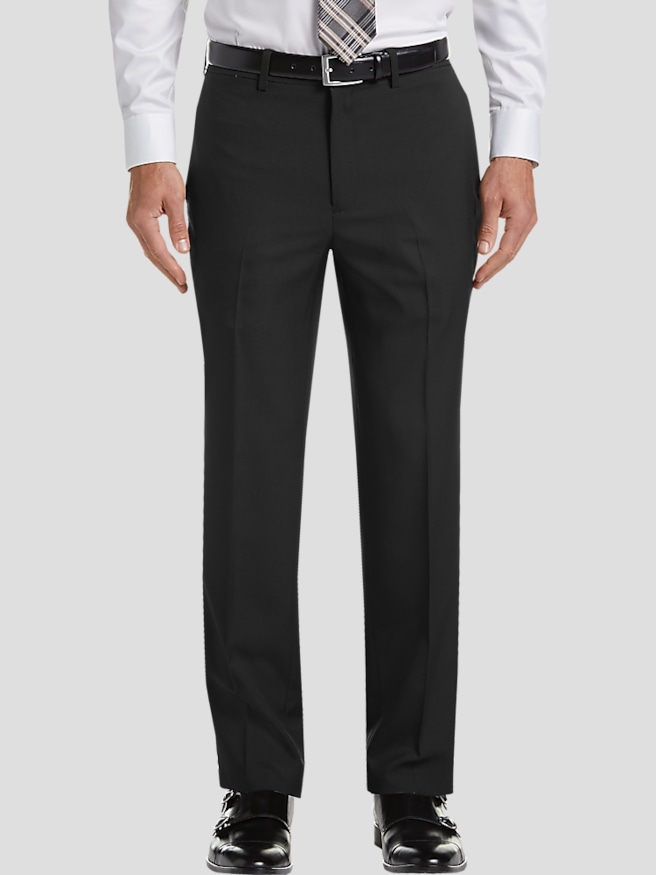
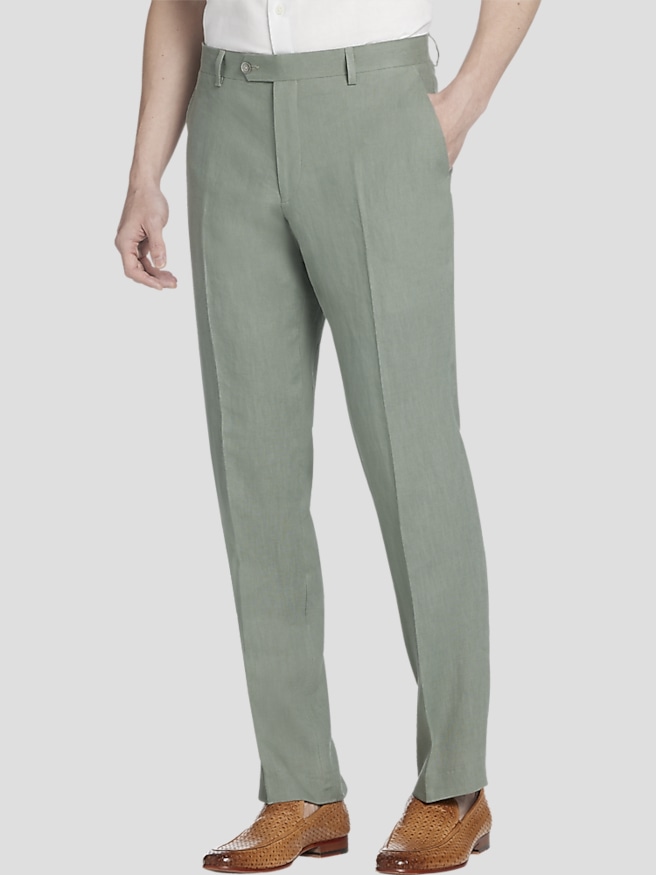
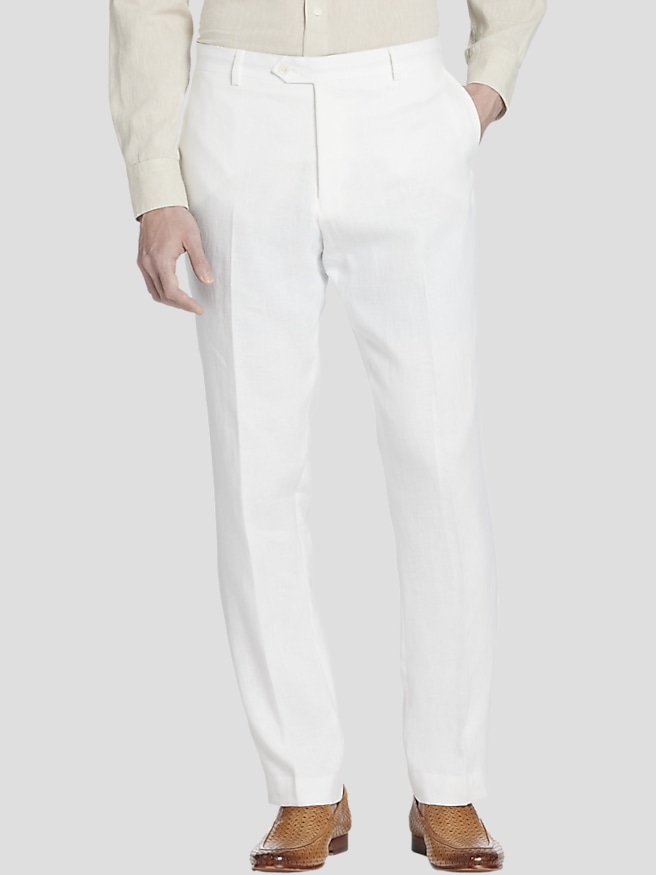
Solid linen pants bring the distinctive texture of flax-based fabric to a clean, single-color silhouette. Unlike patterned trousers, their visual interest comes from the weave itself: fine variations in the yarn, a lightly textured surface, and folds that soften the outline without adding a printed design. Solid describes the color treatment, not a completely smooth or uniform fabric, so subtle slubs can be part of linen’s character. That combination makes these pants a natural fit for wardrobes that balance polished clothing with more relaxed pieces. A pair can anchor a tucked-in button-down and leather loafers for a celebratory dinner, or accompany a knit polo and understated sneakers for a casual gathering. Beige, stone, navy, gray, and other solid shades each create a distinct effect, but the absence of a pattern keeps coordination straightforward. A neutral trouser allows a textured shirt or patterned jacket to stand out, while a deeper shade can provide a stronger visual foundation for lighter-colored tops. Linen is made from flax fibers and is valued for its strength, absorbency, and ability to let air move through the fabric. Its recognizable creasing is also part of the appeal; linen pants generally look more at ease than sharply pressed dress trousers, even when the cut is tailored. They can work well for dinners, vacations, daytime celebrations, and workplaces with a flexible dress code, although the fabric alone does not determine how formal an outfit will feel. A smooth waistband, a neat hem, and a well-proportioned jacket create a more composed impression than a drawstring waist and an untucked shirt. For occasions with a stated dress code, the construction of the pants and the rest of the outfit matter as much as the material. Solid linen trousers offer an expressive middle ground: more structured than lounge clothing, less rigid in appearance than traditional suiting, and easy to personalize through footwear, belts, and shirts.
Fabric composition and fit make a substantial difference in how linen pants look and behave over a full day of wear. Pure linen typically has a pronounced texture and a crisp initial hand that can become softer with repeated wear and appropriate care. Linen blends may combine flax with cotton, viscose, or other fibers to adjust softness, drape, or crease behavior; a small amount of elastane can add stretch. A blend is not automatically smoother, stronger, or easier to maintain, since yarn quality, fabric weight, weave, and finishing also influence performance. The composition and care labels provide a more useful starting point than the word linen by itself. Lighter-colored fabric may benefit from discreet, skin-toned underlayers, and lining can affect both coverage and the way the trousers fall. A comfortable fit leaves enough room through the seat and thighs for sitting without pulling the pockets open or drawing tight horizontal lines across the front. Slim cuts create a closer outline, straight legs maintain a consistent line from thigh to hem, and relaxed shapes allow more space and movement. None needs to look oversized: the waistband should sit securely without relying on an overtightened belt, and the rise should feel comfortable both standing and seated. Pleats can provide useful room through the upper leg, while a flat front gives a simpler appearance. Length deserves equal attention because linen’s folds can make excess fabric at the ankle look more pronounced. A slight break offers a traditional finish, while little or no break emphasizes a cleaner line and gives loafers or low-profile shoes more definition. For someone drawn to a more refined interpretation of the fabric, Luxury Linen Pants provide a related style direction to explore, with fabric composition, finishing, and fit remaining the meaningful points of comparison. Thoughtful proportions usually contribute more to a polished result than forcing linen into a perfectly crease-free shape.
The practical appeal of solid linen pants extends beyond a single outfit, especially when their color and cut complement clothing already in regular rotation. A navy pair can sit comfortably alongside white shirts, brown leather accessories, and muted knitwear; stone or beige trousers can bring gentle contrast to charcoal, olive, or deep blue tops. Keeping the shirt hem and trouser rise in balance helps the outfit feel intentional. A shorter, neatly finished shirt can work untucked with a casual waistband, while a longer dress shirt generally looks more composed tucked into tailored trousers. For travel, linen’s natural folds are worth expecting rather than treating as a flaw. Packing the pants without compressing them tightly and hanging them after unpacking can help limit heavy creases, though neither will eliminate wrinkling. Care should always follow the garment label, particularly with lined pants, blended fabrics, or structured waistbands. Some linen trousers can be washed, while others require professional cleaning; the treatment suitable for an unstructured pair may not suit a tailored one. When washing is permitted, gentle handling and the recommended water temperature help protect the shape and finish. Excessive heat can cause shrinkage, and aggressive drying may set wrinkles more firmly. Pressing or steaming should also follow label directions, with attention to any fibers blended into the linen. A pressing cloth can help protect the surface, and testing an inconspicuous area is sensible before treating the whole garment. Durable wear depends on more than linen’s naturally strong fibers: seams, pocket construction, fit, and laundering all affect how well pants hold up. Allowing adequate room at the seat and thighs reduces strain, while addressing loose stitching early can prevent a small issue from becoming a larger repair. As a gift, solid linen pants suit someone who enjoys textured fabrics and easygoing tailoring, provided the waist, inseam, and preferred cut are known. Their lasting appeal lies in that balance of usefulness and character—a straightforward color, a distinctive natural weave, and enough styling flexibility to move from an ordinary lunch to a thoughtfully dressed occasion.