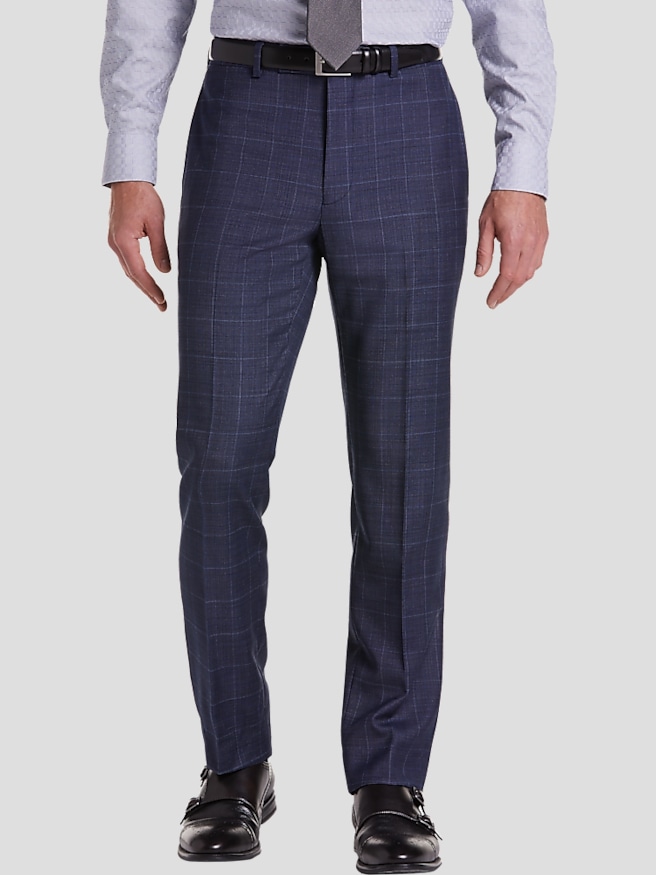
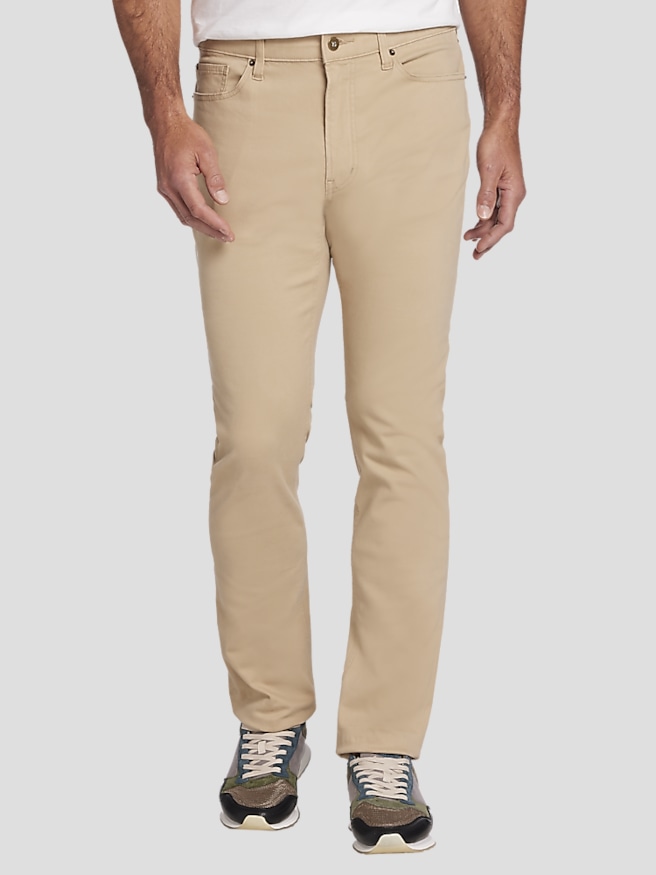
Slim fit stretch pants for men combine a close, tailored silhouette with fabric that gives during everyday movement. The shape generally follows the seat and thighs before narrowing toward the ankle, creating a defined line without the cling associated with a skinny fit. Stretch adds flexibility when sitting through a meeting, stepping onto a train, or leaning down to tie a shoe, while the slim cut keeps the overall appearance neat. Within this category, chino-inspired pants bring a relaxed polish to everyday outfits, and dressier trousers offer a smoother finish suited to offices, presentations, and dinners that call for a jacket. Materials help distinguish those uses. Cotton blended with a small amount of spandex or elastane often has a familiar, soft hand with added give; spandex and elastane are names for the same type of elastic fiber. Polyester blends may contribute wrinkle resistance and help fabric retain its shape, depending on the weave and construction. Wool blends can provide the drape and refined texture associated with dress trousers, with stretch fibers adding flexibility where specified. Mechanical stretch, by contrast, comes from the structure of the fabric rather than necessarily relying on an elastic fiber. Fiber percentages alone do not tell the whole story: the weave, fabric weight, and finishing also affect how pants bend, hang, and recover after wear. A slightly textured twill reads differently from a smooth dress fabric, even when both contain stretch. Shape recovery matters as much as initial softness because pants that return toward their original dimensions are less likely to develop a loose-looking seat or bagged knees. Stretch should support the intended silhouette rather than substitute for a suitable size. For someone who moves between a desk, a commute, and plans after work, that balance of flexibility and structure can make slim stretch trousers a useful foundation for repeat wear.
The appeal of a slim fit depends on proportion, not simply a narrow leg opening. A well-balanced pair sits securely at the waist, lies smoothly across the front, and leaves enough room through the seat and thighs to sit comfortably. Horizontal pulling across the fly, pockets that flare outward, or fabric that grips the calves can indicate that the cut is too close, even if the material stretches. Men with fuller thighs may find that a slim silhouette works best when the upper leg has adequate room and the taper happens more gradually below the knee. The rise also influences comfort: a waistband positioned too low or too high for the wearer can change how the seat fits and how a tucked shirt stays in place. Some constructions include a flexible waistband, which can provide extra ease while seated, but the amount and location of that give vary. A comfortable waist should not require a tightly cinched belt to hold the pants in position. Length completes the shape. A hem that just meets the shoe offers a crisp finish, while a slight break creates a more traditional trouser line; excess fabric pooling at the ankle can obscure the taper. Shoe choice changes that relationship, with loafers, low-profile sneakers, and lace-up dress shoes each occupying a different amount of space beneath the hem. Color and surface texture help set the level of formality. Navy, charcoal, and medium gray work naturally with button-front shirts and sport coats, while khaki and olive lend themselves to polos, knitwear, and more relaxed combinations. For a coordinated silhouette, Slim Fit Stretch Shirts for Men can complement a tapered trouser line without adding excess fabric around the waist. A close-fitting shirt still needs room across the shoulders and chest, just as the pants need ease through the hips. Together, those proportions create a composed outfit that feels appropriate for a client lunch or an evening reservation without looking overly tight or rigid.
Daily usefulness also depends on construction and care. Secure stitching at pocket openings, a neatly finished waistband, and a zipper that lies flat contribute to pants that look tidy through repeated wear. Pocket placement deserves attention because a phone or bulky wallet can interrupt a slim silhouette; lighter pocket contents help preserve the line of the fabric and reduce concentrated strain. For frequent sitting or walking, comfort at the waistband, crotch, and knees is more meaningful than how much fabric can be stretched by hand. Features such as moisture management, stain resistance, or wrinkle resistance should be evaluated only when the garment information specifies them, since stretch fabric does not automatically provide those properties. Care requirements vary just as much. Some cotton and synthetic blends permit machine washing, while certain dress fabrics require professional cleaning or another specific method. The care label remains the best reference for water temperature, drying, and pressing. Where washing is permitted, a gentle cycle and appropriate detergent can help limit unnecessary wear; excessive heat may affect elastic fibers and alter fit. Drying and ironing should follow the garment instructions rather than a single rule for all stretch pants. Prompt attention to spills, avoiding overloaded pockets, and rotating between pairs can also reduce repeated stress on the same areas. Hanging trousers neatly after wear helps maintain their shape, and a proper trouser hanger can support a crease when the fabric and styling call for one. These practical details matter for men building a work wardrobe, traveling for business, or choosing an everyday alternative to denim. They also make fit and care preferences worth considering when pants are intended as a gift for a partner, parent, or graduate preparing for a first office role. Familiar waist and inseam measurements are a useful starting point, but the recipient’s preferred rise and room through the thighs matter too. The most successful slim fit stretch pants bring those details together: a clean outline, movement-friendly fabric, an appropriate finish for the occasion, and maintenance that fits naturally into everyday routines.