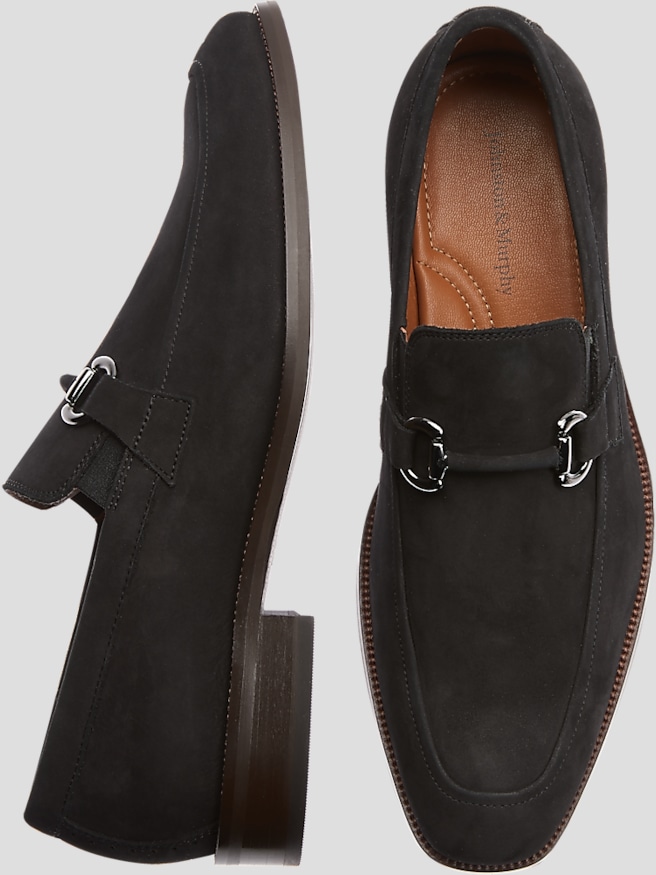
Size 14 loafers bring the ease of a slip-on shoe to outfits that call for a finished, put-together look, from tailored trousers at the office to dark jeans at dinner. The defining shape is straightforward: a low-cut upper, no laces, and a vamp that covers the top of the foot. Within that familiar silhouette, small details make a noticeable difference. Penny loafers have a strap across the vamp with a small opening, creating a clean profile that works with chinos, dress pants, and relaxed tailoring. Tassel loafers add movement and a more decorative finish, while bit loafers use hardware across the upper for a distinct focal point. An apron toe outlines the front of the shoe with stitching, giving the shape definition without the sharper lines of some lace-up dress shoes. For someone wearing size 14, the proportions of these details can matter as much as the style itself. A rounded or almond-shaped toe offers a balanced appearance, while an elongated toe can make the shoe look longer. Neither shape determines comfort on its own; the interior dimensions and the way the upper follows the foot are more important. Smooth black leather has a crisp appearance alongside charcoal or navy trousers, and brown leather brings depth to tan chinos, textured dress pants, and denim. Suede creates a softer visual effect, especially with unstructured jackets and casual pants. A slim sole keeps the overall look understated, whereas a thicker sole gives the shoe more visual weight. The intended setting helps put those details in perspective: a quiet office, a business dinner, and a casual celebration may all suit loafers, but each can call for a different finish. For dressier occasions, polished leather and restrained detailing generally pair more naturally with tailoring than heavily textured uppers or pronounced tread. Loafers can also be a thoughtful gift for someone who appreciates versatile footwear, provided the recipient’s size, width, and preferred fit are known rather than estimated.
Fit is especially important in size 14 loafers because the shoe depends on its shape, rather than adjustable laces, to stay comfortably in place. The size number describes only part of that fit. Width, toe-box depth, heel shape, and room over the instep all influence how a pair feels during a full day of wear. A longer foot is not necessarily a wider foot, so moving up in length is not a reliable substitute for choosing the appropriate width. The toes should have room to rest naturally without pressing against the front or being squeezed from the sides. Across the instep, the upper should feel secure without creating a concentrated band of pressure. A little heel movement can occur with a new, relatively stiff sole, but repeated lifting, rubbing, or the need to grip with the toes suggests the fit deserves another look. Trying loafers with the socks intended for everyday wear gives a more useful impression than trying them barefoot and later adding thick socks. Fine dress socks preserve a streamlined look with trousers, while low-profile socks can create an exposed-ankle appearance without placing the foot directly against the lining. Anyone comparing adjacent sizes can also consider size 15 loafers when measurements indicate that additional length may be needed, keeping width and heel security part of the comparison. Materials contribute their own characteristics to the experience. Leather uppers can gradually conform to the foot, although they should not be expected to gain substantial length or correct an overly tight fit. Suede feels supple and has a textured surface that changes subtly with the direction of its nap. Textile and knit uppers can offer a more relaxed appearance, with flexibility and support varying by construction. Inside the shoe, smooth linings help reduce friction, and cushioning can soften the feel underfoot. Cushioning alone, however, does not establish how supportive a shoe will be. Footbed contour, sole stability, and the relationship between the shoe and the wearer’s foot all matter, particularly for someone moving between a desk, meeting rooms, and stretches of walking.
The construction beneath the upper helps determine where loafers feel most at home and how they hold up to repeated wear. Leather soles are associated with traditional dress footwear and a relatively sleek profile, though smooth surfaces may provide limited grip until worn in. Rubber soles can add flexibility and traction, with performance depending on the compound and tread rather than appearance alone. A substantial lug sole changes both the silhouette and the feel of the shoe, making it worth considering alongside the weight of the trousers and the amount of walking planned. For long days on hard floors, a secure heel and a stable base deserve as much attention as a soft first impression. Durability also depends on details that are easy to overlook: even stitching, neatly finished edges, and a well-attached sole contribute to a shoe’s overall construction. Some loafers can be resoled, but that possibility depends on how they are made and should not be assumed from visible stitching alone. Routine care helps preserve both appearance and shape. Smooth leather benefits from removing surface dust with a soft brush or cloth, followed by leather-appropriate conditioning when needed and polish suited to the finish. Suede calls for its own brush and compatible cleaning products; conventional leather polish can flatten or discolor its textured surface. Textile uppers should be cleaned according to their care instructions rather than treated as automatically machine washable. Letting shoes air out between wears helps the interior dry, while properly sized shoe trees can support the upper and limit deep creasing. A shoehorn is useful with slip-on footwear because it helps protect the heel structure from being crushed during entry. For someone building a practical wardrobe, size 14 loafers offer a familiar bridge between dress shoes and casual footwear. The strongest match is a pair whose shape feels secure, whose materials suit the intended use, and whose styling fits naturally with the clothes already worn most often.