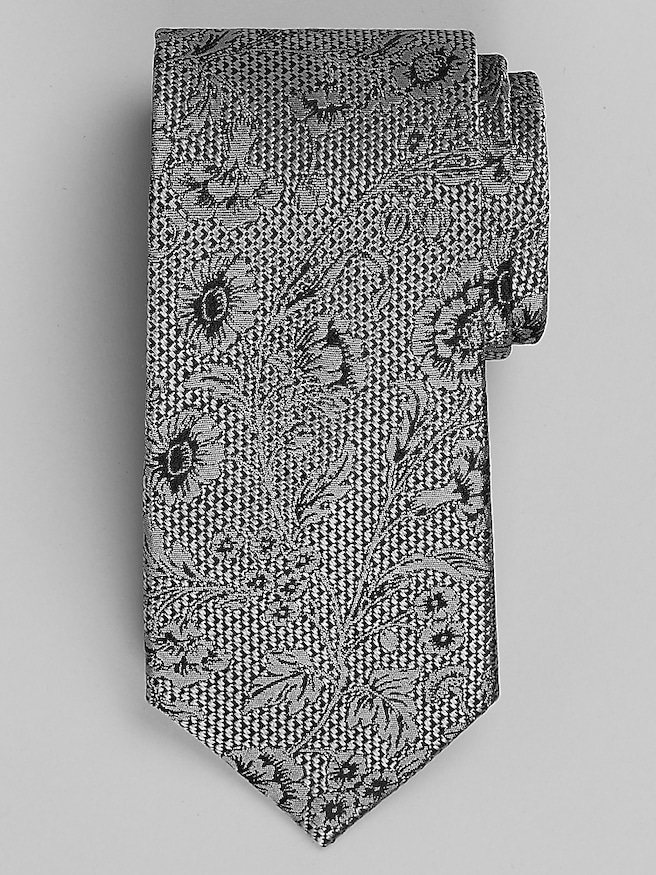
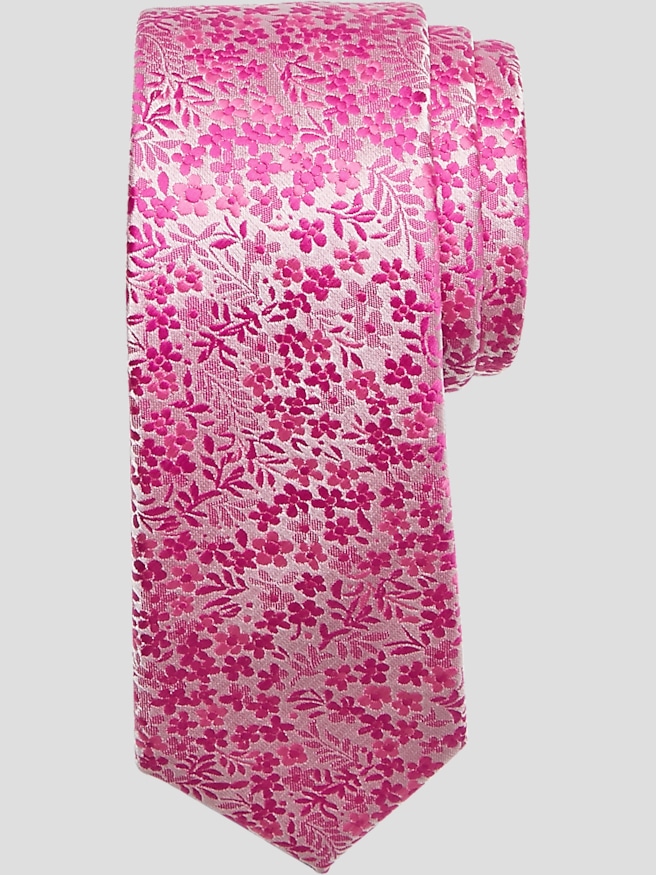
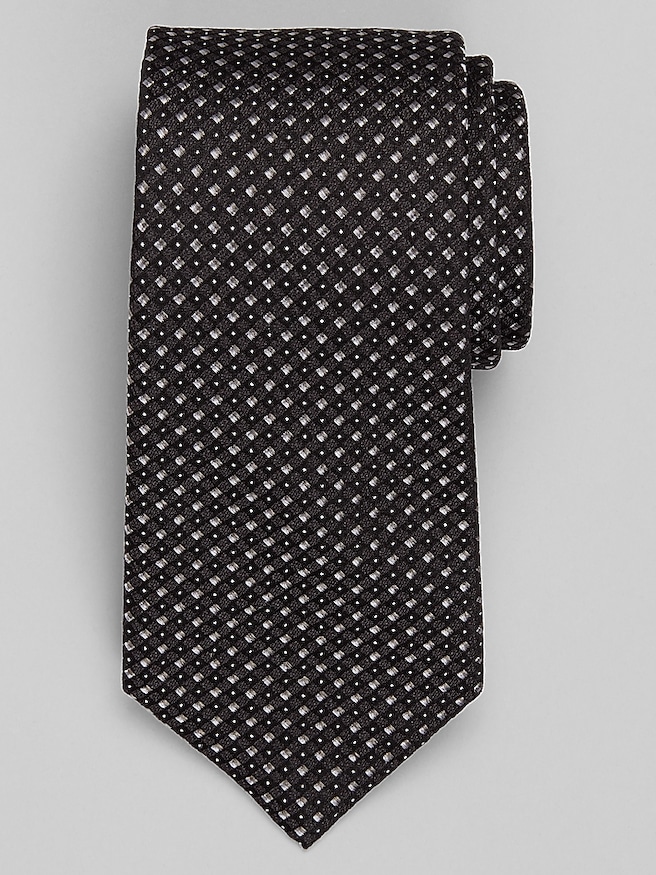
Silver ties for Valentine's Day bring a polished, understated touch to dinner dates, evening celebrations, and dressier gatherings. Their neutral color works with familiar suit shades while offering an alternative to the reds and pinks often associated with the occasion. Silver can look crisp against a white shirt, soften the contrast of a black suit, or add a subtle highlight to navy and charcoal tailoring. The effect depends as much on texture as on color: a pale silver tie with a soft sheen feels different from a dark pewter tie with a woven surface. For a restaurant dinner, a charcoal suit, white shirt, and silver tie create a clean combination that feels considered without looking overly themed. A pale pink shirt brings in a quiet Valentine's Day reference, while a burgundy pocket square adds depth without competing with the tie. Small dots, restrained stripes, and subtle geometric patterns can give silver neckwear more dimension, especially when the rest of the outfit is solid. A patterned shirt generally pairs more comfortably with a quieter tie, allowing the collar and neckwear to remain visually distinct. Scale matters here: a fine shirt stripe and a larger, widely spaced tie pattern tend to look more intentional than two patterns of nearly identical size. Silver also changes character under different lighting. A smooth, reflective surface may appear brighter beneath restaurant lighting, while a textured weave tends to produce a softer highlight. Neither finish needs to look flashy; a balanced combination of fabric, pattern, and tailoring keeps the overall impression refined. For celebrations that begin with a workday and end with a reservation, silver offers a useful middle ground between businesslike restraint and evening polish. It is a color that marks the occasion without requiring a heart motif or an entirely new outfit, making it especially practical for someone who prefers classic clothing with just one distinctive detail. A simple pocket square with a relaxed fold can finish the look without making the accessories appear too closely matched.
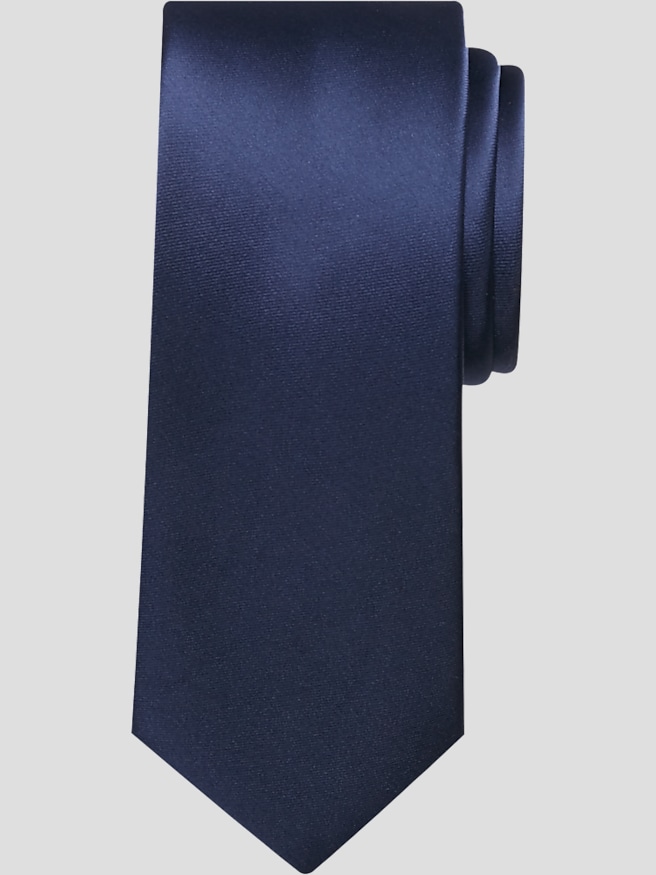
The material and construction of a silver tie influence its drape, texture, and ability to hold a neat knot. Silk is valued for its supple feel and natural luster, though the final appearance also depends on the weave. Satin describes a weave rather than a fiber, so a satin tie may be made from silk or another material; its smooth face typically reflects more light than a textured woven surface. A woven silk tie with a small repeating pattern can offer depth without the pronounced shine of satin. Polyester and blended fabrics can provide a consistent finish and resistance to some everyday wear, but care requirements still depend on the individual fabric and construction. Silver is a color description, not necessarily an indication of metallic fibers, and a convincing silver effect can come from the interplay of light and dark threads. The lining and inner structure also affect how substantial a tie feels and how smoothly it falls. A well-balanced tie should hang cleanly rather than twist, with enough body to form a knot without becoming bulky. Width is another important part of that balance. A narrower tie often sits comfortably alongside slimmer lapels, while a more generous width can complement broader lapels and fuller tailoring. Personal proportions and taste matter more than a rigid rule, but keeping these elements in conversation usually produces a cohesive result. Length deserves equal attention, particularly for taller wearers or anyone who favors a larger knot, since both height and knot size affect where the front blade ends. A finished tie generally looks most balanced when its tip reaches around the waistband. A compact four-in-hand knot can suit a narrower collar opening, while a half-Windsor offers a more symmetrical shape with a moderately spread collar. Thick fabric naturally creates more volume, so a larger knot is not always necessary. These details are especially noticeable in silver because light can emphasize folds and texture. A smooth front, a centered knot, and a small dimple beneath it give the color room to stand out without distracting from the wearer.
Silver neckwear can also make a thoughtful Valentine's Day gift for a partner, spouse, or someone who enjoys dressing for meaningful occasions. It is particularly useful for a recipient whose wardrobe already includes navy or charcoal suits, white dress shirts, and understated accessories. Familiarity with the person's preferred tie width, usual shirt collars, and approach to pattern can make the gift feel personal rather than generic. Someone who wears tailored clothing throughout the workweek may appreciate a subtle woven texture that transitions easily to dinner, while someone who dresses up mainly for celebrations may gravitate toward a smoother finish with a little more presence. A silver tie can continue to earn its place at weddings, anniversary dinners, and other occasions where a suit is appropriate. Dress codes still matter: a silver necktie suits many business and cocktail settings, but a traditional black-tie invitation generally calls for a tuxedo and a black bow tie. For a darker necktie option with a similarly polished character, Black Silk Ties For Valentine's Day offers a contrasting direction for an occasion-ready outfit. Thoughtful care helps preserve either a smooth silver finish or a more textured weave. Untying the knot after wear, rather than pulling the narrow end through a tightened knot, reduces unnecessary strain on the fabric and stitching. Resting the tie between wears and storing it loosely rolled or hanging without sharp folds can help maintain its shape. Food, drinks, and fragrance deserve particular care around light-colored neckwear, where a small mark may be more noticeable. Blotting a spill gently is safer than rubbing it into the surface, and the care label should determine whether professional cleaning is appropriate. Direct heat can flatten texture or leave unwanted shine, so pressing requires caution. With attention to fit, fabric, and care, a silver tie becomes more than an occasion-specific accent: it is a versatile finishing piece that can carry the memory of a Valentine's Day celebration into many well-dressed moments afterward.