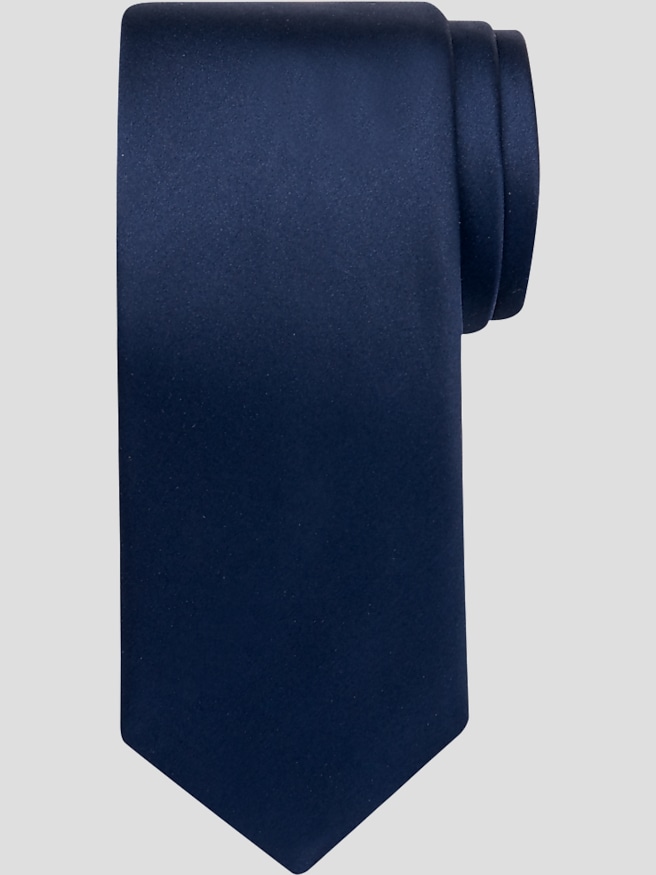
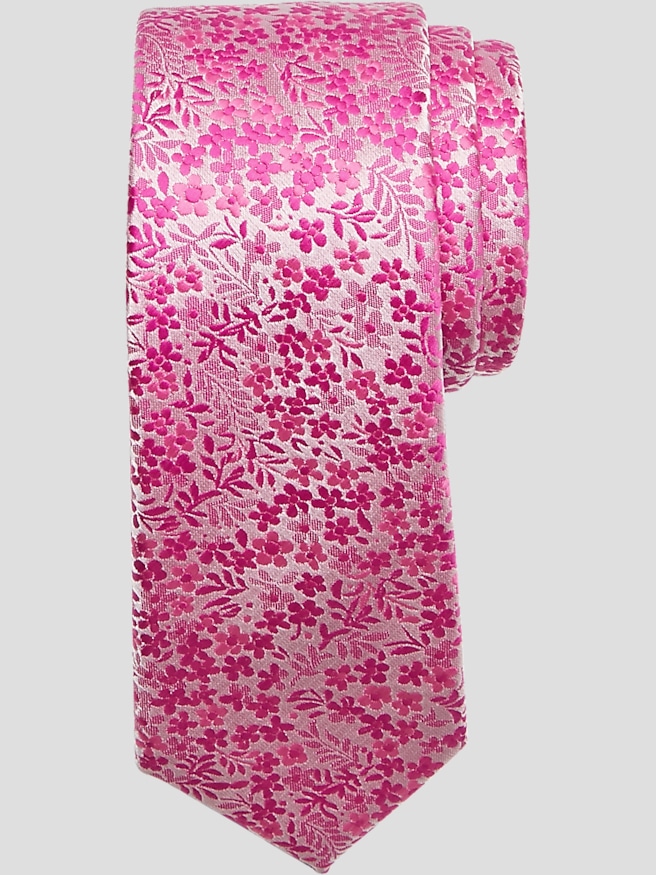
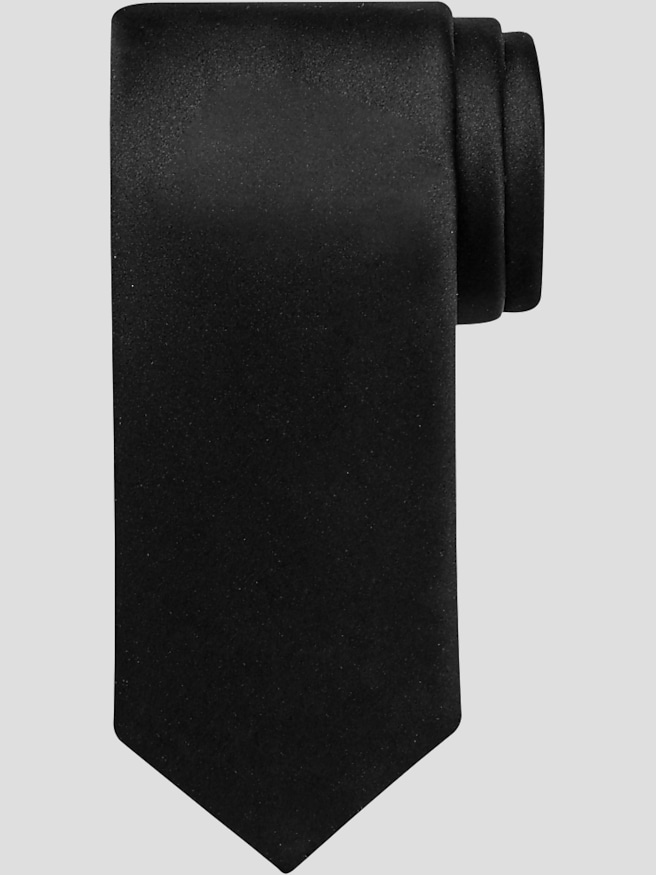
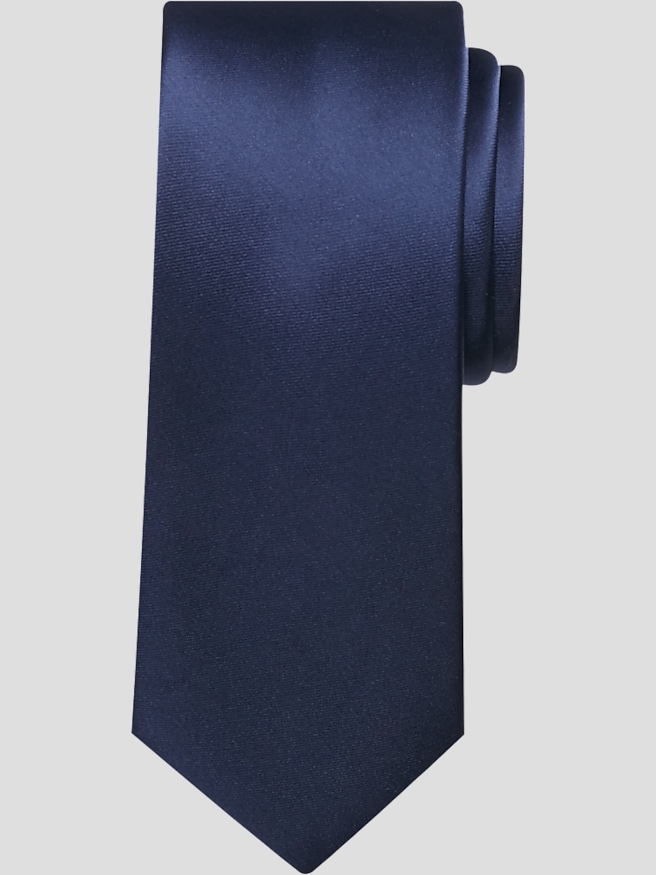
Silk wedding ties bring a polished finish to formalwear while adding just enough texture and personality to a wedding-day look. Woven silk has a natural luster that catches the light softly rather than appearing overly glossy, and its smooth hand helps a properly tied knot hold its shape from the ceremony through the last dance. Depending on the weave, a silk tie may look refined and clean or display a richer, more dimensional surface. Jacquard silk features a pattern woven directly into the fabric, creating raised detail and a subtle shift between matte and sheen. Grenadine and hopsack silk use an open weave to create a fine, tactile texture that looks especially elegant with a classic suit. Micro-patterns, small geometric designs, and restrained woven motifs can add visual interest without competing with the wedding party’s overall style. When choosing among silk wedding ties, consider the suit color, shirt shade, wedding setting, and level of formality. Champagne, silver, soft greige, and pale blue can complement navy or charcoal suits with a romantic, traditional effect, while black and deep charcoal coordinate naturally with evening formalwear. A [black silk tie](https://www.menswearhouse.com/o/black-silk-ties) can offer a particularly sharp finish with a black, charcoal, or midnight suit, especially for a formal ceremony or reception. Burgundy, forest green, and other deep neutrals bring warmth to cooler-weather celebrations, while muted pastels and softly textured neutrals suit daytime ceremonies, garden venues, and outdoor gatherings. The goal is not only to match the wedding colors, but also to create balance: a patterned tie often pairs best with a solid shirt, while a textured solid tie can add depth to a simple white or light-blue shirt.
These ties are designed for more than the groom alone. A coordinated silk tie can help distinguish the groom while giving groomsmen a unified appearance, whether everyone wears the same color or selects complementary shades within a carefully chosen palette. Some wedding parties prefer an exact match for a clean, traditional presentation; others use texture, tone, or a shared color family to let each attendant show a little individuality. Fathers of the couple, ushers, and close family members may also choose silk wedding ties to look connected to the celebration without appearing identical to the wedding party. Guests can use the same considerations in a more flexible way. For an evening wedding, dark navy, burgundy, charcoal, and black tend to look composed beneath a suit or tuxedo jacket. Daytime events allow room for softer colors, subtle patterns, and open-weave textures, particularly when the venue has a relaxed or outdoor feel. During the cooler months, deeper jewel tones and richly textured silk can echo the atmosphere of a candlelit reception or a tailored wool suit. As the weather warms, lighter shades and breathable-looking weaves can provide a fresh appearance without sacrificing formality. Silk wedding ties also make thoughtful gifts for an engaged partner, a best man, a groomsman, or someone building a more versatile formal wardrobe. A classic color and restrained pattern can be worn well beyond the wedding, including at business events, anniversary dinners, holiday celebrations, and other occasions that call for a finished, confident look.
A few practical details can make a noticeable difference in how a wedding tie looks and wears. Start with proportion: the tie should generally suit the lapel width and the wearer’s build, with a standard width offering a timeless appearance for most traditional suits. Length matters as well; after tying, the tip should reach around the middle of the waistband or belt, rather than stopping noticeably above or extending far below it. A four-in-hand knot creates a slightly relaxed, versatile shape, while a half-Windsor provides a fuller, more symmetrical finish that works well with a spread or semi-spread collar. Silk’s smooth surface makes it easy to form a neat knot, but the fabric should still have enough structure to drape cleanly instead of collapsing into a flat, overly shiny strip. Look for a woven or jacquard finish when you want depth and texture, and avoid choosing solely by shine, since inexpensive satin-like surfaces can appear harsh under bright photography or reception lighting. Before the ceremony, hang the tie or lay it flat to release minor creases rather than ironing it directly at high heat. After wearing it, loosen the knot fully and roll the tie gently for short-term storage; long-term storage is best handled by hanging it where it can keep its shape. With thoughtful color selection, a well-balanced pattern, and the right knot, silk wedding ties can bring together the suit, shirt, and wedding palette while remaining useful long after the celebration ends.