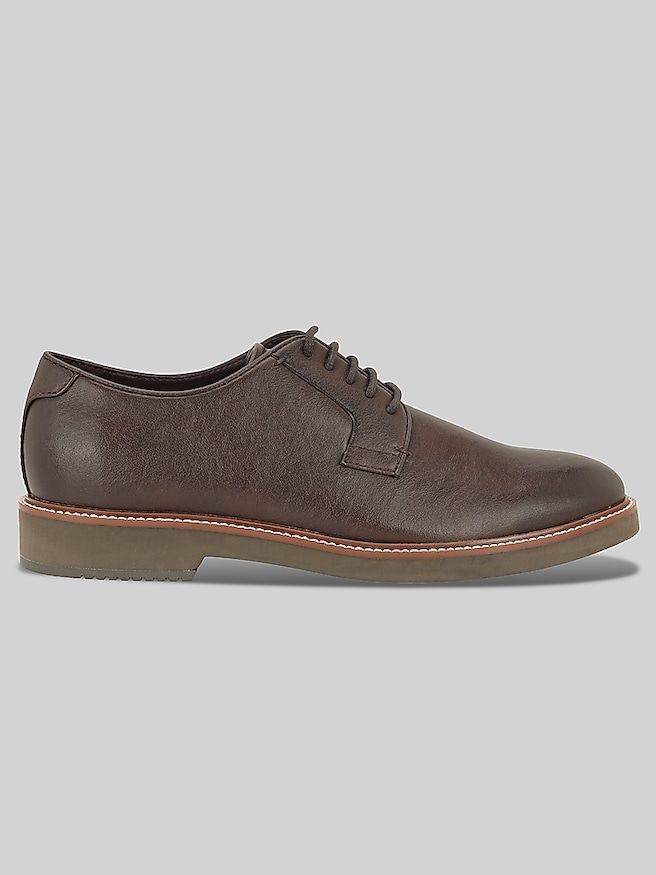
Men’s shoes bring an outfit into focus, whether the setting is an office presentation, a wedding reception, or a dinner that calls for something sharper than everyday casual clothing. Clean lines, balanced proportions, and restrained detailing make footwear easy to coordinate with a wardrobe built around suits, dress pants, chinos, and dark denim. Dress shoes create a polished foundation for tailored clothing, while loafers and streamlined sneakers offer more relaxed ways to finish an outfit without making it feel unfinished. Within lace-up footwear, an Oxford’s closed lacing gives the upper a compact appearance, while a derby’s open lacing creates a slightly less formal look and can allow more adjustment across the instep. Neither construction guarantees a particular fit, but the distinction affects both the silhouette and the way the shoe closes over the foot. Plain-toe designs emphasize an uninterrupted profile, cap toes add a defined line across the front, and decorative perforations introduce texture that can soften an otherwise formal outfit. Loafers have their own range of expression: a sleek leather shape can complement tailored trousers, while a softer, more casual construction feels at home with chinos. Minimal sneakers work well with casual clothing and some relaxed office dress codes, though they are not interchangeable with formal footwear for every occasion. Black shoes create a crisp pairing with charcoal or black tailoring, while shades of brown can bring depth to navy, gray, and earth-toned outfits. Matching the general color and finish of a leather belt helps the overall look feel considered without requiring an exact match. Trouser length matters, too; a hem that falls cleanly over the shoe shows its shape better than fabric pooled around the ankle. For wardrobes centered on tailored clothing, Calvin Klein Dress Shoes For Men offers a focused category to explore for office attire, celebrations, and other occasions where footwear is part of a coordinated look.
Materials and construction influence how shoes look, feel, and hold up through repeated wear. Smooth leather often develops creases and a subtle patina with use, giving a well-maintained pair character rather than keeping it perfectly unchanged. Its feel varies with thickness, finish, lining, and construction, so a leather upper alone does not establish softness or breathability. Suede has a textured surface that lends itself to less formal outfits, while coated and synthetic uppers can provide a consistent finish with care requirements that differ from those of natural leather. Textile panels can make casual footwear feel lighter, although comfort still depends on the complete shoe rather than one material. Inside, smooth linings, a supportive footbed, and seams positioned away from pressure points can make a noticeable difference over a full day. Cushioning may soften each step, but it cannot compensate for a shoe that is too short, too narrow, or loose through the heel. A comfortable fit holds the heel securely, leaves room for the toes to move without rubbing, and avoids pressure across the widest part of the foot. Some movement is normal in certain slip-on constructions, but repeated slipping or gripping with the toes suggests a mismatch. The socks intended for regular wear belong in the fit equation: a thin dress sock and a thicker casual sock can change how the same shoe feels. Foot length, width, instep height, and differences between the two feet all matter, and familiar sizing from another pair is a reference rather than a guarantee. Shoes should feel comfortable from the beginning; normal softening with wear is different from relying on a tight fit to stretch substantially. Underfoot, outsole material affects flexibility, weight, and grip. Rubber can offer useful traction and cushioning, while leather soles have a traditional dress appearance and may feel different on smooth floors. Visible stitching, secure sole attachment, and even finishing are useful construction details, though long-term durability also depends on frequency of wear, walking surfaces, and maintenance. For someone moving between a desk, meetings, and a walk to lunch, secure fit and manageable weight can be as important as a polished upper.
Everyday care helps preserve both the appearance and the structure of men’s footwear. Smooth leather generally benefits from surface cleaning with a soft cloth, followed by a compatible conditioner or polish when needed; the maker’s care directions remain the best reference for a particular finish. Polish can restore color and shine, but products intended for smooth leather may alter suede, nubuck, coated surfaces, or textiles. Suede usually calls for a dedicated brush and material-appropriate cleaning products that lift dirt without flattening the nap. Textile and synthetic shoes also benefit from cleaners suited to their construction, and machine washing should not be assumed safe simply because an upper looks casual. After wear, allowing shoes to air out helps release moisture from the interior. Cedar shoe trees can help leather footwear retain its shape, while storage away from direct heat and strong sunlight reduces unnecessary stress on materials. Alternating pairs gives interiors time to dry naturally, and attending to worn heel edges, loose stitching, or damaged laces can prevent small issues from affecting comfort and appearance. Those practical details matter whether shoes are worn for daily business attire or reserved for milestone occasions. A polished lace-up can serve a graduate attending interviews, a professional preparing for client meetings, or a wedding guest coordinating a suit. A versatile loafer may suit someone whose day moves from a relaxed office to dinner, while a clean sneaker can support a casual wardrobe built around jeans and unstructured layers. Footwear can also be a thoughtful gift for a father, brother, partner, or friend when size, width, and personal style are well understood. The recipient’s favorite pair offers clues about preferred shape and fit, but sizing can vary between constructions. The most useful choice reflects the wearer’s actual routine: enough refinement for the intended setting, enough comfort for the time spent on foot, and materials that fit the level of care the wearer is comfortable maintaining.