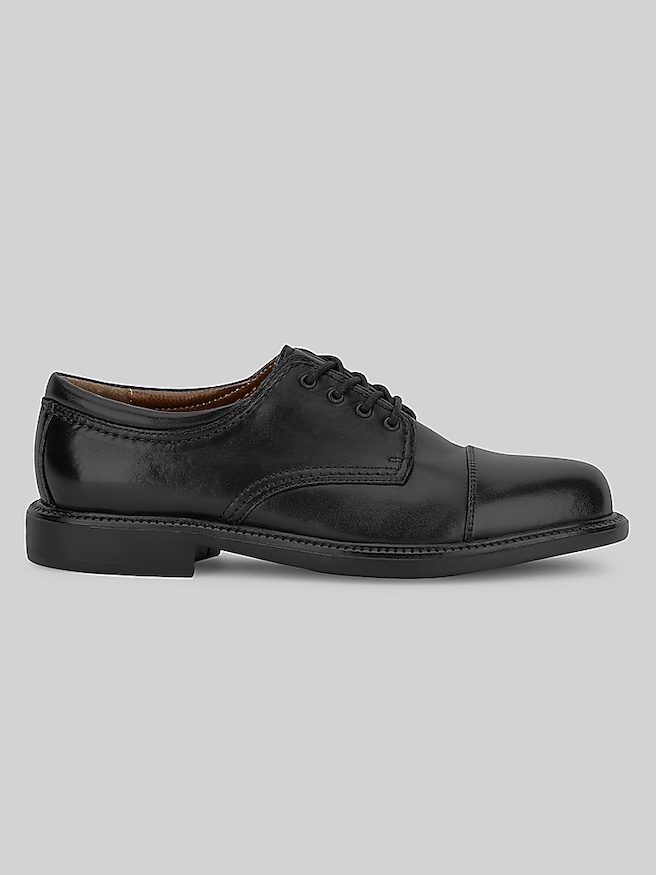
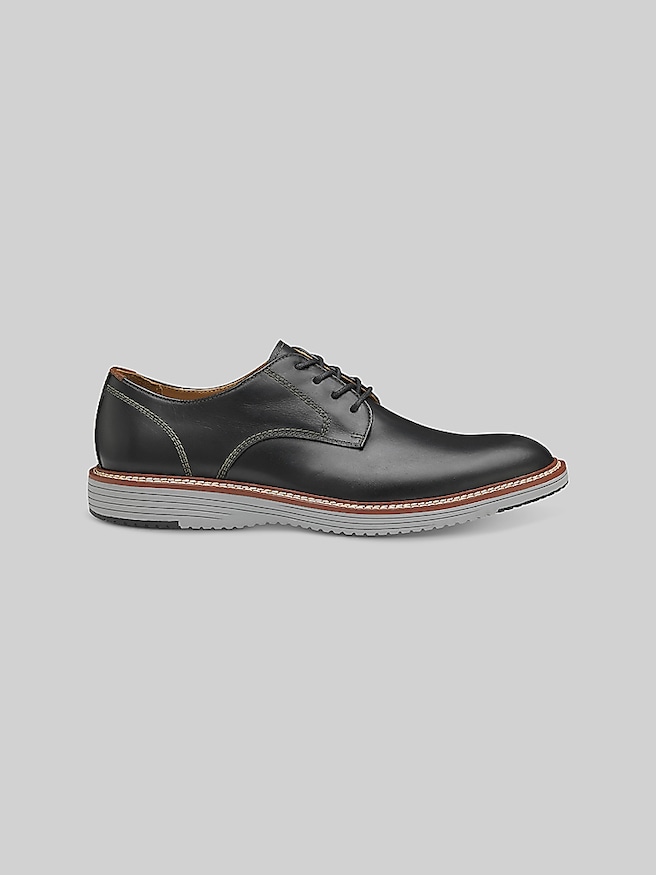
Shoes for groomsmen bring the wedding party’s outfits together without requiring every person to wear an identical pair. The most cohesive choices share a color family, a similar finish, and the same level of formality as the suits or tuxedos. Matching those details matters more than matching every seam or lace hole, especially when several people stand together for ceremony photos. Black leather dress shoes create a clean foundation for black, charcoal, and many navy ensembles, while brown leather can complement navy, medium gray, and earth-toned suits when the dress code allows. Within either color family, consistency helps: dark chocolate and light tan can look noticeably different in a group photograph, even though both are brown. A shared description such as dark brown smooth leather is more useful than a broad color name alone. Oxfords have closed lacing and a neat profile that works particularly well with tailored wedding attire. Plain-toe and cap-toe styles keep the overall effect restrained, while decorative perforations introduce more visual detail. Derby shoes have open lacing and can suit weddings with a less formal dress code. Loafers offer another option for relaxed tailoring, provided their shape and finish still feel appropriate beside the rest of the wedding party. For a traditional tuxedo, black patent leather or highly polished black calfskin offers a suitably formal finish. The groom can wear a distinctive detail while the groomsmen stay coordinated, allowing the outfits to feel connected without making every look interchangeable. Trouser length also affects the result: a clean hem keeps the shoe visible without excess fabric pooling over the laces. When belts are part of the outfit, coordinating their leather color with the footwear adds another quiet point of consistency. The broader range of Men's Wedding Shoes provides context for balancing the wedding’s dress code with the style of the entire party.
Comfort deserves as much attention as appearance because groomsmen may spend hours standing, walking, greeting guests, and dancing. A shoe that feels tolerable for a few minutes can become distracting before the reception begins. Proper fit means enough room for the toes to rest naturally, a secure hold through the middle of the foot, and a heel that does not slide excessively with each step. Toes should not press against the front, and the upper should not pinch across the widest part of the foot. A slightly different size or width may work better than expecting tight leather to stretch into a comfortable fit. Lace-up designs allow some adjustment across the instep, although the shoe’s underlying shape still needs to suit the foot. Trying dress shoes with the socks intended for the wedding gives a more realistic sense of fit, particularly when comparing thin dress socks with a more cushioned pair. Anyone who uses an orthotic may also need enough interior depth and, where the construction permits, a removable footbed. Material and construction influence how a shoe feels throughout the celebration. Smooth leather offers a traditional appearance and can soften with wear, while suede has a textured finish that generally pairs more naturally with less formal suits. Patent leather creates a glossy surface associated with formal evening attire. Leather linings can help manage moisture, cushioned footbeds can ease pressure, and a stable heel can make long periods on the feet more manageable. None of those features makes a poor fit comfortable, but they can support a well-fitting shoe. Soles deserve attention, too. Leather soles offer a traditional dress-shoe appearance, while rubber soles or discreet rubber inserts can provide useful traction. A walk from the ceremony to a courtyard reception, a polished indoor floor, or a few flights of stairs makes secure footing especially valuable. Wearing the shoes for short periods before the wedding helps reveal pressure points early, rather than during the processional.
Durability and care help groomsmen’s dress shoes remain useful well beyond a single celebration. Smooth leather benefits from regular dusting, appropriate conditioning, and polish suited to its color and finish. A soft brush can lift surface dirt from seams and around the sole edge before polishing, while a clean cloth helps remove light marks after wear. Suede needs its own brush and compatible care products rather than ordinary leather polish; keeping its nap even preserves the texture that gives it character. Patent finishes call for gentle cleaning with a soft cloth and products intended for that surface, since abrasive treatment can damage the shine. Care instructions matter because similar-looking shoes may use different materials or coatings. After a long reception, allowing footwear to air out before putting it away helps the interior dry naturally. Shoe trees can support the shape, and a shoehorn reduces strain on the heel counter when getting dressed. Protective bags or a clean shoe compartment also keep polished footwear from rubbing against other belongings on the trip to the venue. For frequent wear, repairable construction may offer an advantage, though resoling depends on how the shoe is made and its condition. A simple silhouette can earn a place in a wardrobe after the wedding, pairing with tailoring for business events, formal dinners, milestone celebrations, and future ceremonies. That versatility makes dress shoes a thoughtful groomsman gift when the recipient’s size, width, and style preferences are known. A coordinated gift need not mean forcing every foot into the same shape; matching color and formality can leave room for individual fit needs. For a wedding party with varied tastes, understated details create the strongest common ground. Clean leather, well-kept soles, tidy laces, and comfortable proportions give each groomsman a finished appearance while keeping attention on the celebration. The result is footwear that looks considered in the group portrait and still feels practical when the jackets come off and the dancing begins.