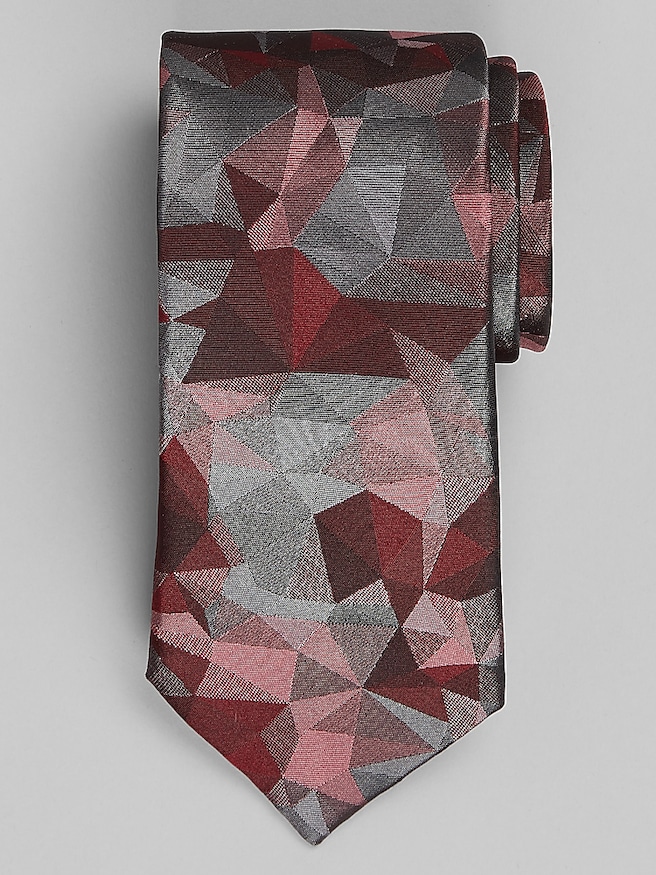
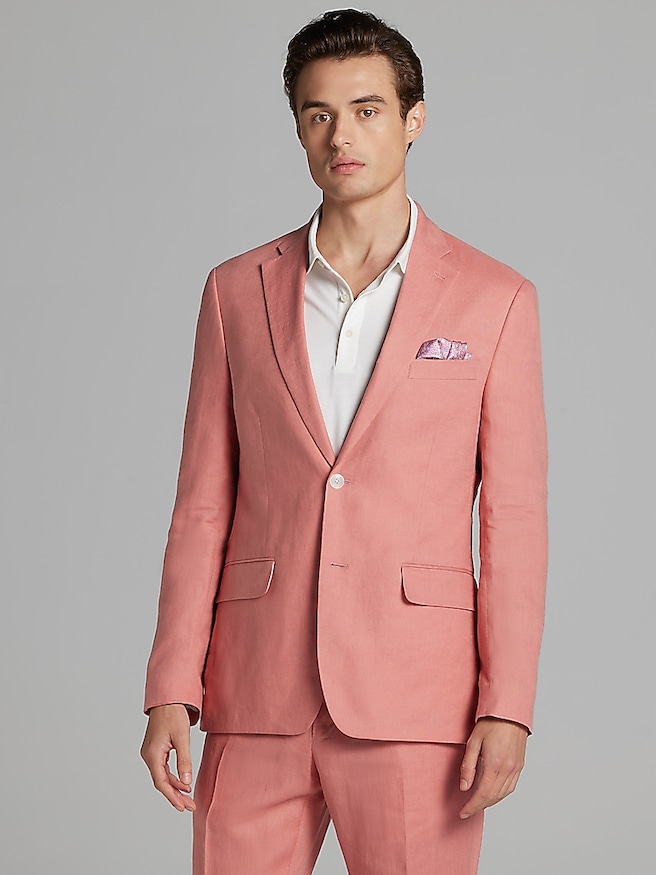
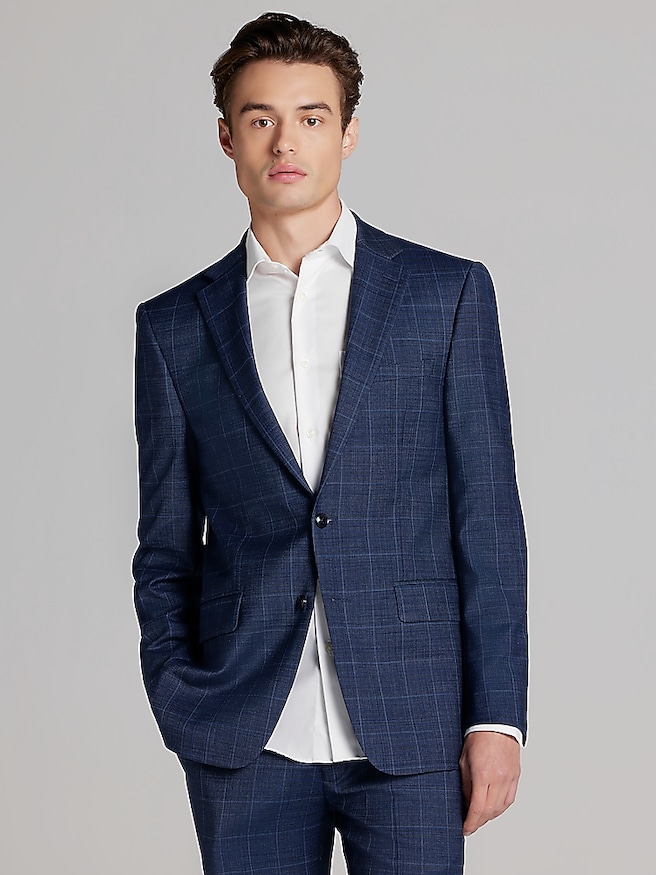
Shiny suits for Valentine’s Day make sense when the setting gives the fabric a chance to catch the light. A restrained sheen can look almost matte across a candlelit table, then show up along the lapel when the wearer stands. A glossier finish has more presence at a Valentine’s Day party, on a dance floor, or in a room where flash photos are part of the night. The distinction matters more than the color alone. Midnight blue with a soft luster can feel understated at a restaurant, while the same shade with a slick finish reads more like party attire. Burgundy brings in a Valentine’s Day note without relying on a bright red, and charcoal gives the light something to play against without making shine the only thing anyone notices. Much of that effect comes down to fabric. Smooth worsted wool and some wool blends can have a quiet luster, while a satin weave, which can be made with several kinds of fibers, tends to reflect light more directly. Velvet has a softer, directional glow: it can look dark from across the room and take on more depth as the wearer moves. Even texture that looks nearly flat in a close-up can be lively under overhead lighting, so the size and intensity of the reflection are worth noticing as much as the shade. For a dinner reservation followed by drinks somewhere livelier, a low sheen can carry from one setting to the next without looking out of place in either. An evening built around dancing or a festive party gives a brighter suit more room to shine. The Suit For Valentine's Day collection offers a broader look at dressing for the occasion when the venue or dress code matters more than the finish.
Fit matters especially with a reflective fabric because the light picks up lines that a matte weave tends to hide. The jacket should follow the shoulder without a dent below the seam, and the lapels should lie flat when it’s buttoned. A bright X of creases across the front usually means the jacket is pulling at the waist, not that the fabric needs a press. Trousers should have room through the seat and thigh so the cloth falls cleanly after sitting, rather than catching high on the leg. Trying a suit while seated is especially useful for a long dinner or a show; a fit that looks neat while standing can still feel tight through the hips at a table. If dancing is on the agenda, ease through the upper back is just as important as a tidy sleeve. Fabric weight plays a role here, too. A cloth with some body can hold a clean line, while a lighter, smoother fabric may show folds more readily. For repeated wear, look at stress points such as pocket openings and trouser seams, where sturdy stitching and a fit that doesn’t strain the fabric matter more than shine. Styling can stay uncomplicated once the fit and finish are settled. A crisp white shirt gives a dark suit a clear contrast, while a tonal shirt lets the shine do more of the work. A matte tie can give the eye a place to rest if the jacket is already catching plenty of light. Color also changes under the lights that make these suits distinctive. A deep burgundy that looks muted in daylight may warm up under amber lamps, and a dark blue can read close to black in a dim room. Seeing the full outfit under more than one light helps when the evening starts at a quiet table and ends somewhere brighter.
Care depends on how the suit gets its sheen. A smooth wool blend may need little more than airing out after an evening of wear, while a glossy weave or a fabric with a raised pile can be more sensitive to rubbing and heat. The care label is the best starting point before spot cleaning or pressing, since the face fabric, lining, and jacket construction may not all respond the same way. Blotting a splash rather than scrubbing it can help avoid disturbing the surface, but a stubborn stain is better left to a cleaner familiar with tailored clothing. If the suit is dry-clean-only, point out any spots so the cleaner knows where to look. Between wears, a broad, shaped hanger supports the shoulders, and a breathable garment bag can keep dust off without crushing the jacket against neighboring clothes. Giving trousers room to hang also helps prevent hard folds that show clearly on a lustrous finish. A shiny suit can make a thoughtful Valentine’s Day gift for a partner who enjoys dressing up for a night out, especially when there’s already a favorite suit to use as a reference for fit. A labeled size is only a starting point: shoulder width, jacket length, and room through the waist can vary with the cut. Leaving time for a fitting before the occasion is more useful than guessing how close a slim silhouette should sit. For someone who usually wears matte tailoring, a muted luster in a familiar shade can feel special without taking the outfit too far from what already works. Someone who likes expressive evening clothes may get more use from a finish that catches the light across the room. A suit chosen with both fit and the wearer’s usual plans in mind can go well beyond Valentine’s Day, turning up again at milestone dinners, cocktail parties, or any celebration where a plain dark suit would feel a little too quiet.