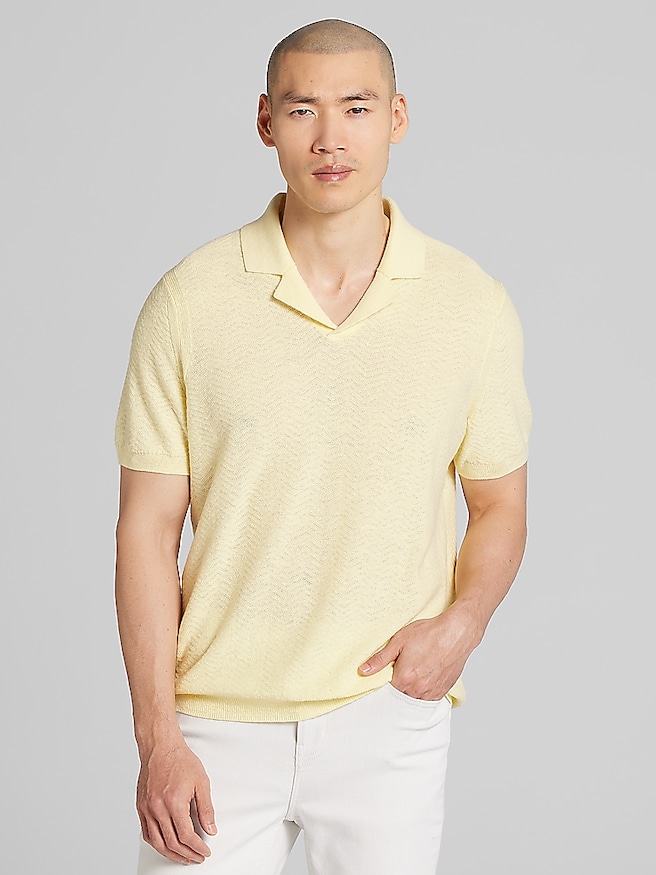
Seasonal sweaters are knit layers that add warmth, texture, and personality to fall and winter outfits, from understated pullovers for the office to patterned styles for holiday gatherings. Their usefulness comes from the balance between insulation and easy layering: a fine-gauge sweater can sit neatly beneath a jacket, while a substantial cable knit provides a more relaxed layer over a shirt. Crewneck sweaters create a clean frame around the neckline and work well with a visible shirt collar or a simple T-shirt underneath. V-neck sweaters leave more space for a collared shirt and tie, making them a practical choice when an outfit needs to look polished without feeling overly formal. Cardigans offer an adjustable front opening, helpful when moving between a chilly walk and a heated room, while quarter-zip styles let the neckline sit open or close higher for added coverage. The visual character of a sweater matters just as much as its shape. Ribbing adds subtle definition, cable patterns create depth, and jacquard designs bring multiple colors into the knit itself. Snowflake motifs and traditional geometric patterns can give holiday outfits a festive note without requiring an elaborate look. Solid navy, charcoal, cream, and burgundy are easy to coordinate with existing shirts and trousers; richer greens and warm earth tones bring a seasonal feel through color rather than decoration. For a family dinner, a textured pullover with chinos feels considered but comfortable. For a casual office gathering, a smooth knit worn over an Oxford shirt provides a tidy alternative to a jacket. A sweater intended for an outdoor outing may need room for a base layer, while one worn mostly indoors can be lighter and closer fitting. Choosing between those uses helps distinguish a sweater that simply looks substantial from one that provides the right amount of warmth for the setting.
Fiber content and knit construction shape how seasonal sweaters feel, wear, and respond to care. Cotton sweaters tend to feel familiar against the skin and provide breathable warmth, making them useful for indoor settings and fall days that call for a light layer. Cotton can also absorb moisture and take time to dry, so it is less suited to situations where staying warm while damp is important. Wool provides insulation while helping manage moisture vapor, and its natural resilience can help a knit recover its shape between wears. Fine merino wool often has a smoother feel than coarser wool, though sensitivity varies from person to person. Cashmere is known for a soft hand and warmth without excessive weight; it benefits from gentle handling and time to rest between wears. Acrylic and other synthetic fibers can contribute softness, color retention, and easier maintenance, depending on the construction. Blends combine characteristics rather than guaranteeing one result: a cotton blend may have added stretch, while a wool blend may balance insulation with improved resistance to everyday wear. The label gives the clearest picture of the fibers involved. Knit density also matters. A tightly constructed sweater can feel more protective than an open, loosely knitted style, even when both have a similar weight. Ribbed cuffs and hems should retain enough elasticity to sit comfortably without stretching out quickly. Pilling can occur when fibers rub against a coat lining, backpack strap, or chair, and it does not automatically mean a sweater is poorly made. Careful use of a sweater comb or fabric shaver, when appropriate for the fabric, can help maintain its appearance. Care instructions should always determine whether a sweater is washed or professionally cleaned. For washable knits, gentle handling and drying flat when directed help reduce distortion. Supporting the garment while it is wet protects shoulders and sleeves from stretching under their own weight. Folding sweaters for storage, rather than leaving heavier knits on hangers, helps preserve their shape. Clean, fully dry storage also protects the fabric between wears.
A good fit gives a seasonal sweater enough room to move without allowing excess fabric to bunch beneath outerwear. With set-in sleeves, the shoulder seam generally sits near the edge of the shoulder; intentionally relaxed designs may place it lower. Sleeves should allow comfortable movement at the elbow, with cuffs resting near the wrist rather than covering the hand. The body should fall smoothly when sitting or reaching, and the hem should provide adequate coverage without gathering into a thick band above the trousers. Trying the intended shirt underneath gives a more realistic sense of fit than judging the sweater alone. A fine knit over a dress shirt needs room through the chest and upper arms so the shirt does not pull or wrinkle excessively. A thicker pullover worn with a casual base layer can have a little more ease, particularly if comfort is the priority for travel or an afternoon with family. When added insulation is the priority, Warm Sweaters For Winter brings the focus to cold-weather layering. The complete outfit still matters: a substantial sweater needs a coat with enough space through the sleeves and torso, while a slimmer knit can work beneath a closer-fitting jacket. Dark denim and boots give textured sweaters a straightforward weekend setting; tailored trousers and leather shoes make smoother knits feel more refined. Holiday patterns are often most effective when the rest of the outfit stays simple, allowing the sweater to supply the visual interest. Seasonal sweaters also make thoughtful gifts for a father, brother, partner, friend, or colleague whose preferences are familiar. A recipient who wears collared shirts regularly may appreciate a V-neck or cardigan, while someone who favors casual outfits may get more use from a crewneck. Familiar colors, preferred fabric feel, and realistic care habits are stronger starting points than an unfamiliar pattern. The most useful sweater is one that suits the wearer’s routine, feels comfortable for several hours, and holds its shape through repeated use.