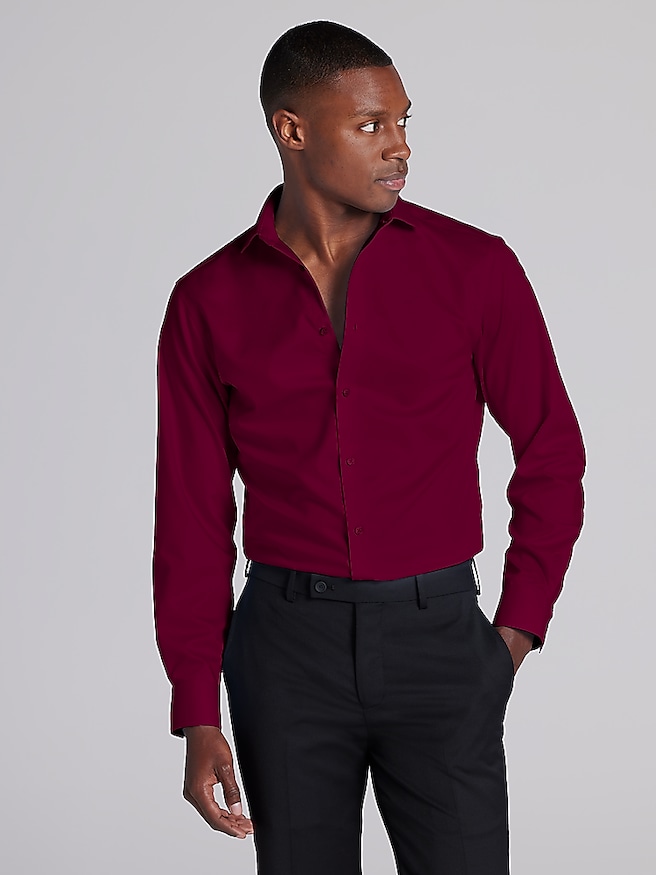
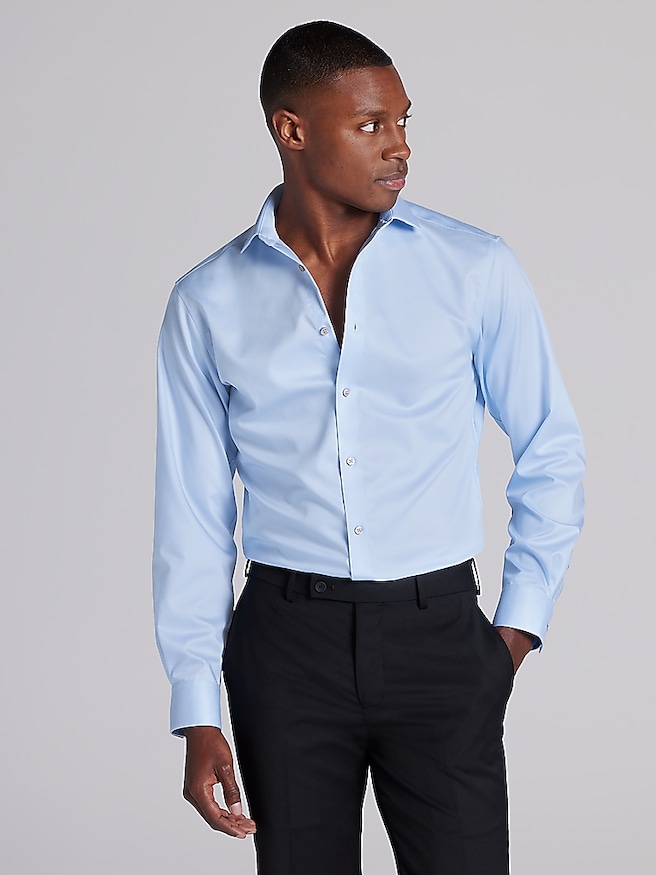
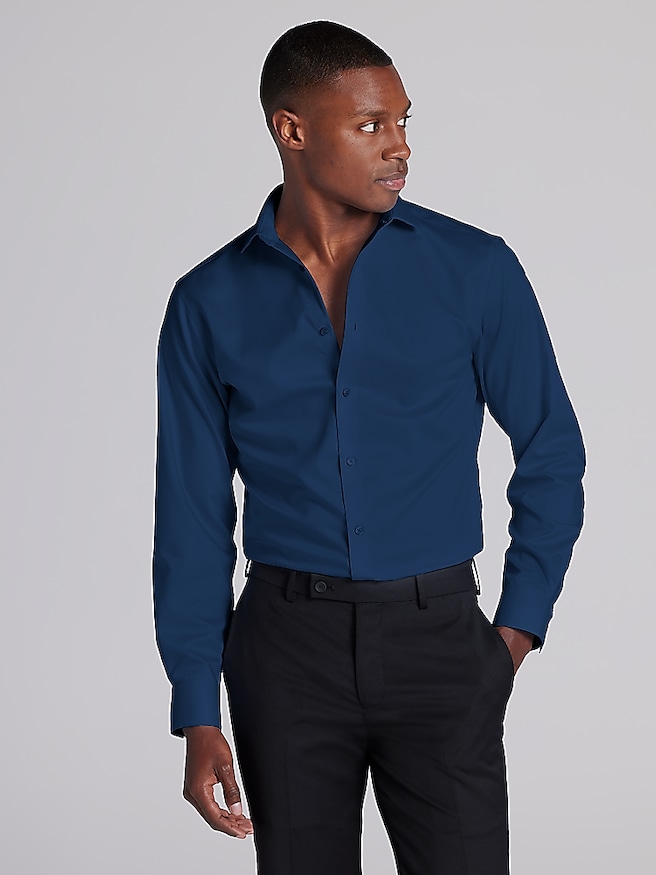
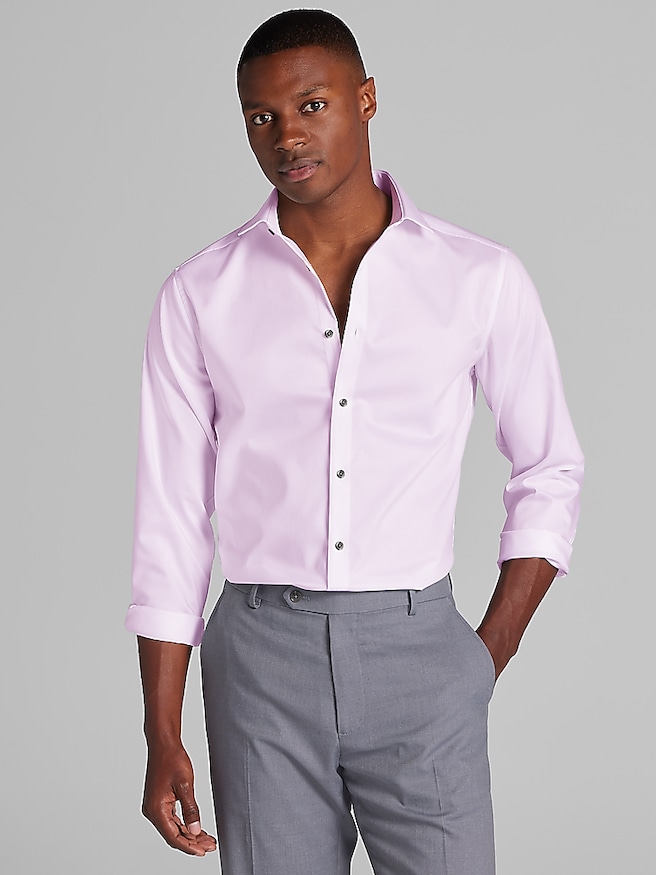
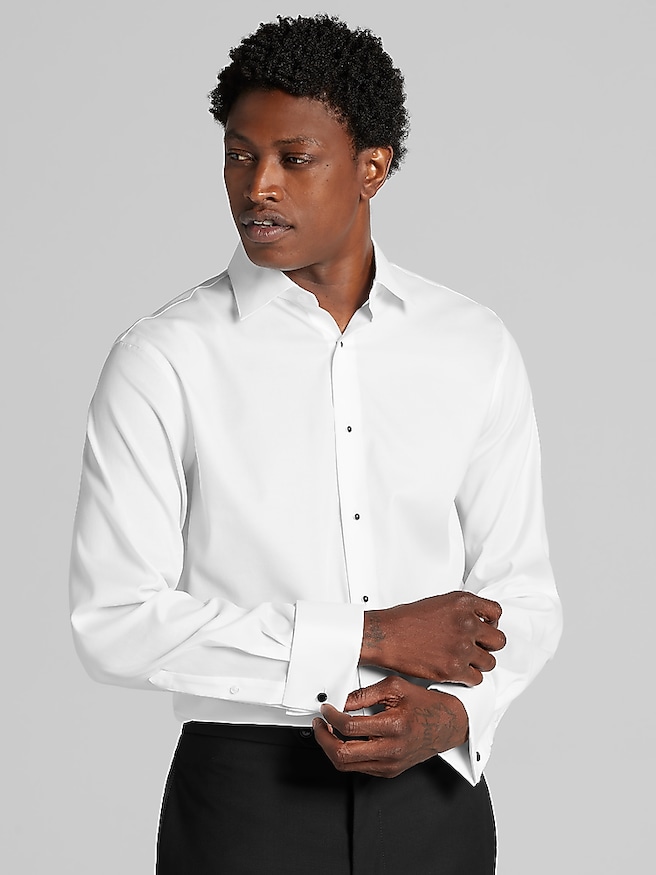
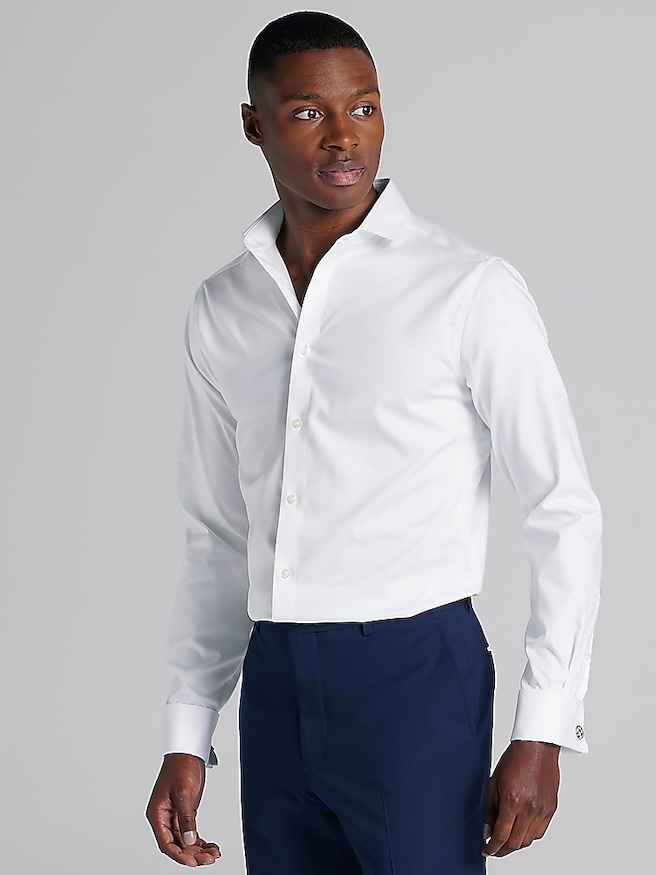
Satin-finish evening dress shirts bring a smooth surface and a subtle play of light to formal clothing, adding depth beneath a jacket without relying on a bold pattern. Their defining feature is the fabric’s sheen, which can range from a soft glow to a more noticeable luster. Satin describes a weave rather than a single fiber, and a satin-like finish can also come from other fabric constructions or finishing techniques. That distinction matters: shirts with a similar appearance may feel quite distinct against the skin, hold their shape differently, or call for separate care methods. Depending on the fabric, silk can offer a fluid feel, cotton can bring breathable structure, and synthetic fibers can contribute smoothness and shape retention. Blends may balance several of these qualities, while added stretch can allow easier movement through the shoulders and arms. The fiber label and fabric description give a more useful picture of performance than shine alone. For evening weddings, formal dinners, charity galas, and milestone celebrations, the appeal is a shirt that looks considered when the jacket is on and remains polished when it comes off. Under soft ballroom lighting, a restrained satin finish catches highlights along the collar and cuffs; in flash photography, a brighter finish becomes a stronger part of the outfit. White and ivory create a crisp contrast with dark tailoring, while black and deeper colors can produce a tonal look at events with a more flexible dress code. Sheen by itself does not make a shirt appropriate for every formal occasion. Traditional black-tie clothing generally calls for a white evening shirt with suitable collar, front, and cuff details. The broader category of Men's Tuxedo Shirts provides a useful point of comparison for those features. Satin-finish shirts also suit performers, hosts, and guests who want a dressier surface for an evening setting, provided the fabric’s brightness fits the occasion rather than competing with it.
Fit gives a satin-finish evening dress shirt much of its character, because a light-catching surface makes folds, pulling, and excess fabric more visible. A clean fit follows the torso without stretching across the chest or forming tight lines between the buttons. The shoulder seams should sit close to the natural shoulder edge, and the sleeves should allow comfortable movement when reaching across a dinner table or greeting another guest. A fitted cut can sit neatly beneath a close-cut jacket, while a roomier cut may feel better through a long seated dinner or an evening of dancing. Neither should require constant adjustment. With the collar fastened, there should be enough space to breathe and turn the head comfortably without a loose gap that weakens the neckline. Cuffs should rest around the wrist rather than slipping over the hand, with a small amount of shirt cuff visible beyond the jacket sleeve when the arms hang naturally. Shirt length matters as well: a hem intended for tucking should stay secure through sitting, standing, and movement, especially with formal trousers. Collar and cuff construction help determine how the shirt works with the rest of the outfit. A structured turndown collar frames a tie or bow tie, while French cuffs create space for cufflinks and add a more formal finish. Barrel cuffs offer a simpler closure for dressy occasions that do not require traditional evening details. A covered placket keeps the front visually quiet; a front designed for studs serves a separate purpose and should be paired with the appropriate fasteners. Because satin already contributes reflected light, matte wool trousers, understated neckwear, and a neatly folded pocket square can keep the overall effect balanced. A satin lapel can sit comfortably alongside a gently lustrous shirt, but several highly reflective surfaces may compete in photographs. During the cooler months, the smooth fabric also works as a refined layer beneath a dinner jacket or tailored evening coat. For a wedding reception that moves from an outdoor arrival to a warm dance floor, breathability, ease of movement, and a comfortable collar matter as much as the first impression.
The lasting appeal of a satin-finish evening dress shirt depends on both construction and care. A smooth, even surface, secure buttons, tidy seams, and a collar that sits cleanly all contribute to a polished appearance over repeated wear. Durability varies with the fibers, weave density, and finishing process; a heavier fabric is not automatically stronger, and a softer fabric is not automatically delicate. Satin weaves have longer exposed yarns on the surface, which create their characteristic luster but can also catch on rough edges. A watch clasp, textured belt, or sharp cufflink backing deserves attention when it rests against the fabric. Friction from a shoulder bag or a rough chair back can also affect a smooth finish over time. Care should always follow the garment label rather than a blanket rule for all satin shirts. Some fabrics permit gentle washing, while others require professional cleaning, and washing temperature, drying method, and pressing limits may vary even among shirts that look alike. Where washing is permitted, gentle handling and separation from abrasive fabrics can help protect the surface. Where ironing is permitted, the recommended heat setting, pressing from the reverse, and a suitable pressing cloth can reduce the chance of marks or unwanted changes in sheen. Steam is not suitable for every fabric or finish, so the label remains the starting point. Prompt attention to collar soil and spills can help prevent stains from setting, but aggressive rubbing may disturb the face of the fabric. Between occasions, a clean shirt stored on a smooth, supportive hanger has space to hang without being crushed against neighboring clothing. For travel to a wedding or formal gathering, a garment bag and careful packing can limit friction and deep creasing, though the shirt may still need label-appropriate finishing after arrival. As a gift for someone who regularly attends formal functions, performs onstage, or enjoys evening tailoring, this category works best when the recipient’s neck size, sleeve length, preferred fit, and care habits are known. The most useful choice combines the desired sheen with practical comfort: a collar that stays composed through dinner, sleeves that move freely, and fabric that suits the wearer’s routine beyond a single celebration.