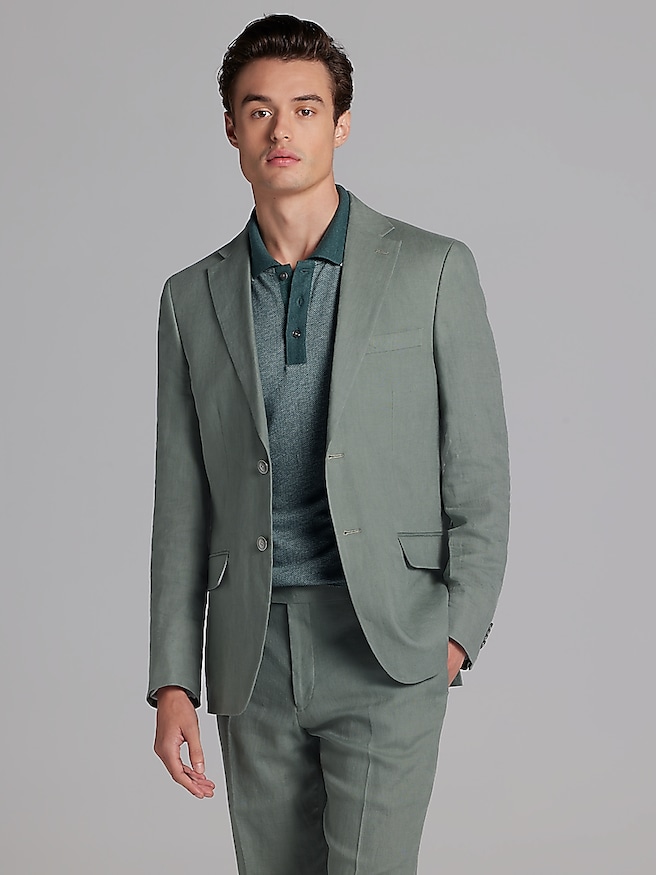
Sage green pants bring a soft, muted color to a wardrobe without the intensity of brighter greens. Their gray undertone makes them easy to pair with familiar neutrals, including white, cream, beige, navy, charcoal, and black. The result is a distinctive look that still feels understated enough for everyday wear. Men’s sage green pants can range from casual chinos with a matte finish to tailored trousers with a smooth surface and a defined crease; the fabric and construction influence how dressed up they appear just as much as the color. A white Oxford shirt and brown loafers give sage chinos a clean, approachable look for a casual office, while a cream knit polo creates a softer combination for dinner or a family gathering. For a sharper contrast, a navy blazer adds structure without competing with the green. Black can work well, too, especially when repeated in a shirt and shoes to make the outfit feel intentional. Tan, cognac, and dark brown leather footwear complement sage’s earthy character, while clean white sneakers suit more relaxed settings. When coordinating colors, pay attention to the actual shade of the pants: some sage fabrics lean toward silvery gray, while others have a warmer, slightly olive cast. A subtle stripe or small check in a shirt can add interest, but broad blocks of neutral color let the pants remain the focal point. Texture offers another way to build an outfit without adding more colors. A softly textured shirt alongside smooth trousers creates depth, while a crisp shirt balances the more casual surface of cotton twill. For anyone exploring muted shades alongside stronger greens, trendy green pants offer a broader color direction, with sage occupying an especially understated place in that palette. Its appeal lies in that balance: noticeable color, familiar styling options, and enough restraint for a wide range of everyday occasions.
Material and fit determine whether sage green pants feel like an easy everyday choice or a more tailored part of an outfit. Cotton twill is a familiar foundation for chinos, with a diagonal weave that gives the surface subtle texture and generally stands up well to regular wear. Cotton blends with a small amount of stretch can provide flexibility when sitting at a desk, climbing stairs, or moving between appointments, although fabric recovery matters as much as initial softness. Pants should feel comfortable in motion without becoming noticeably loose at the knees or seat after a few hours. Linen blends tend to have a more visible texture and a relaxed drape; their natural creasing contributes to a less formal appearance. Wool and wool-blend trousers often provide a cleaner drape suited to tailoring, while polyester blends may help with shape retention and wrinkle resistance, depending on the fabric’s construction. Fiber content alone does not establish quality, breathability, or durability. Fabric weight, weave, finishing, and stitching all contribute to how a pair wears. Fit deserves the same attention. A waistband should sit securely without pinching or relying on a tightly cinched belt, and front pockets should lie relatively flat rather than pulling open. Slim cuts create a closer line through the leg, straight cuts offer a more consistent silhouette, and athletic cuts can provide additional room through the seat and thighs while tapering below the knee. These labels vary, so actual measurements and comfort are more useful than the name of the cut. The rise also changes how the pants sit against the torso and how neatly a tucked shirt stays in place. At the hem, little or no break creates a crisp outline, while a slight break gives the trouser leg a more traditional finish. Trying pants with the shoes intended for them helps establish the right length, especially when alternating between low-profile loafers and sneakers with thicker soles.
Sage green pants can serve several roles, but matching their level of formality to the setting keeps the outfit convincing. In a business-casual workplace, tailored sage trousers with a tucked button-down shirt and polished leather shoes can feel professional without resembling a full suit. For a restaurant dinner, chinos with a knit shirt and loafers offer a comfortable middle ground between denim and dress trousers. At a wedding that explicitly calls for casual or cocktail attire, the dress code and venue should lead the decision; sage trousers with a complementary jacket may suit some celebrations, but they are not a substitute for formal attire when that is requested. A matching suit requires more than two pieces described as sage: the fabric, weave, and shade need to align for a cohesive appearance. For repeated everyday use, small construction details matter. Secure pocket openings, even seams, reinforced stress points, and a smoothly operating closure can help pants withstand regular movement. Care is equally important for preserving their muted color and shape. Always follow the garment’s care label, since washable cotton chinos and tailored wool-blend trousers may require very distinct treatment. For machine-washable styles, turning the pants inside out and washing with similar colors can help reduce surface abrasion and color transfer. Avoid excessive heat when the label calls for gentler drying, and remove pants promptly to limit deep wrinkles. Tailored trousers benefit from hanging neatly after wear, with pockets emptied so keys and a wallet do not distort the silhouette. Pressing should follow the fabric’s recommended heat setting; a pressing cloth can help protect against shine where appropriate. Rotating pairs also gives each one a break from repeated friction and stretching. As a gift for a partner, parent, graduate, or someone starting a new office role, sage green pants feel thoughtful when the recipient already enjoys understated color. Confirming waist, inseam, preferred rise, and usual leg shape makes the choice more personal and practical. With the right fit and care, sage becomes an easy color to return to rather than one reserved for a single outfit.