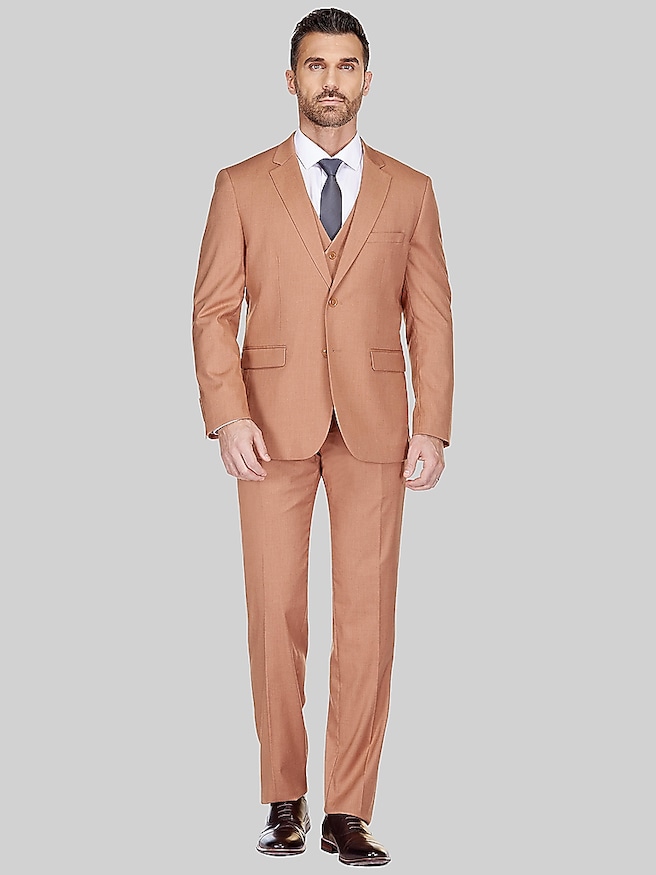
Rustic prom suits bring earthy color, tactile fabrics, and clean tailoring to a formal occasion without making the outfit feel like a costume. The look sits between traditional eveningwear and country-inspired dressing: a structured jacket, well-fitted trousers, and polished accessories provide the formality, while shades of brown, tan, taupe, olive, and charcoal establish a grounded palette. For students drawn to rustic prom suit ideas, texture often makes a bigger difference than elaborate details. A subtle herringbone weave, a fine windowpane pattern, or a softly textured fabric can suggest a countryside setting while still looking appropriate beneath ballroom lighting. Brown and gray offer understated foundations; rust, muted green, and warm ivory work well as smaller accents. Tan suiting with a white shirt feels crisp and relaxed, while a black shirt and restrained black tie create a stronger contrast. The key distinction is that rustic describes the character of the outfit, not a lower level of dress. Suiting should still look intentional alongside formal dresses and tuxedos, with the school’s dress code setting the baseline. Fabric composition also affects how that impression holds up through dinner, photographs, and dancing. Wool offers natural resilience and a refined drape, while wool blends can balance texture with practical wear. Some synthetic blends resist wrinkling and abrasion, although comfort and breathability depend on the weave, lining, and overall construction rather than fiber content alone. Tweed and brushed finishes have a pronounced rustic character, but a smooth fabric in an earthy shade can achieve a quieter version of the same look. A fine pattern generally coordinates more easily than an oversized check, especially when a tie or pocket square adds another design. The most versatile combinations give one element the spotlight and let the rest of the outfit support it, creating a prom look that feels distinctive in person and cohesive in photographs.
Fit gives rustic formalwear its polish, whether the silhouette is slim, tailored, or more relaxed. A jacket should sit smoothly across the shoulders, with lapels that lie flat rather than pulling away from the chest. Buttoning the jacket should not create strong horizontal creases, and the sleeves should leave a small amount of shirt cuff visible without covering the hands. These details matter just as much with textured suiting as they do with a classic dark suit; a handsome weave cannot compensate for shoulders that extend too far or a collar that gaps at the neck. Trousers need enough room through the seat and thighs for sitting at dinner and moving comfortably on the dance floor. A narrow cut is not automatically a better fit, particularly when fabric strains at the pockets or catches around the calves. A clean hem with little excess fabric keeps the line sharp and prevents heavy bunching over shoes. Footwear changes that balance: dress boots may need a slightly different trouser opening and length than low-profile dress shoes, so alterations are best assessed with the intended footwear on. A two-piece suit offers a straightforward outline, while a coordinating vest adds depth and keeps the outfit looking finished when the jacket comes off. The vest should sit close without pulling, cover the trouser waistband, and allow comfortable movement. Softly structured jackets can reinforce the easygoing character of country-formal dressing, while more defined shoulders create a stronger formal impression. Neither approach needs exaggerated details to feel memorable. A comfortable shirt collar, sleeves that stay in place, and trousers that sit securely at the waist all contribute to an outfit that requires less adjusting throughout the evening. For a student heading from group photographs to dinner and then onto the dance floor, those small fit decisions are as useful as the color palette.
Accessories can carry the rustic theme without overwhelming the suit. A textured tie in muted green, burgundy, or rust can complement brown or taupe tailoring, while a simple ivory pocket square adds contrast without competing with a patterned jacket. Coordinating with a date works best through shared undertones or a repeated accent rather than matching every element exactly. A tie that picks up one color from a date’s outfit usually feels more natural than forcing the shirt, vest, pocket square, and boutonniere into the same shade. Western influence is another option, particularly when it reflects the wearer’s everyday style. Clean leather dress boots or ropers, a modest belt buckle, and a tailored trouser leg can introduce that character while preserving the formality of the occasion. Scuffed work boots and oversized buckles pull the outfit in a more casual direction. Brown leather often complements earth-toned suiting, while black leather provides a sharper finish with charcoal or a dark shirt. Belts and shoes do not need identical textures, but similar color depth helps them look connected. For related formalwear inspiration beyond prom, Rustic Attire For Grooms offers another occasion where earthy palettes and tailored silhouettes belong together. These same qualities can make a prom suit useful afterward for graduation celebrations, school banquets, and other dressy events, depending on the setting and dress code. Ties, pocket squares, and cuff links can also make thoughtful gifts when chosen around the recipient’s suit colors and personal taste. Lasting wear depends on care as well as construction. Following the garment’s care label, hanging the jacket on a supportive hanger, and letting the fabric air out after wear help preserve its shape. A garment brush can lift surface dust from suitable textured fabrics, while spills should be blotted gently rather than rubbed into the weave. Cleaning according to the label and addressing loose buttons or hems promptly help keep rustic formalwear polished well beyond prom night.