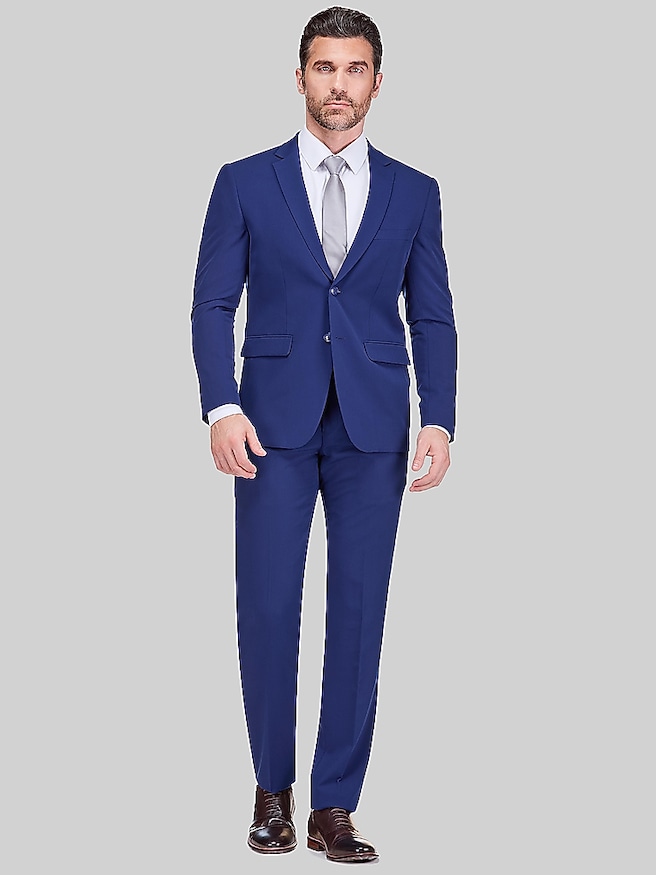
Royal blue ties bring a clear, saturated blue to tailored clothing, creating a focal point without requiring a loud pattern. Brighter than navy and deeper than pale blue, royal blue has enough presence to stand out against a white shirt while remaining easy to pair with familiar suit colors. The exact shade can lean slightly toward violet or a cleaner, more electric blue, and the fabric’s surface affects how that color appears. A smooth, lustrous tie catches the light differently from a textured weave, even when both share the same color description. Solid royal blue ties offer a straightforward look for business meetings, wedding parties, graduation ceremonies, and dressier dinners. Stripes, small geometric motifs, dots, and subtle woven patterns introduce detail while keeping blue at the center of the outfit. Against charcoal, the color creates a crisp contrast; with light gray, it feels brighter and more expressive. A navy suit allows a royal blue tie to stand out through differences in depth rather than a dramatic color change. Black tailoring can also work, especially with a clean white shirt that separates the two strong tones. For a coordinated blue outfit, Royal Blue Suits pair naturally with ties that offer a noticeable difference in texture, pattern, or shade, helping each element remain distinct. Shirt patterns deserve the same attention: a small check generally works best with a tie pattern large enough to read separately, while a solid shirt gives intricate designs more room. A white pocket square provides a quiet finishing touch without repeating every detail of the tie. The overall effect can be restrained or expressive, depending on the surrounding clothing, which makes royal blue a useful color for both an established dress wardrobe and a first suit-and-tie outfit.
Fabric, construction, width, and length all influence how a royal blue tie looks once it is knotted. Silk is valued for its smooth hand, rich color, and ability to form a defined knot, though its finish varies considerably with the weave. Satin describes a weave rather than a fiber: silk satin and polyester satin can both have a glossy face, but their feel and care requirements may differ. A satin finish emphasizes the brightness of royal blue and suits occasions where a polished appearance is part of the dress code. Twill has fine diagonal ribs that add depth without a bold printed design, while more pronounced woven textures create a less reflective surface. Polyester and microfiber ties can provide consistent color and practical resilience, although resistance to wrinkles or staining depends on the fabric and finish rather than the fiber name alone. Cotton and linen bring a drier texture and a more relaxed character; their natural tendency to crease is part of their appearance, not necessarily a sign of poor construction. The inner lining also matters because it helps the tie hold its shape and recover after wear. A tie should drape smoothly rather than twist, with a knot that feels substantial without becoming bulky. Width is most balanced when it relates to the shirt collar, jacket lapels, and wearer’s proportions. Standard widths often fall around three to three and a half inches, while narrower ties create a leaner line; neither is automatically more formal. Length matters just as much, with the finished tip generally reaching the waistband or the area around the belt buckle. Taller wearers, larger neck sizes, and fuller knots may require extra length to achieve that proportion. A four-in-hand produces a relatively compact, slightly asymmetrical knot, while a half-Windsor creates a more symmetrical shape. Heavier fabrics build volume quickly, so a smaller knot can keep the collar area looking comfortable and composed.
The intended occasion often determines which details matter most. For a wedding party, a consistent royal blue shade helps create a unified appearance in photographs, but texture and finish deserve attention alongside color. Two ties described as royal blue may look noticeably different under indoor lighting or daylight, especially if one is glossy and the other matte. Coordinating several outfits is easier when the desired effect is clear: closely matched ties create uniformity, while related patterns give each wearer a little individuality. For interviews and client-facing work, a solid or quietly patterned tie keeps the emphasis on a neat collar, a well-fitting jacket, and an uncluttered overall appearance. A royal blue bow tie offers a different silhouette for celebratory dressing, although formal events should always be approached according to their stated dress code; a colorful tie does not replace black-tie requirements. Royal blue can also make a thoughtful gift for a graduate, a new professional, a father, or someone who regularly dresses for special occasions. Familiarity with the recipient’s usual lapel width, shirt collars, and preferred patterns helps make that gift more personal. Good care supports the tie’s appearance over repeated wear. After use, gently reversing the knot rather than pulling the narrow end through a tightened knot reduces unnecessary strain. Resting the tie untied allows light creases to relax, and hanging it on a smooth tie rack or loosely rolling it can prevent sharp folds. Spills call for prompt, careful attention: blotting is gentler than rubbing, and the care label should determine the next step. Silk and structured ties may need professional cleaning, while some synthetic fabrics allow other methods when specifically indicated. Direct heat and heavy pressing can flatten texture or damage the finish. With suitable proportions, considered coordination, and careful handling, a royal blue tie can remain a dependable finishing piece for occasions ranging from a presentation at work to an important family celebration.