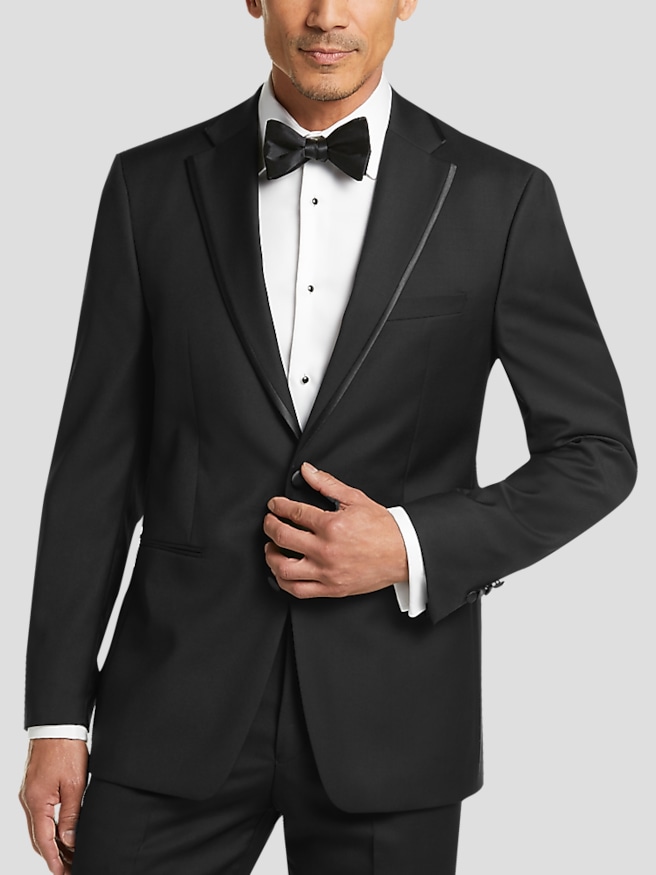
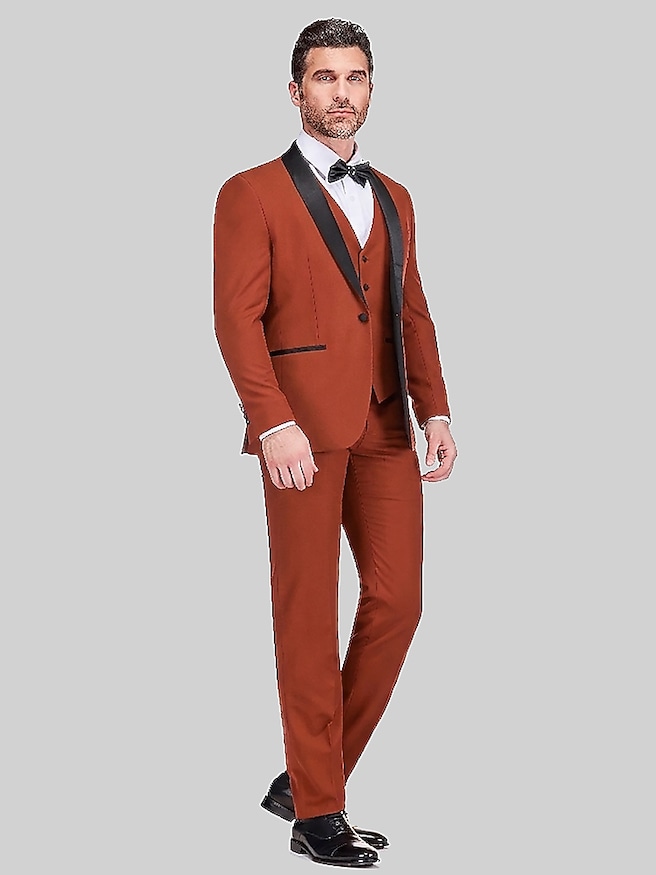
Romantic tuxedos bring a softer, more expressive character to formal eveningwear through color, texture, and thoughtful detailing. Muted rose, champagne, ivory, and dusty blue can create a gentle palette, while midnight navy and black offer a quieter foundation for floral patterns, lustrous lapels, or a richly textured jacket. The effect is less about one prescribed design than the balance of tailoring and personal touches: a curved shawl collar against a crisp shirt, a tonal floral jacquard that becomes visible as the wearer moves, or a restrained pocket square that echoes a partner’s outfit. Romantic is a styling description rather than a separate dress code, so the invitation and setting still matter. For an event specifying traditional black tie, black or midnight navy is generally a more dependable choice than a pastel ensemble. At a wedding with a more expressive dress code, a champagne jacket or subtle botanical pattern may feel right at home. A groom might choose a softly patterned jacket to stand apart from the wedding party, while someone attending an anniversary celebration might prefer a classic dark tuxedo with a rose-colored accent. Satin or grosgrain lapel facings, coordinated formal trousers, and considered accessories help preserve the distinction between a tuxedo and a business suit. The strongest combinations give one feature room to lead instead of asking every detail to compete. An intricate floral weave often needs little more than a plain shirt and simple bow tie; a smooth, solid jacket leaves more room for distinctive cufflinks or a textured pocket square. Color also deserves a look beyond a screen. Champagne can lean ivory, beige, or gold, and rose can range from barely tinted to noticeably pink. Viewing fabric alongside the shirt and other accessories helps establish whether those tones feel harmonious. The goal is a complete outfit that feels intentional at the ceremony, across the dinner table, and in photographs, without letting decoration overshadow the person wearing it.
Fabric and fit determine whether that visual appeal translates into an outfit that feels good for an entire celebration. Wool is valued in tailored formalwear for its drape, resilience, and ability to hold a clean silhouette, although the weight and weave affect how it feels. Wool blends can offer another balance of texture, structure, and crease resistance; the fiber-content label provides a better picture than appearance alone. Velvet adds depth and a plush surface, while jacquard uses woven patterning to create detail that may be subtle from a distance and more intricate up close. Satin describes a weave rather than a particular fiber, so its sheen does not, by itself, reveal the material’s composition or care needs. For a romantic tuxedo, contrast is often especially effective: a matte jacket body with smooth lapels, or a restrained woven floral against an otherwise simple outfit. Construction matters alongside the fabric. Secure buttons, neatly finished seams, smooth lining, and lapels that lie cleanly help an outfit withstand repeated wear. A jacket should sit comfortably across the shoulders without extending well beyond them, and its collar should rest close to the shirt collar rather than leaving a visible gap. When buttoned, the front should look composed instead of pulling into pronounced lines around the closure. Slim, tailored, and classic fits describe general silhouettes, not a universal standard across every garment, making actual measurements and movement more useful than the label alone. Trousers need enough room through the seat and thighs to sit through dinner and move naturally on the dance floor. Their length should work with the intended formal shoes, with a clean hem rather than excess fabric pooling at the ankle. Trying the outfit with its shirt and shoes makes those proportions easier to judge. Reaching forward for a handshake, sitting down, and taking a few full strides can reveal discomfort that is easy to miss while standing still in front of a mirror.
Finishing details can make romantic formalwear feel personal without making it busy. A white formal shirt provides a crisp backdrop for pale colors and patterned fabrics, while an understated bow tie keeps attention on the jacket’s shape and texture. With a floral jacquard, choosing an accessory that picks up one quiet tone from the weave usually looks more cohesive than adding another large pattern. A pocket square need not match the bow tie exactly; a small shared color or complementary texture can create a more relaxed connection. Polished formal shoes, appropriate socks, and discreet cufflinks carry that attention through the entire outfit. For couples coordinating wedding attire, sharing a fabric swatch or comparing colors in person can be more useful than trying to match separate photographs. A groom’s look can echo a partner’s clothing or the ceremony flowers without repeating every shade, and wedding-party outfits can share a common thread while allowing the groom a distinctive lapel, texture, or accessory. Guests should follow the stated dress code and avoid a pale or highly decorative ensemble that could be confused with the couple’s chosen attire. For celebrations centered on a character or theatrical theme, Costume Tuxedos provides a related direction, while romantic styling generally keeps the focus on elegant formalwear with expressive details. After the event, careful handling helps protect both the tailoring and those decorative surfaces. Empty pockets, air the garments, and use a supportive jacket hanger and a suitable trouser hanger to preserve their shape. Follow the care label for cleaning, particularly with velvet, contrasting trim, or embellished fabrics, and avoid applying direct heat without checking the material’s requirements. Blot an accidental spill gently rather than rubbing it into the weave, then seek appropriate cleaning advice when needed. Store the outfit clean and dry in a breathable garment bag with enough space to avoid crushing the lapels. With thoughtful care and versatile accessories, a romantic tuxedo can remain a meaningful choice for wedding celebrations, formal anniversaries, and other occasions that call for dressing with a little more feeling.