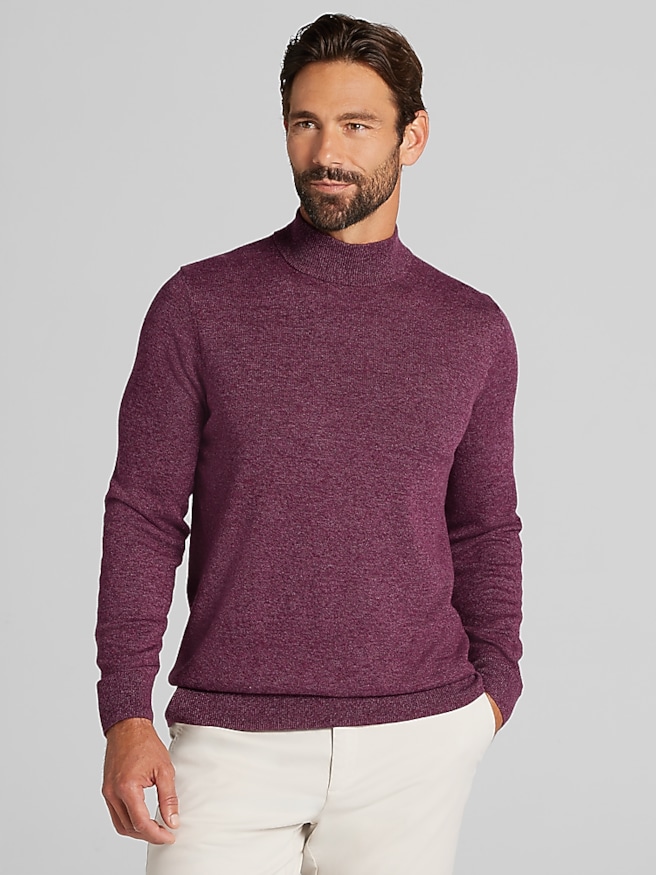
Red sweaters bring a distinct point of color to a men’s wardrobe, with shades ranging from bright scarlet and clear crimson to deeper burgundy and maroon. Common styles include crewnecks, V-necks, cardigans, turtlenecks, and quarter-zip sweaters, each with a different neckline and layering profile. A smooth, fine-gauge knit keeps the look clean and streamlined, while cable stitching, ribbing, and textured patterns give the color more dimension. The shade makes a noticeable difference in how the sweater works with other clothing. Bright red creates a strong contrast against navy trousers or dark denim, while burgundy sits comfortably alongside charcoal, tan, olive, and brown. For an office with a business-casual dress code, a fine-knit red sweater over a white or pale blue button-down can add personality without competing with the rest of the outfit. With straight-leg jeans and simple leather sneakers, the same color feels more relaxed. A crewneck frames a shirt collar neatly, a V-neck leaves more of the shirt front visible, and a cardigan offers an open front that can show a patterned layer underneath. A turtleneck creates an uninterrupted line at the neck and works especially well with a softly structured blazer. Quarter-zip styles offer another way to adjust the neckline, whether worn over a T-shirt or a collared shirt. Patterned layers such as Red Plaid Shirts can complement a solid knit when the colors share a similar red tone; keeping the trousers and shoes simple helps the pattern feel intentional rather than busy. Texture matters just as much as color when combining layers. A substantial cable knit has a more casual character than a smooth pullover, and a trim cardigan can sit comfortably beneath a jacket without adding much bulk. Small details, including the width of the neckline, the depth of the ribbed hem, and the finish of the buttons or zipper, help establish whether a red sweater feels polished, easygoing, or somewhere between the two.
Material and construction influence how a red sweater feels, drapes, and holds its shape through repeated wear. Cotton generally has a familiar, soft feel and lends itself to everyday dressing, though a heavier cotton knit can have more weight than its appearance suggests. Wool offers natural resilience, helping the fibers recover after ordinary movement, and its insulating qualities vary with the yarn and density of the knit. Merino wool is known for its relatively fine fibers, making it a useful option for a smoother sweater that sits close to the body without excessive bulk. Cashmere has a particularly soft hand and a light, supple drape, although it benefits from careful handling to limit abrasion. Blended yarns can combine the character of natural fibers with other qualities, such as stretch, strength, or shape retention. Fiber content alone does not tell the whole story: a loosely knitted sweater may feel airy and flexible, while a dense knit often has a more substantial surface and firmer structure. The intended fit should leave enough room for the layers worn beneath it. On a sweater with set-in sleeves, shoulder seams generally look neat when they sit near the edge of the shoulder, and the fabric across the chest should fall smoothly rather than pull into horizontal lines. A slim fit works best when it follows the body without gripping it; a regular or relaxed fit gives more space through the torso and arms. Sleeve cuffs should meet the wrist without covering most of the hand, and the hem should provide comfortable coverage when sitting or reaching. For a sweater worn under a blazer, slimmer sleeves and a flatter knit reduce bunching at the elbows and shoulders. For one worn mainly over a shirt, room through the chest and upper arms helps preserve comfortable movement. Ribbed cuffs and hems should recover after stretching, while neatly finished seams and securely attached closures support repeated use.
Care needs vary by fiber and construction, so the garment’s care label is the best starting point for preserving both the red color and the shape of the knit. Some sweaters permit machine washing on a gentle cycle, while others call for hand washing or professional cleaning. Washing with similar colors helps reduce the risk of color transfer, and turning a washable sweater inside out can limit friction against its outer surface. High heat and vigorous agitation can damage certain fibers or change the fit, making the specified water temperature and drying method important. For knits that require flat drying, gently reshaping the sweater on a clean towel helps keep the sleeves, shoulders, and hem in proportion. Hanging a damp, heavy sweater can stretch it, and folded storage generally places less strain on the shoulders than a hanger. Pilling can occur where fabric rubs against itself, a jacket, or a bag strap; it does not necessarily mean a sweater has reached the end of its useful life. A suitable sweater comb or fabric shaver, used carefully according to its directions, can help tidy the surface without pulling at the yarn. These practical details matter for a garment that moves between work, dinners, travel, and everyday plans. A smooth burgundy pullover can look composed at a restaurant with tailored trousers and loafers, while a textured crimson crewneck feels at home with denim for a casual gathering. For gifting, red sweaters offer a balance of usefulness and personal expression, especially for a father, brother, partner, or friend who already enjoys color in shirts or accessories. Matching the recipient’s preferred neckline, usual fit, and tolerance for fabric against the skin is more helpful than choosing by color alone. A familiar silhouette in a distinctive shade can become a frequently worn piece, with straightforward care requirements making it easier to keep in regular rotation.