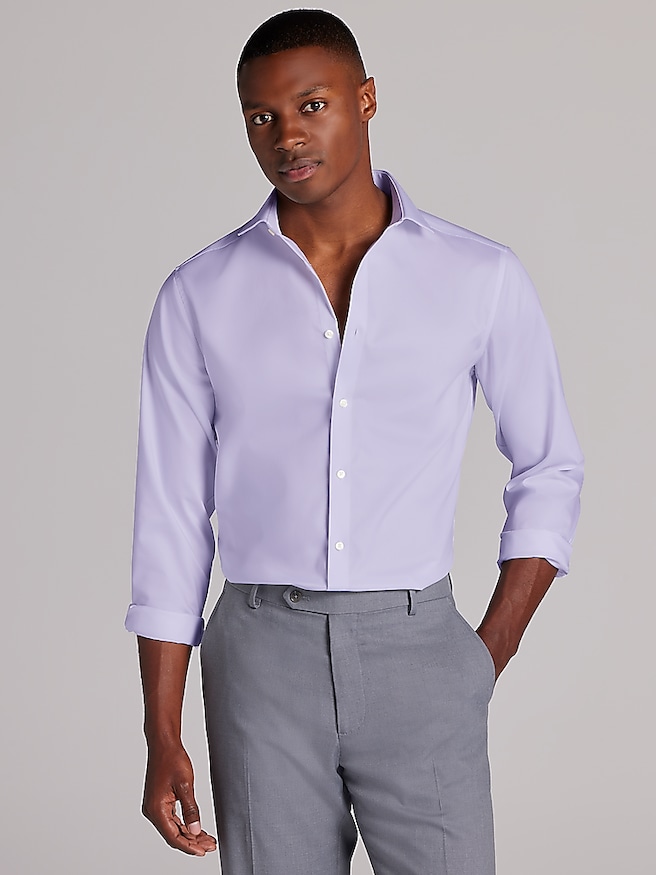
Purple button-up shirts add color to a wardrobe without requiring a complete rethink of the clothes already in it. The range of purple tones gives this familiar shirt shape several distinct personalities: pale lavender feels understated, a muted lilac brings softness to tailored clothing, and deeper plum or eggplant creates a richer contrast against neutral trousers. A light purple shirt beneath a navy suit can look composed in a meeting or at a wedding reception, while a deeper shade with charcoal pants creates a more pronounced, evening-ready combination. Gray, navy, tan, and black are useful starting points because they give the shirt’s color room to stand out. Texture matters alongside shade. A smooth, solid fabric creates a cleaner backdrop for a patterned tie, while a subtle woven pattern adds interest when the collar is worn open. Purple also works well in everyday outfits that sit between dressed up and relaxed, such as a tucked shirt with chinos or an untucked style with dark denim. The shirt’s length and hem shape help determine which approach looks intentional; a long, curved dress-shirt hem generally belongs inside the waistband, while a shorter casual cut can sit neatly over it. For professional settings, Purple Work Shirts offer a related starting point for a wardrobe built around workplace dressing. The right shade depends partly on the setting and partly on personal preference. Someone who usually wears white or blue may find a soft lavender easy to incorporate, while someone comfortable with stronger color may gravitate toward violet or deep plum. At a dinner, graduation celebration, or family gathering, a purple button-up can provide a distinctive focal point without relying on a loud print. A solid shirt also leaves space for thoughtful details elsewhere in the outfit: a textured navy tie, a brown leather belt, or polished black shoes can finish the look without competing with the color. When a jacket is added, keeping the surrounding pieces restrained helps the shirt look considered rather than overworked.
Fabric and construction influence how a purple button-up shirt feels, drapes, and holds its appearance through repeated wear. Cotton is a common choice for its breathable feel and familiar texture, but the weave can make two cotton shirts behave quite differently. Poplin generally has a smooth surface and a relatively crisp appearance, making it well suited to a clean, tailored outfit. Oxford cloth has a more noticeable woven texture that lends itself to relaxed office dressing and everyday wear. Twill’s diagonal weave can give a shirt a softer drape and a slightly richer surface, though weight and finish vary. Linen has a textured character and tends to develop visible creases; that lived-in appearance can be part of its appeal rather than a flaw. Blended fabrics may offer easier maintenance or improved wrinkle resistance, depending on their composition and finish. A small amount of stretch can help with reaching, sitting, and moving, but it does not replace a good fit. Across these materials, the color may appear subtly different because a textured weave reflects light differently from a smooth one. Fit should support the way the shirt will be worn. Under a suit jacket, excess fabric through the waist can bunch at the waistband, while an overly narrow chest may pull the front placket apart when seated. Shoulder seams should sit close to the natural shoulder edge, and sleeves should allow comfortable movement without creating a large fold of fabric near the cuff. A collar worn with a tie needs enough room to fasten comfortably without looking loose; a collar worn open should still hold a balanced shape around the neck. Slim, tailored, and classic fit descriptions are useful reference points, but measurements provide a clearer picture because those terms can vary. Comparing neck size, sleeve length, and chest measurements with the shirt’s sizing information helps reduce guesswork. Collar shape, cuff style, and hem length also affect intended use. A structured collar and tidy cuffs complement tailoring, while softer construction can feel more natural with chinos, denim, or an unstructured jacket.
Keeping a purple button-up shirt looking good starts with care suited to its fabric, finish, and construction. The care label is the most reliable reference for washing, drying, ironing, and any professional cleaning requirements. Separating colors appropriately and using a suitable detergent can help protect the shirt’s appearance, especially with deeper purple shades. Too much detergent can leave residue, and aggressive washing or excessive dryer heat may contribute to fading, shrinkage, or unnecessary wear. When machine washing is permitted, treating a collar mark or cuff stain promptly can prevent repeated heavy cleaning of the whole shirt. Removing a washable shirt from the dryer promptly, if tumble drying is allowed, and smoothing the placket, collar, and sleeves can make finishing easier. Ironing temperature should match the fabric, with particular care around blends and stretch fibers. For a polished outfit, attention to the collar edge, front placket, and cuffs often makes the biggest visible difference. Those are also useful areas to inspect over time: secure buttons, sound buttonholes, and intact seams help a shirt remain dependable through frequent use. Hanging the shirt with enough space to avoid compression helps preserve its shape between wears, while allowing deodorant to dry before dressing may reduce buildup under the arms. A purple button-up can become a regular part of a work rotation, an option for dinners and celebrations, or a thoughtful gift for someone who enjoys color but prefers familiar clothing shapes. For a father, brother, partner, or friend, the most useful gift is often a shade and fit that relate to what the recipient already wears. A pale purple dress shirt may suit someone with a navy-and-gray wardrobe; a textured plum shirt may appeal to someone who favors denim and casual trousers. Knowing the recipient’s usual neck and sleeve measurements is more helpful than guessing from general body size. With a suitable fabric, comfortable proportions, and consistent care, a purple shirt can feel like a natural extension of personal style rather than a piece reserved for a single occasion.