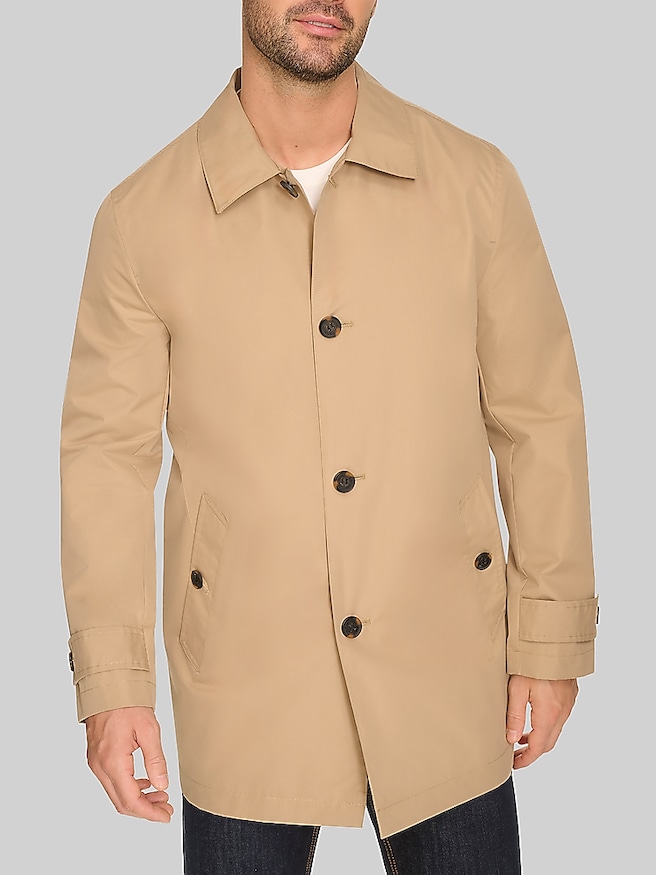
Professional raincoats combine protection from wet weather with a clean appearance suited to offices, business travel, and client-facing work. Their defining qualities are a streamlined silhouette, room for tailored layers, and fabric construction appropriate to the amount of rain expected. Unlike industrial rain gear designed around job-site hazards or high-visibility requirements, business-oriented raincoats emphasize everyday coverage without looking out of place over a suit. They are not substitutes for protective clothing required by a workplace. Within this category, traditional trench shapes, understated single-breasted coats, and refined technical shells offer different balances of structure and ease. A smooth front and restrained hardware can look natural over a jacket and tie, while a simpler shell may complement an office wardrobe built around sweaters and chinos. Fabric performance deserves as much attention as appearance. Water-resistant materials can handle brief exposure to light rain, but they should not be assumed to provide the protection of a waterproof construction. Sustained rainfall calls for closer attention to the garment’s stated performance, including its membrane or coating, seam treatment, and closures. Polyester and nylon can provide lightweight strength, while cotton blends may offer a more traditional texture and drape. Fiber content alone does not establish how well a coat keeps water out. A water-repellent finish helps droplets bead on the surface, but it is different from the barrier that prevents water from passing through a waterproof fabric. Breathability also matters on a brisk walk from a train platform to an office building: moisture generated inside a coat can feel uncomfortable even when rain stays outside. Ventilation openings, breathable construction, and an appropriate amount of layering can help balance those demands. For someone who spends only a few minutes between a parking space and a lobby, priorities may differ from those of a commuter walking several blocks in steady rain. The right professional raincoat reflects that actual routine rather than appearance alone.
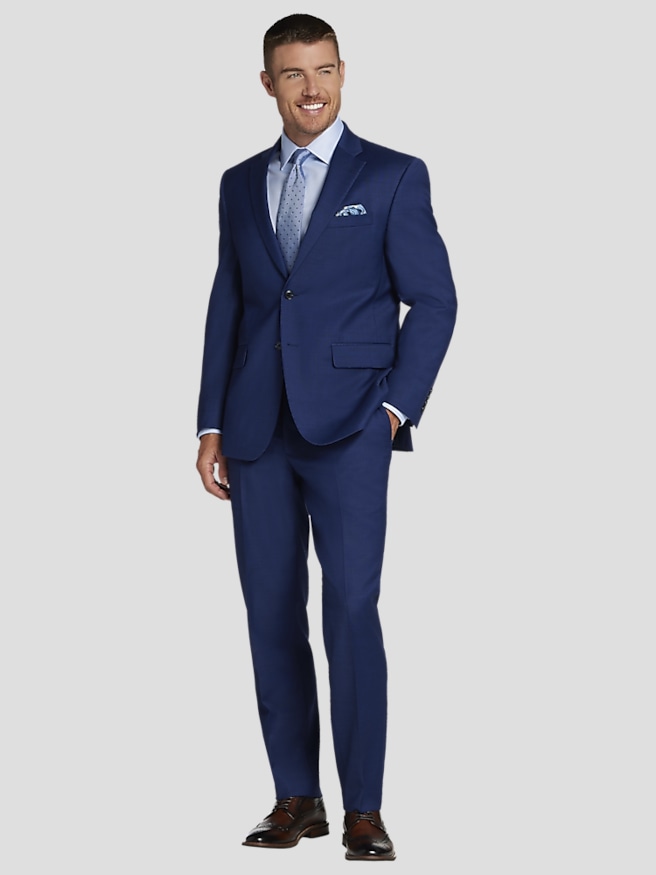
Fit determines whether a professional raincoat looks composed and feels comfortable throughout the workday. A coat worn over a suit needs enough space through the shoulders, upper arms, and chest to accommodate the jacket without compressing it. That extra room should feel intentional rather than oversized. Shoulder seams should sit appropriately for the design, sleeves should allow comfortable movement, and the front should close without pulling when both layers are fastened. Reaching for a handrail, carrying a briefcase, and sitting in a car reveal fit issues that may not be obvious while standing still. A back vent or other movement allowance can make a longer coat easier to walk in, while an adjustable waist can help control fullness without restricting the layers underneath. Length affects both coverage and proportion. A hem that extends below a suit jacket keeps the jacket from peeking out beneath it and provides additional protection across the seat and upper legs. Shorter designs may feel easier for frequent driving, though they leave more of the trousers exposed. Sleeve coverage matters when arms extend forward, but cuffs should not interfere with the hands. Details such as a covered front closure, a protective collar, and a hood can contribute to practical weather coverage; their usefulness depends on how they are constructed and worn. A removable or stowable hood may suit someone who prefers a cleaner outline indoors, while an accessible hood is useful when an umbrella is awkward to manage. Deep, securely closing pockets can keep small essentials contained, although a pocket should not be treated as waterproof unless specified. The distinction between professional styles and Casual Raincoats often comes down to silhouette, visible hardware, and compatibility with tailored clothing rather than rain protection alone. Navy, charcoal, black, and neutral tan offer familiar foundations for business outfits, with the best choice depending on the suits, trousers, and shoes already in the wardrobe.
Durability comes from the relationship between fabric, construction, use, and care. A substantial textile may resist everyday abrasion, but weight alone does not guarantee better weather protection or longer wear. Seams, pocket openings, cuffs, and fasteners all face repeated stress, especially on a coat carried through crowded transit stations or worn beneath a shoulder bag. Smooth-operating closures and neatly finished construction are useful signs to examine, along with care requirements that fit the wearer’s habits. Some raincoats can be machine washed according to their labels, while others require professional cleaning or a more specialized approach. Waterproof and water-repellent materials deserve particular care because unsuitable detergents, fabric softeners, or cleaning methods can affect performance. The garment’s instructions should govern washing, drying, ironing, and any treatment used to refresh the finish. If surface water stops beading, that does not automatically mean a waterproof barrier has failed, though a saturated outer fabric can feel heavier and reduce comfort. Cleaning or renewing the surface treatment may help when the care instructions permit it. After a wet commute, allowing the coat to dry with air circulating around it helps prevent lingering dampness; damp outerwear should not be packed tightly into a bag or crowded closet. Removable liners, where included, can expand layering options, but a raincoat should not be assumed to provide substantial warmth unless its insulation supports that purpose. A lightweight shell over a suit serves a different need from an insulated coat worn for a longer outdoor journey. For frequent travelers, manageable weight and resistance to wrinkling can matter as much as a sharp silhouette, particularly when a coat spends part of the day folded over a carry-on. As a gift for a graduate beginning an office job or someone whose commute has changed, professional rainwear is most useful when the recipient’s measurements, usual layers, and care preferences are known. Thoughtful proportions and dependable construction make it a practical part of a working wardrobe.