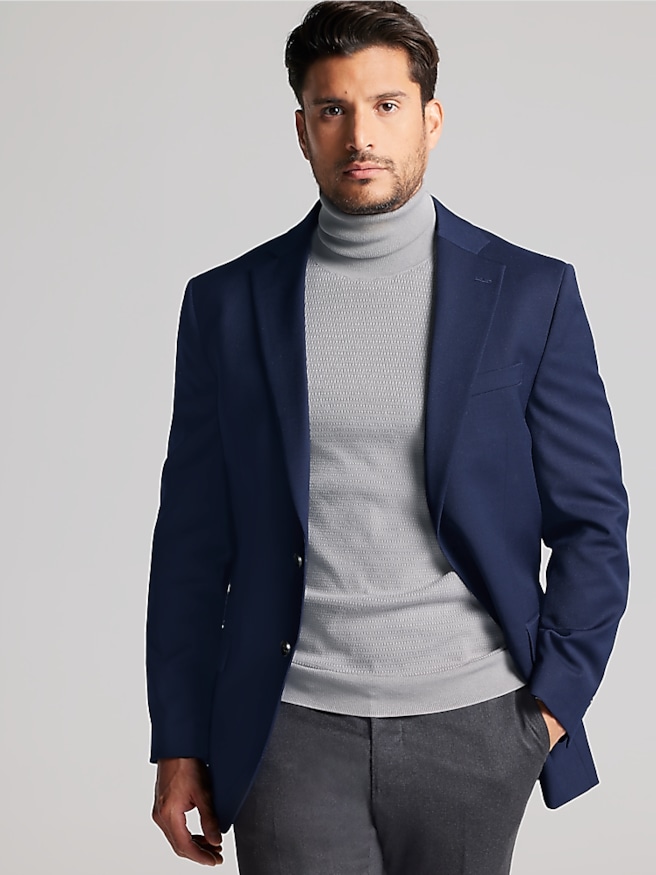
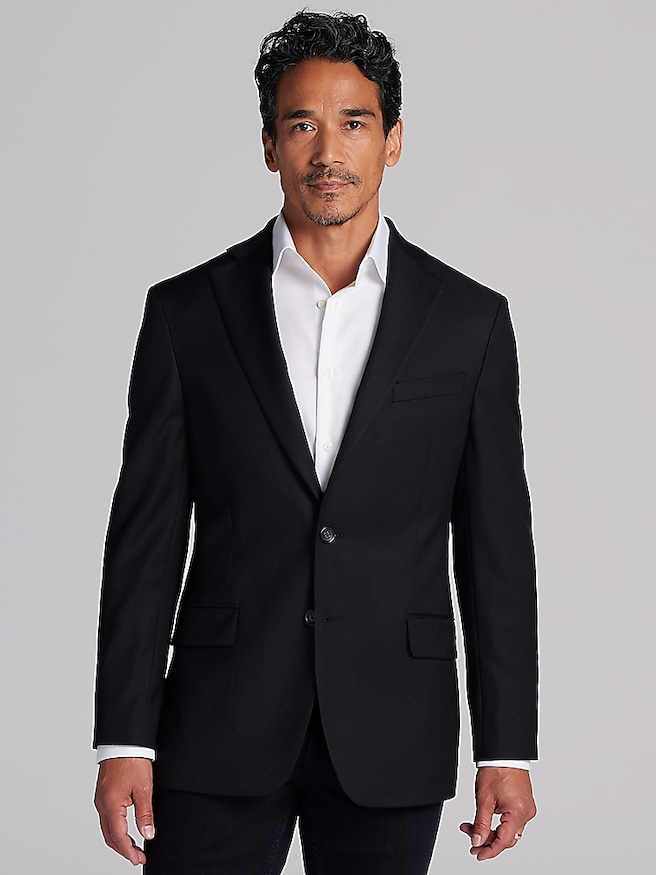
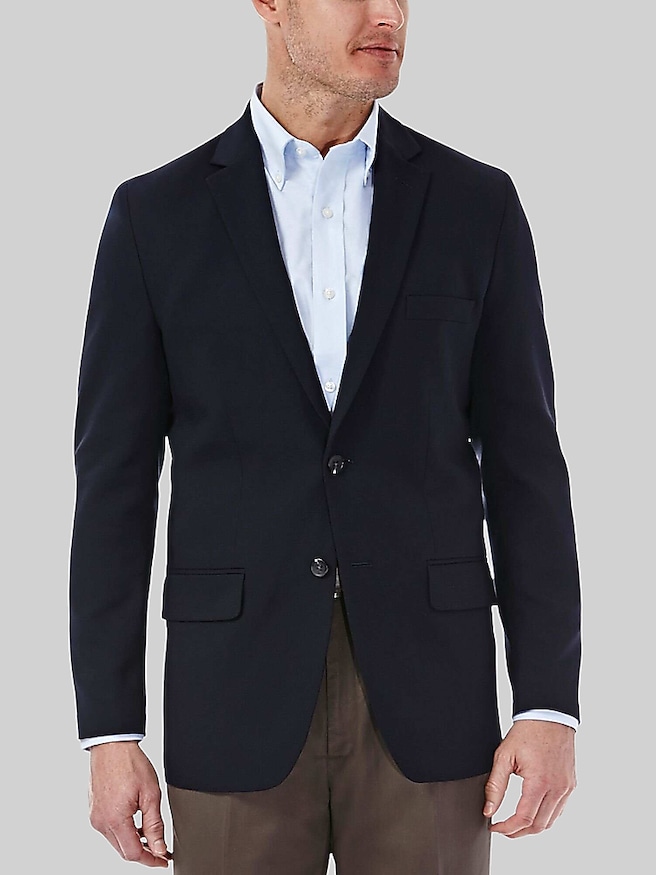
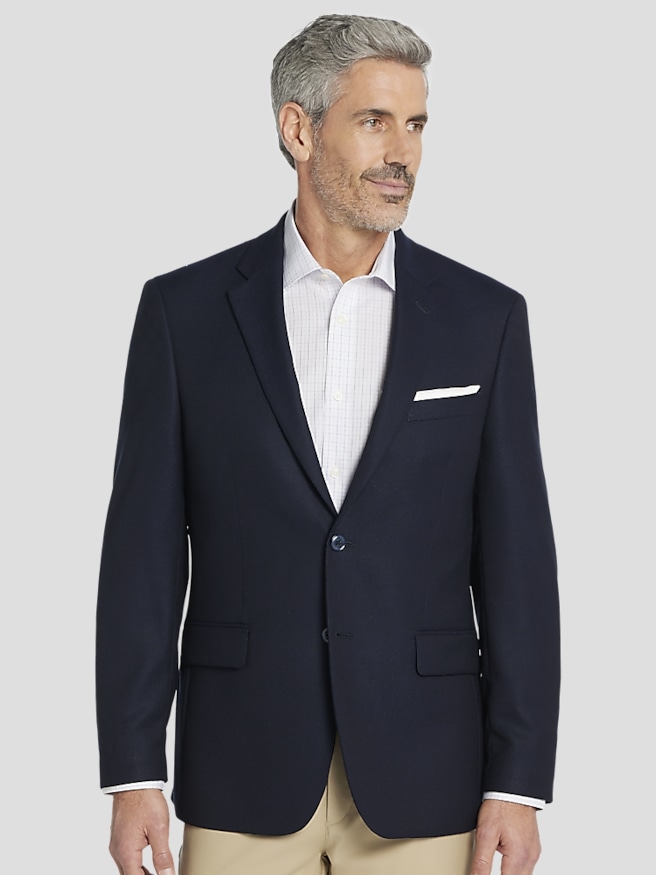
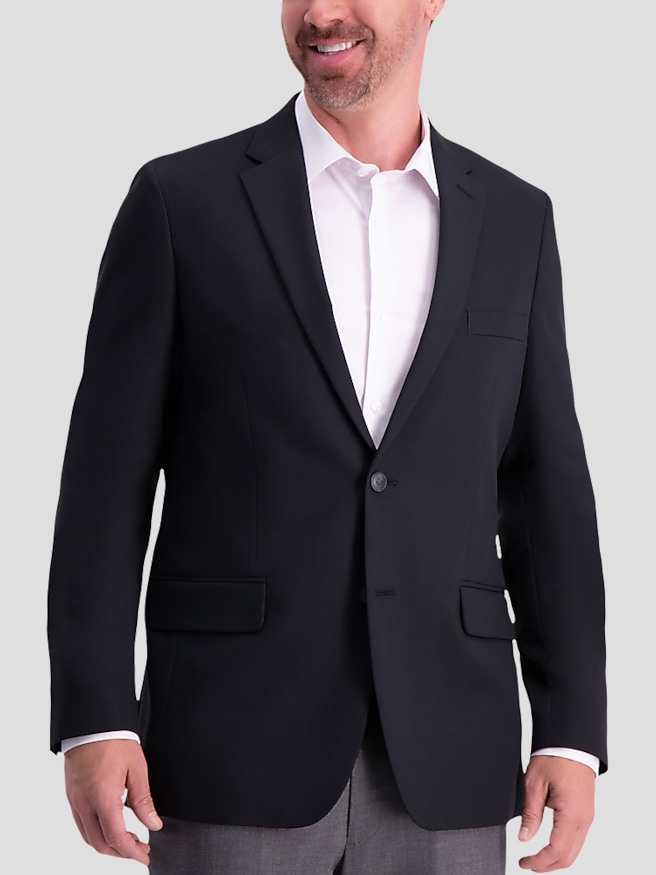
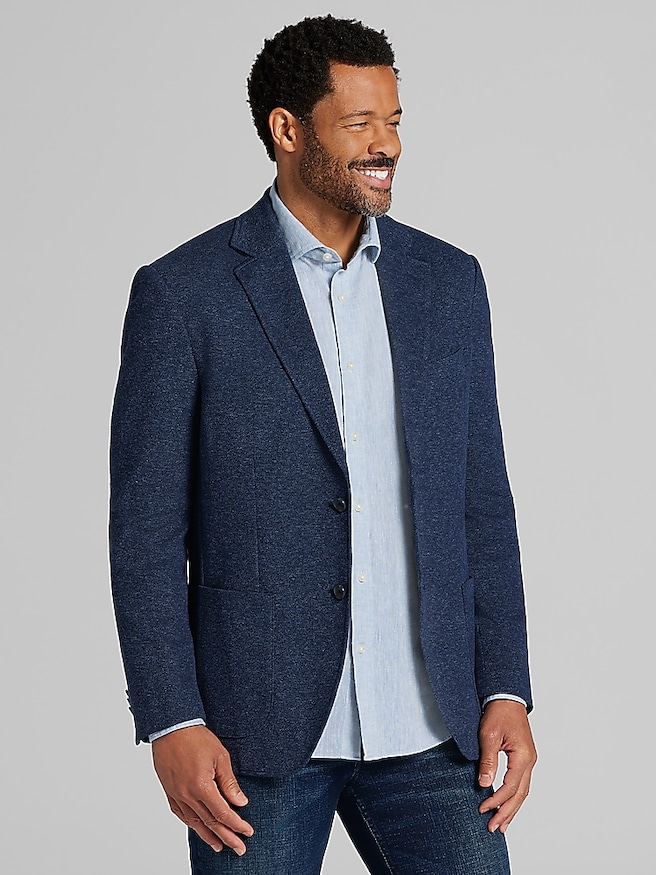
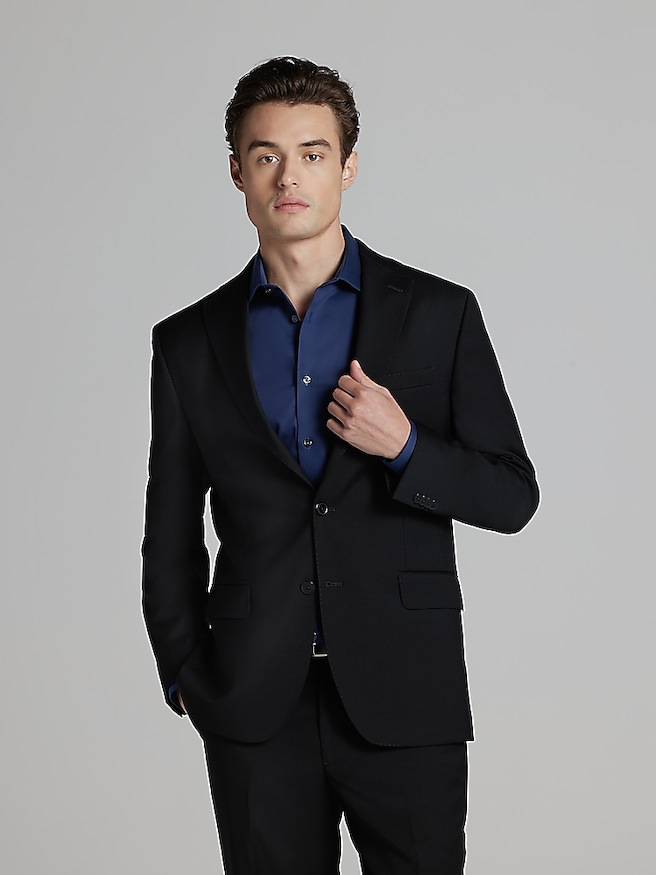
Professional blazers are tailored jackets designed to add structure and polish to business and business-casual clothing without requiring a matching suit. They work particularly well for office days, interviews, presentations, and client meetings where a dress shirt alone may feel too informal. A navy blazer with gray trousers creates a familiar professional combination, while charcoal, textured blue, and subtle neutral patterns offer other ways to build a coordinated outfit. Unlike a suit jacket, which belongs to a matching set, a blazer is intended to work with separate trousers, giving it a useful role in a wardrobe that needs to handle several dress codes. Fabric makes a noticeable difference in how that jacket looks and feels throughout the day. Wool has a natural drape and resilience that can help a blazer maintain a clean silhouette through repeated wear. Wool blends combine those characteristics with other fibers, with the resulting feel, texture, and care needs depending on the fabric composition. Cotton often has a more relaxed surface, making it a natural partner for chinos in offices with less formal expectations. Knit constructions and fabrics containing stretch can offer additional flexibility, though neither replaces the need for a well-proportioned fit. A fine, smooth weave generally reads as dressier than a pronounced basket weave or visibly textured fabric. Small-scale checks and understated patterns introduce interest without competing with a shirt or tie, especially when the rest of the outfit stays simple. Construction matters alongside fabric: a structured shoulder creates a defined outline, while a softer shoulder gives the jacket a less formal character. Lining can help the blazer move smoothly over a shirt, and a partially lined construction may feel less substantial. The most useful combination depends on whether the jacket will spend its days in a conservative office, a creative workplace, or a mix of settings.
Fit gives a professional blazer its finished appearance, especially when the wearer is moving rather than standing still in front of a mirror. The shoulder seam should sit close to the natural edge of the shoulder, without a pronounced overhang or fabric pulling across the upper back. A collar that rests against the shirt collar helps the jacket look settled; a noticeable gap can interrupt an otherwise clean fit. Across the chest, the fabric should lie smoothly when the appropriate front button is fastened, rather than pulling into an X around the closure. Enough room to sit comfortably, reach across a conference table, or carry a work bag matters just as much as a trim outline. Slim, modern, and classic fit labels provide a starting point, but their proportions can vary, so the actual relationship between the jacket and the body deserves more attention than the name alone. A closer cut should still allow movement, while a roomier cut should not leave excessive fabric collecting at the waist or sleeves. Sleeve length typically allows a small amount of shirt cuff to show when the arms are relaxed, and the jacket hem should look balanced with the wearer’s torso and legs. Lapel width, pocket styling, and the position of the front buttons also affect that balance. Notch lapels and restrained details generally fit easily into professional wardrobes, while contrasting buttons or patch pockets can make a blazer feel more relaxed. Back vents help accommodate sitting and walking, and sleeves with enough room for the intended shirt prevent unnecessary bunching. For long presentations, client visits, and schedules that move between a desk and a dinner reservation, Comfortable Blazers reflect the importance of balancing polish with ease. Thoughtful tailoring can refine sleeve length and the shape through the torso, but a sound fit through the shoulders and chest provides the strongest foundation.
A professional blazer earns its place through repeat use, so its relationship with the rest of a wardrobe is worth considering. With a pale blue or white dress shirt, tailored trousers, and leather dress shoes, it creates an outfit suited to an interview or an important meeting. In a business-casual workplace, the same general jacket style can work with a fine-gauge knit polo or a neat crewneck sweater, provided the layers sit smoothly underneath. Dark, clean-finished jeans may be appropriate in more relaxed offices, but trousers remain the safer choice when expectations are unclear. Contrast helps separate pieces look intentional: a navy jacket and medium-gray trousers are easier to distinguish than two nearly matching shades of navy. Texture can create separation as well, although keeping patterns restrained makes frequent outfit changes simpler. Durability depends on fabric, construction, fit, and care rather than weight alone. Seams that lie flat, secure buttons, and a lining that does not pull during movement are practical details to inspect. Overfilled pockets can distort the front of a blazer, so a slim card case usually preserves its shape better than a bulky wallet. After wear, a broad, shaped hanger supports the shoulders, while allowing the jacket to air out before returning it to a crowded closet can help keep it fresh. A soft garment brush may remove surface lint and dust from suitable fabrics; the care label should determine cleaning and pressing methods. Professional cleaning, when recommended, is best reserved for genuine cleaning needs rather than treated as an automatic step after every wear. Following fabric-specific instructions for steaming or ironing helps avoid shine, flattening, or damage to the jacket’s structure. For a graduate starting a first office job, someone preparing for interviews, or an established professional refining a business-casual wardrobe, a blazer can be a thoughtful gift when measurements and dress preferences are known. Its lasting value comes from feeling appropriate, fitting comfortably, and coordinating naturally with clothing already worn.