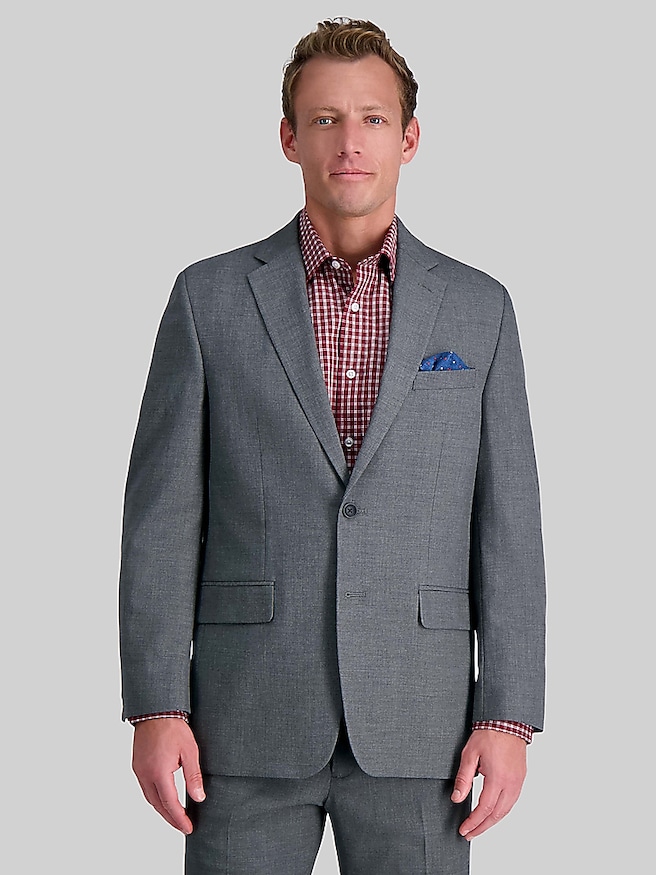
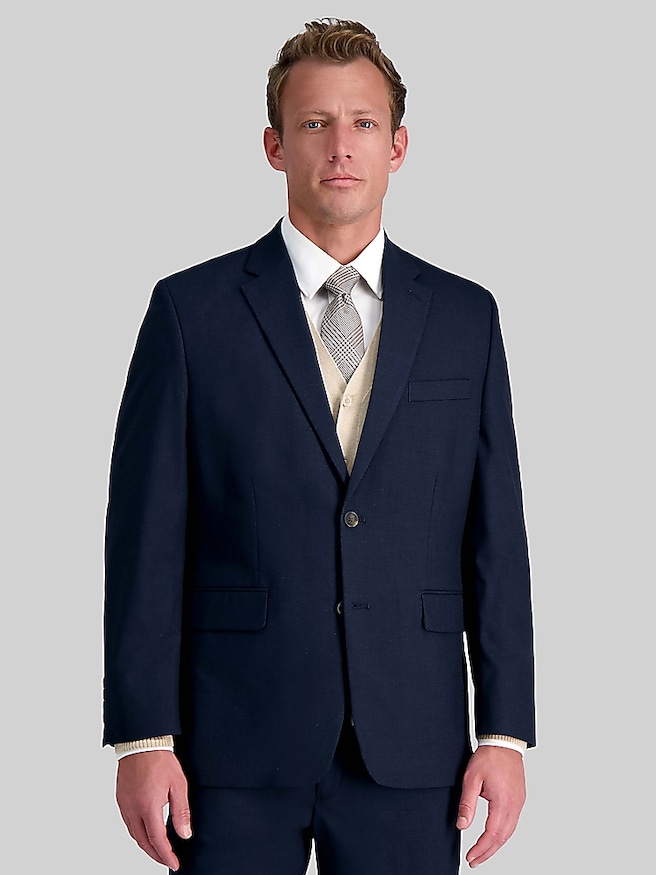
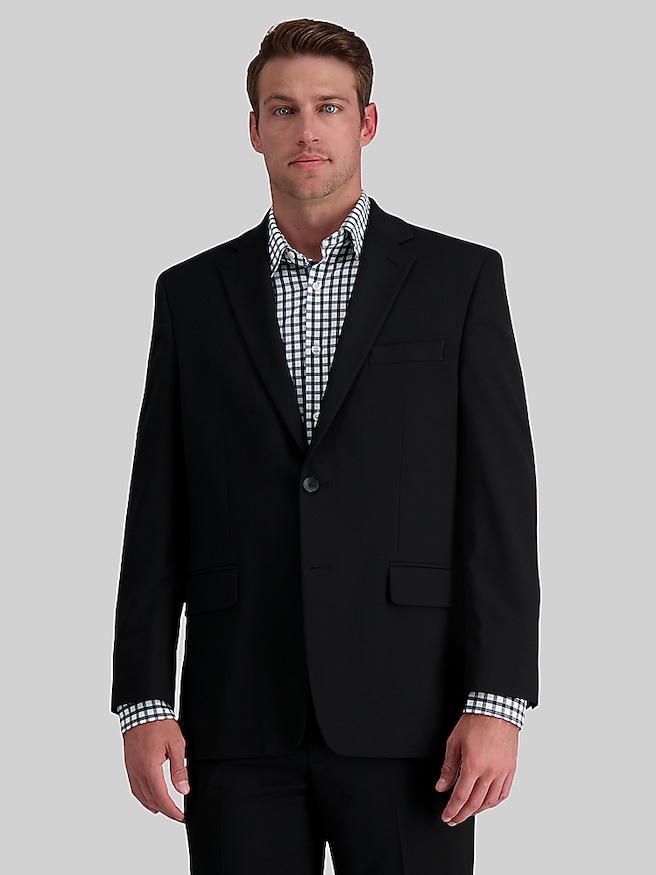
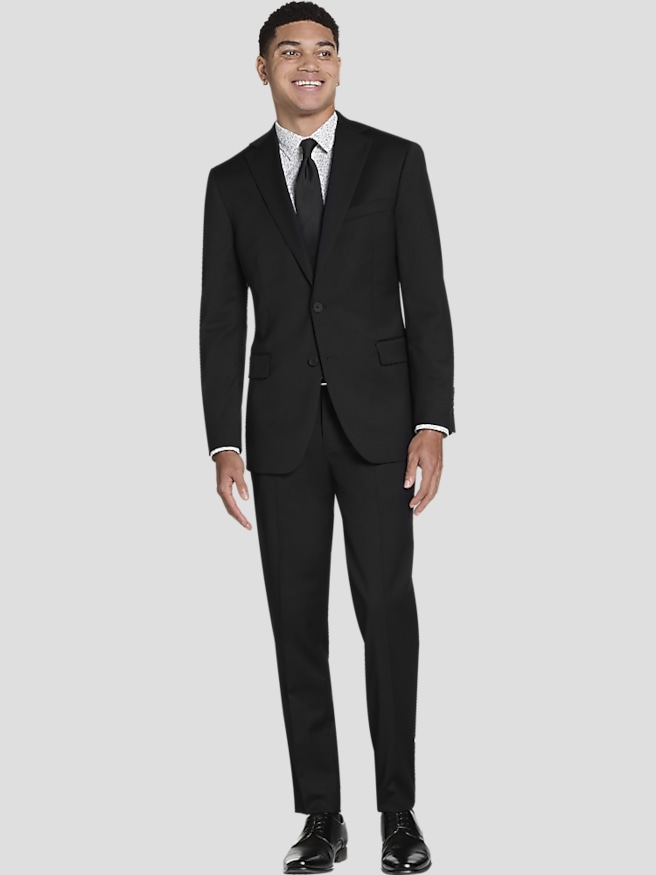
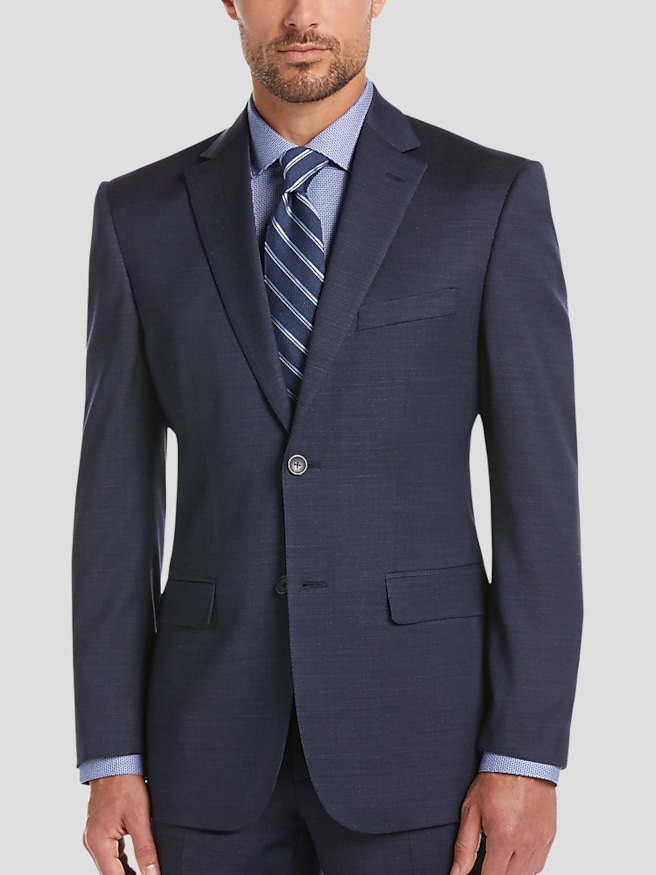
Presentation suits are tailored suits worn for public speaking, client meetings, interviews, academic defenses, and other occasions when a polished appearance supports the message being delivered. Rather than a separate category of formalwear, they are business suits chosen with particular attention to fit, comfort, color, and the setting. A speaker standing beside a screen has practical needs: a jacket that stays composed through natural gestures, trousers that feel comfortable after a long seated session, and fabric that looks neat under overhead lighting. Navy and charcoal are versatile choices because they pair easily with familiar shirt and tie colors and provide a restrained backdrop for the face. Solid fabrics and subtle textures also tend to create fewer visual distractions than bold checks or closely spaced stripes, especially when a presentation is recorded or streamed. The appropriate level of formality depends on the audience and the room. A traditional corporate boardroom often calls for a dark, coordinated suit with a dress shirt and tie, while a creative conference may welcome softer tailoring and an open collar. Neither approach needs to look theatrical; the purpose is to appear prepared without letting clothing dominate the conversation. For consultants moving between offices, managers addressing a team, researchers presenting findings, or graduates making a first professional impression, a well-chosen suit can become a dependable part of a working wardrobe. The same suit may also serve at a professional association gathering, an awards reception, or a formal dinner after a conference. Details matter most at close range: a collar that sits neatly, lapels that lie flat, clean shoes, and sleeves that leave a modest glimpse of shirt cuff. Together, those elements create a finished appearance that feels deliberate rather than elaborate. In a room where attention shifts between the speaker, slides, and discussion, understated tailoring helps keep the visual focus where it belongs. It can look equally appropriate when the speaker steps away from the lectern to answer a question or joins attendees around a table afterward.
Fabric influences how presentation suits feel over several hours as much as how they look at the start of an event. Wool is a common choice for business tailoring because it offers breathability, a graceful drape, and natural resilience that helps light wrinkles relax between wears. Midweight wool can work across many indoor settings, including offices that stay warm during the cooler months. Wool blends may combine that tailored appearance with added strength or easier maintenance, although performance depends on the full fabric composition and construction. A small amount of stretch can make reaching toward a screen or sitting through a panel discussion more comfortable, but stretch is not a substitute for adequate room through the shoulders, seat, and thighs. Lighter cloth may feel comfortable in a crowded conference room, while a slightly more substantial weave can provide structure and a smoother line. Highly lustrous finishes may catch stage lighting more noticeably, so a matte or gently textured surface often suits presentations where photographs and video are part of the occasion. Fit begins at the shoulders, where the jacket should follow the body without extending noticeably beyond it or pulling across the upper back. When the jacket is buttoned, the front should lie cleanly rather than form pronounced tension lines. Enough space through the chest allows a full breath before speaking, and balanced sleeve length keeps the hands visible during gestures. Trousers should sit securely at the intended waist position, with a clean drape through the leg and a hem that does not collect heavily over the shoes. A close silhouette can look sharp, but excessive tightness becomes obvious when sitting, walking up steps, or reaching for a microphone. For a streamlined look that balances shape with ease, Contemporary Suits offer a related tailoring direction. The most useful fit test reflects the actual event: standing with the jacket buttoned, sitting naturally, and raising an arm to the height of a presentation screen. Those ordinary movements reveal comfort more clearly than a still pose in front of a mirror.
The supporting pieces help a presentation suit feel appropriate to both the occasion and the person wearing it. A white or light blue dress shirt creates a clear, familiar contrast with dark tailoring, while a restrained tie adds definition without competing with a projected image or name badge. Small, tightly repeating patterns can produce distracting effects on camera, making solids and broader, quiet patterns practical for virtual presentations and recorded talks. A shirt collar should remain comfortable when fully buttoned, and a tie knot should sit neatly within the collar opening. Shoes need similar attention to function: a presenter may spend hours standing, cross a large venue, or walk from a hotel to a meeting before speaking. Comfortable dress shoes with a well-maintained finish support the outfit more effectively than a striking pair that distracts with every step. Microphone placement is another consideration, since a lapel microphone may need a stable attachment point and a wireless transmitter may need a secure position at the waistband. Keeping pockets lightly filled helps preserve the jacket’s lines and prevents keys or a phone from shifting during movement. After the event, thoughtful care helps maintain the suit’s appearance and useful life. The garment’s care label should determine cleaning methods, and professional cleaning is best reserved for when the fabric needs it rather than treated as an automatic step after every wear. Airing the suit, gently brushing away surface dust with a suitable clothing brush, and hanging the jacket on a broad, supportive hanger can help it recover between occasions. Trousers benefit from careful hanging that preserves their crease without crowding them against other clothing. For travel, a garment bag and prompt unpacking reduce unnecessary compression. A presentation suit can also be a meaningful gift for a graduate, a newly promoted professional, or someone beginning a role with more public-facing responsibilities, particularly when there is room for fitting and alterations. Its lasting value lies in repeat use: familiar comfort, reliable polish, and an appearance suited to moments when preparation deserves to show.