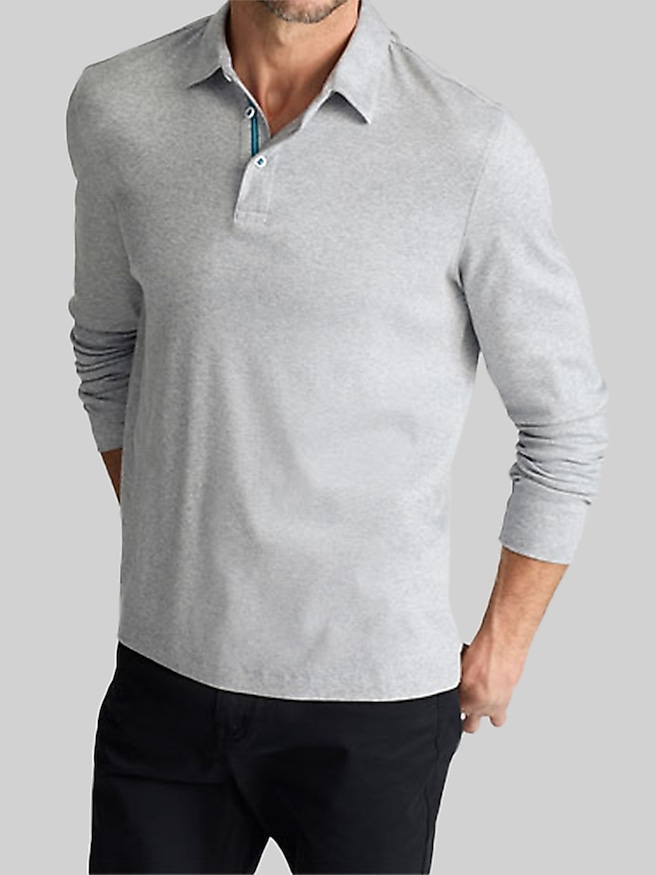
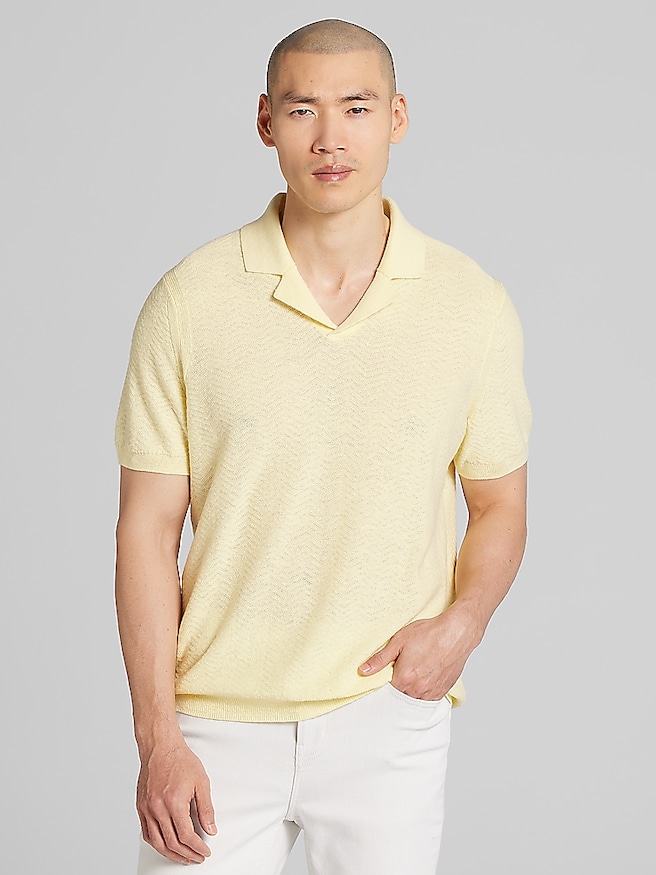
Polo shirts for office wear offer a polished alternative to a T-shirt in workplaces where business casual or smart casual clothing is appropriate. The most office-ready options combine an orderly collar, an even placket, fabric with enough substance to drape cleanly, and a fit that allows comfortable movement without looking oversized. That balance matters at a desk, across a conference table, and during a conversation with a client: the shirt should look intentional without demanding constant adjustment. A collar that lies flat helps frame the face, while a placket that stays smooth keeps the front from pulling or gaping. Ribbed knit collars can work well when they retain their shape; collars with a stand or discreet fastening details can create a more structured appearance. Fit makes an equally noticeable difference. Shoulder seams generally belong near the natural edge of the shoulder, and the body should follow the torso without stretching across the chest or gathering heavily at the waist. Short sleeves usually look cleanest when they finish around the middle of the upper arm, with enough room to move freely. Longer sleeves should reach the wrist without pooling over the hands. Sitting, reaching for a laptop, and extending an arm across a table are useful everyday tests of whether a cut feels right. A neat silhouette does not have to mean a close fit; someone who prefers more room can still achieve a tidy look when the shoulders, sleeves, and length are proportionate. Hem length also affects how a polo works with office clothing. A shirt intended to stay tucked needs enough length to remain secure through ordinary movement, while an untucked style should finish around the middle of the fly rather than extending far down the thighs. Side vents can ease movement, but the overall shape should remain balanced. These details help a polo read as a considered part of a work outfit rather than something chosen only for convenience.
Fabric gives office polos much of their character, from the subtle texture visible beside a jacket lapel to the way the shirt feels after several hours of wear. Cotton piqué has a small, raised knit pattern that adds dimension without a bold design, making it a familiar choice for business casual outfits. Cotton jersey has a smoother surface and a softer drape, though lighter versions may show undershirt lines or cling more closely than expected. Fine-gauge knits can create a refined appearance, especially when the collar and cuffs hold their shape. Fabric weight deserves attention alongside fiber content: a substantial knit can provide better coverage, but a heavy or stiff fabric may not move as easily beneath a jacket. Cotton blends can balance softness with shape retention, while a measured amount of stretch can make reaching, driving, or sitting through a lengthy meeting more comfortable. Performance fabrics may offer moisture management or wrinkle resistance when those features are specified, but the fiber name alone does not establish how a shirt will feel or perform. A matte finish and controlled drape often fit naturally into an office wardrobe. Construction matters just as much as the material. Even stitching, a flat hem, securely attached buttons, and a placket that does not twist are useful signs of careful assembly. Durability also depends on appropriate care. The care label should determine washing, drying, and pressing methods, since cotton, synthetic blends, and wool-containing knits can have distinct requirements. Washing similar colors together, avoiding unnecessarily harsh cycles, and using the recommended drying setting can help protect color and shape. Reshaping the collar and smoothing the placket before drying can reduce the small distortions that make a shirt look tired. Folded storage can help prevent shoulder bumps, particularly with heavier knits. A polo that maintains its proportions and surface appearance through repeated wear is easier to rely on for a regular office rotation.
An office wardrobe built around polos for men benefits from colors and proportions that work easily with the trousers, shoes, and layers already worn throughout the week. Navy, charcoal, black, and muted earth tones can provide a restrained starting point, while lighter solids create contrast against darker pants. Small-scale textures and understated patterns add interest without competing with a jacket or drawing attention away from a conversation. A navy polo with gray trousers and a coordinated leather belt can feel composed enough for a routine presentation in a business casual setting. A tucked polo with chinos and loafers offers a similarly straightforward combination for desk work, team meetings, or an informal business lunch. With more relaxed office denim, an even wash and a clean hem help maintain the outfit’s work-ready character. The relationship between pieces matters more than making every element dressy: very athletic-looking trim, oversized graphics, or a strongly contrasting collar may feel less at home alongside tailored trousers. Under an unstructured jacket, a smooth polo can provide a softer alternative to a button-front shirt, provided the collar sits neatly and the sleeves do not bunch. A restrained neckline also helps; leaving a top button open can look relaxed without exposing too much of the chest. Workplace expectations remain the deciding factor. A polo may suit a creative studio, a casual corporate office, or an internal meeting, while a formal interview, ceremonial occasion, or client-facing appointment may call for a dress shirt and more structured clothing. For someone building a first work wardrobe or refreshing everyday office outfits, familiar colors and an established fit make these shirts practical gifts. Checking a well-fitting shirt’s measurements, preferred sleeve length, and care preferences is more useful than relying on size alone. The result is a versatile workwear staple that can move from focused desk time to a shared lunch or an after-work dinner without feeling out of place.