Polka dot ties give tailored clothing a sense of personality without losing the clean, composed look that makes a tie useful in the first place. Their appeal comes from a simple balance: a solid background keeps the design grounded, while repeating dots add movement and contrast. From a distance, a fine pin-dot pattern can look almost like texture; up close, the small details give a plain shirt and jacket more depth. Larger dots make a bolder impression, especially when the background and pattern have strong contrast. That range makes polka dots at home in business wardrobes, wedding attire, and dressed-up outfits for dinners, celebrations, and photographs. A navy tie with small pale dots feels restrained against a white shirt and charcoal suit, while burgundy with muted blue dots adds richness without making the whole outfit feel busy. Black and white creates a crisp graphic effect, and tonal dots offer a quieter approach when the shirt or jacket already has a noticeable pattern. Dot spacing matters as much as dot size: tightly repeated dots create an even visual rhythm, while more open spacing lets the background color become part of the design. With a solid suit, either approach has room to stand out. Against a checked jacket or striped shirt, a distinct change in pattern scale helps each element remain readable. Fine shirt stripes, for example, can sit comfortably beside medium-size dots because the two patterns do not compete at the same scale. A pocket square does not need to repeat the tie exactly; a shared accent color often creates a more relaxed, considered connection. The result can feel traditional, expressive, or somewhere between the two, depending on the colors and proportions. For anyone who prefers familiar tailoring but wants something more distinctive than a solid tie, polka dots provide a recognizable pattern with plenty of room for individual taste.
Fabric changes the character of a polka dot tie just as much as color does. Silk often brings a smooth hand and a subtle glow that works well with dress shirts and finely woven suits, though its finish can range from softly matte to noticeably lustrous. Printed silk can carry sharply defined dots on a smooth surface, while woven designs may introduce textural contrast between the dots and their background. Neither approach is automatically more formal or more durable; the fabric, construction, and overall finish matter together. Wool and wool-blend ties tend to have a softer, more textured appearance that pairs naturally with flannel trousers, brushed jackets, and other fabrics with visible depth. Cotton and linen can give dots a more relaxed character, with a dry surface or slight irregularity that feels comfortable alongside an unstructured sport coat. Synthetic fibers and blends may offer practical resilience, but care requirements still depend on the finished tie rather than the fiber name alone. The way a tie hangs also reflects its lining and construction: it should settle neatly down the shirt front without obvious twisting or a bulky, stiff appearance. Width is most effective when it feels connected to the jacket lapels and the overall proportions of the outfit. A very narrow tie can look disconnected from broad lapels, while an especially wide blade may overwhelm a trim jacket. Length deserves equal attention, with the front tip generally meeting the waistband after the knot is tied. Torso length, collar size, and knot choice all affect that result. A four-in-hand usually creates a compact, slightly asymmetrical knot, while a half-Windsor offers a fuller shape that can suit a more open collar. Thicker fabrics need less knot volume to look substantial. A small dimple beneath the knot adds dimension, but the tie should still hang freely rather than look tightly compressed or forced into place.
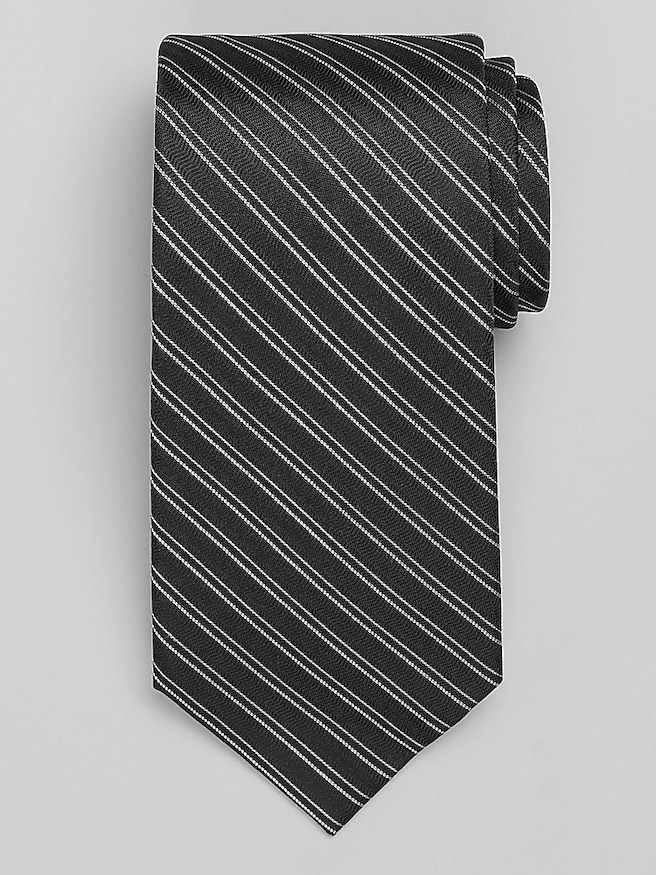
The lasting usefulness of polka dot ties comes from how easily they can move between occasions. A restrained dotted pattern can accompany a presentation, an interview, or a client dinner, then work just as naturally with a wedding suit when the dress code allows. For a wedding party, repeating the same dot scale and color palette can create visual consistency without requiring every accessory to match. For everyday dressing, one well-considered color can connect several familiar pieces: a burgundy background might complement a navy suit, gray trousers, and a blue sport coat in separate outfits. Black Striped Ties offer a more linear alternative in a tie rotation, while dots bring a rounded pattern that changes the mood of similar shirts and jackets. A dotted tie can also make a thoughtful gift for a father, partner, graduate, or colleague whose style leans toward tailored clothing. Clues such as favorite suit colors, usual tie width, and a preference for subtle or bold patterns make the choice feel personal rather than arbitrary. Good care helps preserve that usefulness. The care label should determine the cleaning method, since silk, wool, and blended fabrics can respond differently to moisture, heat, and stain treatments. Food or drink marks are best handled promptly and gently, without rubbing the spot deeper into the weave; a cleaner experienced with neckwear can assess delicate fabrics or persistent stains. After wear, undoing the knot carefully instead of pulling the narrow end through a tight knot helps limit stress on the fabric and seams. Time between wears allows ordinary creases to relax, and storage on a suitable tie rack or in a loose roll helps prevent sharp folds. Direct heat and heavy pressing can flatten texture or leave unwanted shine. With considered handling, balanced proportions, and colors that relate to the rest of a wardrobe, a polka dot tie can remain a dependable detail rather than an accessory saved for a single occasion.