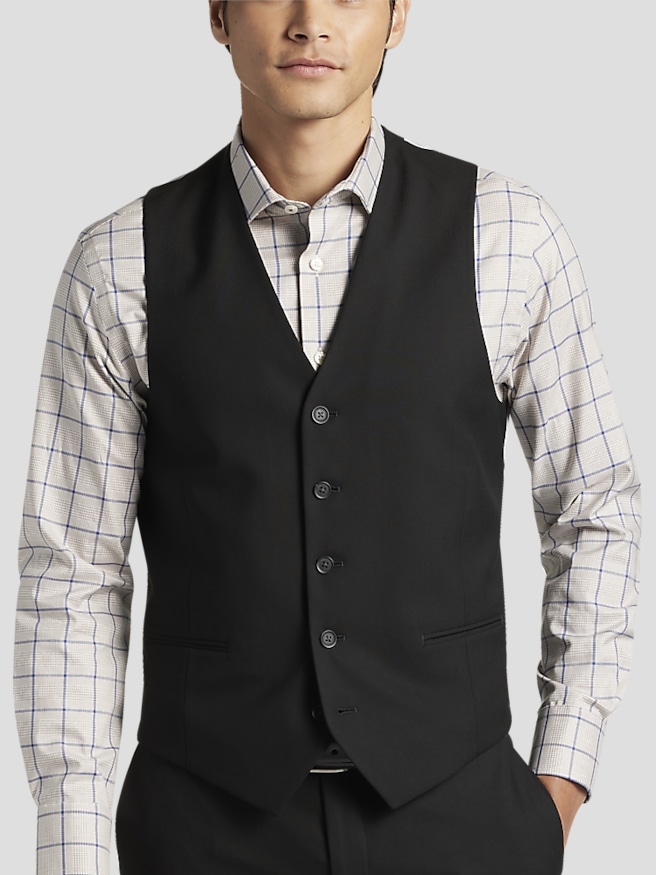
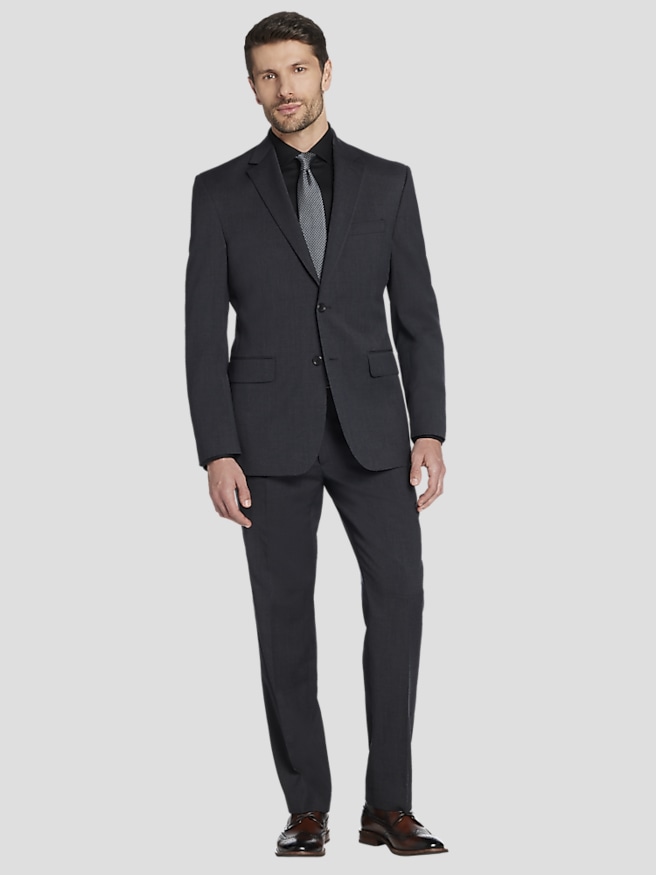
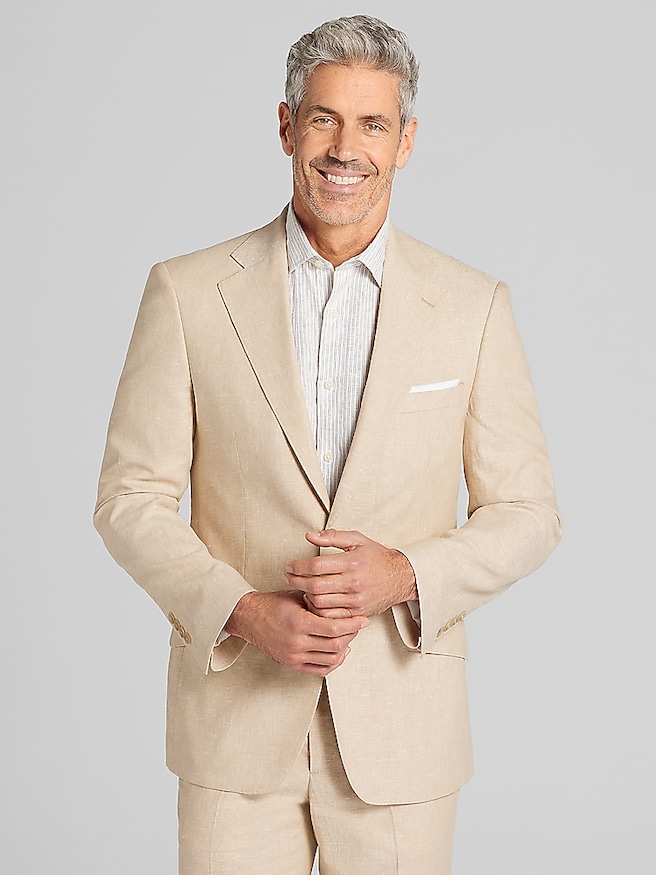
Plus size suits and separates combine tailored structure with proportions suited to fuller builds. A suit pairs a jacket and trousers in matching fabric, while suit separates allow each piece to be selected in its own size. That flexibility is useful when a broader chest calls for a larger jacket than the waist would suggest, or when fuller hips and thighs need more space than a matched set provides. For men dressing for business, weddings, graduation ceremonies, or milestone celebrations, the goal is a fit that looks composed standing up and remains comfortable through a full day of sitting, walking, and greeting people. Extended sizing is not simply about making every dimension larger: chest, waist, seat, rise, sleeve length, and overall jacket length each affect the result. Big and tall proportions may overlap, but a fuller build does not automatically need extra length. Well-proportioned plus size suit jackets sit smoothly across the shoulders, lie neatly over the chest, and close without strong pulling around the button. Lapels should rest against the front rather than bow away, and the collar should follow the shirt collar without a noticeable gap. Through the body, enough ease for movement is more useful than either a tight outline or excess fabric that folds around the waist. Trousers should have room through the seat and thighs, with a rise that stays comfortable when seated. A waistband that stays level and a hem that falls cleanly over dress shoes help the entire outfit look deliberate. A straight or gently tapered leg can create a balanced line without clinging to the calf. Alterations can refine sleeve length, trouser length, and some waist adjustments, but they cannot easily correct every shoulder or rise issue. Starting with the right basic proportions gives tailoring a better foundation and makes the finished outfit feel like clothing meant to be worn, not simply stood in.
The versatility of plus size suits and separates comes from the way color, texture, and proportion work together. Navy and charcoal provide a familiar foundation for professional settings, with enough flexibility to pair with white, pale blue, or subtly patterned dress shirts. A dark, solid suit can feel appropriate for a presentation, an interview, or a wedding with a suit-and-tie dress code, while a textured jacket and contrasting trousers create a less formal combination for a dinner or daytime celebration. The distinction between a coordinated suit and an intentionally mixed outfit matters: pieces that almost match can look less cohesive than pieces with a clear contrast. For a complete suit, matching fabric, weave, and color are important; for separates worn as an outfit, a visible difference in shade or texture helps the combination look purposeful. A navy jacket with gray trousers is one familiar example, while a small-scale check can add interest alongside solid pants and a quiet shirt. Pattern size is a matter of preference, not a rule tied to body size. What matters more is whether the pattern lies smoothly across the body and works with the rest of the outfit. Lapel width, tie width, and shirt collar shape can also support a consistent sense of proportion without needing to match precisely. For a workday that moves from a desk to a client meeting and then to dinner, comfortable trousers and a well-shaped jacket offer structure without requiring an entirely different outfit. On a more relaxed occasion, an open-collar shirt can soften the look where the dress code permits. For events with specific formal requirements, the invitation should determine the level of dress. Suiting can also be a thoughtful gift for a graduation or career milestone when the recipient’s measurements, preferences, and opportunity for fitting are part of the choice.
Fabric and construction influence how plus size suiting feels after several hours, how it holds its shape, and how well it stands up to repeated wear. Wool is valued for its drape, breathability, and ability to recover from ordinary creasing, although performance varies with the weave and finish. Wool blends can combine those qualities with other characteristics, such as added stretch or crease resistance. Cotton-rich fabrics tend to have a more relaxed character and may show wrinkles more readily, while synthetic blends vary considerably in softness, structure, and care requirements. Fabric weight alone does not tell the whole story: the weave, lining, and internal construction also affect how a jacket hangs and moves. A small amount of stretch can make reaching across a conference table or sitting through a long reception more comfortable, but stretch does not replace adequate room in the chest, waist, seat, and thighs. Smooth linings help garments move over a shirt, while neatly finished seams and secure buttons contribute to everyday durability. Pocket openings that lie flat and seams that remain relaxed when seated are useful signs that the fabric is not under constant strain. Overfilled trouser and jacket pockets can distort the outline, so a bulky phone or set of keys may sit better elsewhere. Care should follow the garment label, especially when a jacket and trousers contain different materials or construction details. Between cleanings, gentle brushing and time on a supportive hanger can remove surface dust and allow the fabric to recover its shape. Trousers hung neatly along their crease are less likely to develop unwanted folds, and space between garments helps prevent crushing. Professional cleaning or pressing, when appropriate for the fabric, can refresh the finish without the risk of an overly hot household iron leaving shiny marks. With sound proportions, suitable materials, and consistent care, plus size suits and separates can remain dependable choices for both regular routines and important occasions.