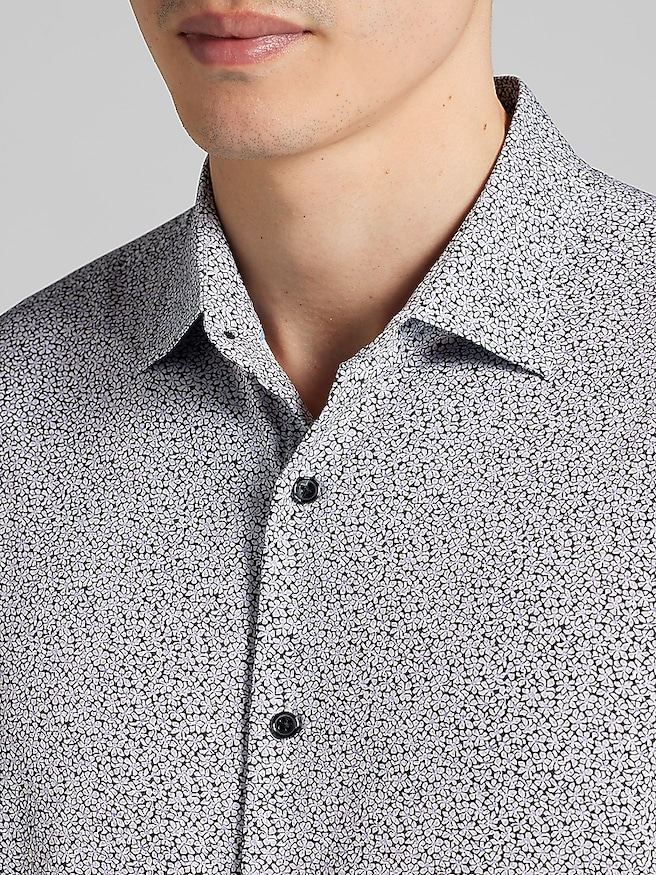
Plus size men's short sleeve shirts combine room through the body with proportions that make everyday dressing feel considered rather than oversized. Across casual button-front shirts, polos, and tees, a comfortable fit depends on the relationship between the shoulders, chest, midsection, and hem—not simply a larger size label. Shoulder seams generally sit near the shoulder edge, while the body should allow natural movement without pulling across the buttons or gathering heavily at the sides. Sitting at a desk, reaching for a shelf, and driving all reveal how a shirt moves beyond its appearance on a hanger. A button-front shirt that lies smoothly when standing should still have enough room through the abdomen when seated. Sleeves deserve equal attention: an opening with a little space around the upper arm allows movement, while an excessively wide or long sleeve can make the entire shirt look less defined. Hem length also changes the effect. A shorter, balanced hem works well untucked, while additional body length helps a tucked shirt stay secure through a full day. Plus size and tall sizing address separate needs, even though they can overlap. Big sizing generally adds width and room through the torso; tall sizing generally adds length, though exact proportions depend on the size chart. The related category of big and tall men's short sleeve shirts can be relevant for anyone comparing those fit requirements. Chest and waist measurements, considered alongside the chart for each shirt, provide more useful direction than assuming the same size will fit identically across every cut. A shirt that already fits comfortably can also provide a practical reference for body width, shoulder placement, and overall length. The goal is enough ease to move naturally, with a collar, sleeve, and hem that look intentional whether the shirt is worn alone or as part of a layered outfit.
Fabric gives a short sleeve shirt much of its character, from a crisp collar to a soft drape across the torso. Cotton is a familiar choice for its breathable feel and absorbency, but the weave or knit makes a noticeable difference. Cotton poplin typically has a smooth surface and a relatively crisp structure, making it well suited to button-front styles with a clean appearance. Oxford cloth has a more visible texture and can bring a substantial, casual feel. Jersey knit is softer and more fluid, while piqué knit gives many polos their lightly textured surface and defined shape. Linen has a distinctive texture and relaxed drape, with natural creasing that is part of its character rather than a sign of poor care. Cotton-polyester blends may offer easier wrinkle management and shape retention, depending on their construction and finishing. A small amount of elastane can add stretch, while some fabrics achieve flexibility through their knit or weave. Stretch is useful across the shoulders and chest, but it does not replace adequate room through the body; a shirt that remains under tension at the buttons is still too close-fitting. Fabric weight matters as well. A lighter cloth tends to move more freely, while a denser fabric may provide greater structure and opacity. For everyday wear, neatly finished seams, secure buttons, and even stitching help support repeated use. Care should follow the garment label, since fiber blends, dyes, and finishes can require distinct handling. Fastening buttons before laundering when recommended, separating deep colors from light ones, and avoiding unnecessary dryer exposure can help preserve appearance. Promptly removing a shirt after drying can reduce settled-in wrinkles, while smoothing the collar and placket before hanging helps maintain their shape. Stain treatment suited to the fabric is especially useful around collars and cuffs, where regular contact can leave visible marks.
The appeal of plus size short sleeve shirts is their range of everyday uses. A solid polo can look composed with chinos in a casual office, yet feel equally appropriate with jeans for a relaxed dinner. A woven button-front shirt offers a more defined collar and placket, making it a useful choice for a lunch meeting, a family gathering, or an evening out that does not call for formal clothing. An open short sleeve shirt over a simple tee creates another casual combination, provided the outer shirt has enough room to hang smoothly rather than pull across the back. For video calls, collar shape, shoulder fit, and a pattern that does not dominate the screen can make a greater difference than elaborate styling. Solid colors keep the focus on fit and texture, while stripes, checks, and small-scale prints add visual interest without requiring much else in an outfit. Pattern placement along the placket and pockets can contribute to a more finished appearance, and restrained details are easy to coordinate with familiar pants and shoes. Travel brings another set of practical considerations: a shirt that moves comfortably while seated, works with several pairs of pants, and needs little attention after unpacking can earn repeated wear. For days with frequent movement, fabric recovery and adequate sleeve room are worth considering alongside appearance. Short sleeves also leave the wrists unobstructed, which can be convenient for desk work and hands-on everyday tasks. As a gift, these shirts are most personal when they reflect the recipient's established preferences: a favorite collar style, a comfortable fabric, or colors already worn often. An existing shirt can offer a useful sizing reference, particularly when body length and sleeve shape are important. Whether intended for daily rotation or occasions that need a little more polish, a well-proportioned short sleeve shirt brings together comfortable movement, straightforward care, and an appearance that feels natural to the person wearing it.