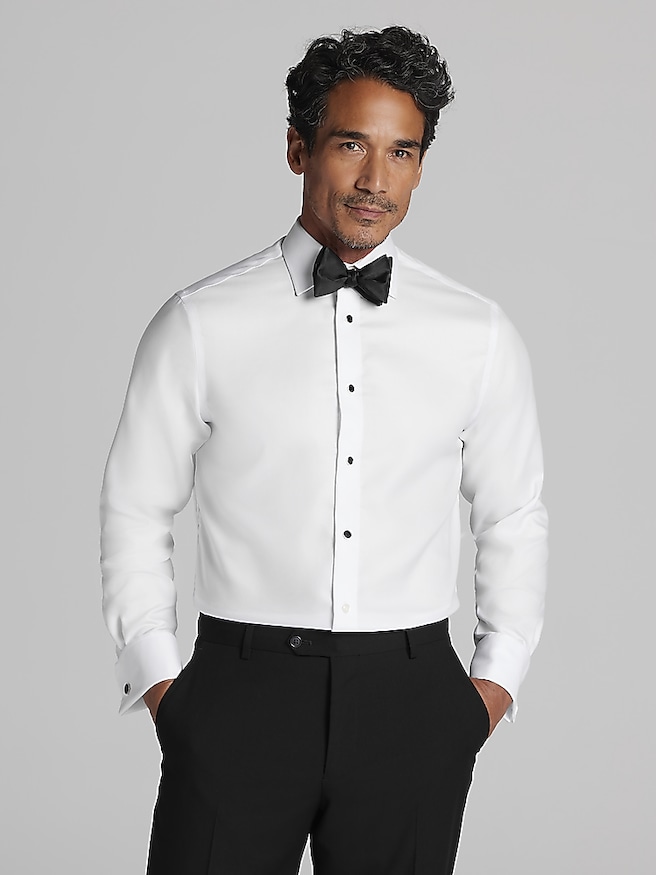
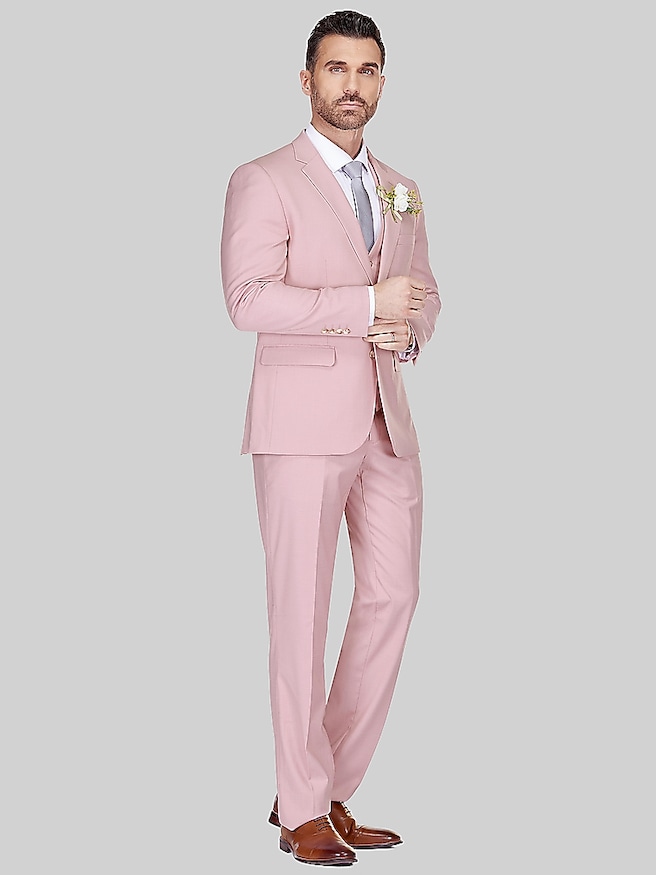
Pink shirts for wedding guests bring a soft touch of color to tailored clothing without losing the polish a celebration calls for. Blush, pale rose, and muted pink offer an alternative to white or light blue, with enough subtlety to sit comfortably beneath a suit jacket. The shade makes a noticeable difference: a barely pink shirt creates a quiet contrast with dark tailoring, while a richer rose has more presence and benefits from restrained accessories. Navy suits provide a crisp backdrop for either approach, charcoal gives pink a grounded appearance, and medium gray keeps the combination soft and balanced. Tan tailoring can also work beautifully for daytime ceremonies when the setting and dress code support lighter colors. For a ceremony followed by dinner and dancing, a smooth pink dress shirt can carry the outfit from natural light into a warmly lit reception room. Solid colors are especially easy to coordinate, though a fine stripe or understated woven texture adds depth without competing with a patterned tie. A navy silk tie, burgundy accent, or small geometric pattern can connect the shirt to the rest of the outfit; a white pocket square provides a clean finishing detail without matching every color exactly. Pink is well suited to many cocktail and semiformal wedding settings when paired with appropriate tailoring, but the invitation remains the clearest signal of what belongs. A traditional black-tie outfit generally calls for a white formal shirt rather than a pink dress shirt. At a more relaxed celebration, an open collar may suit the setting if the hosts have left room for that level of ease. Alongside the broader range of Wedding Guest Shirts, pink offers a distinctive color direction for guests who want their clothing to feel festive, considered, and comfortable without drawing attention away from the couple.
Fabric and fit shape how a pink wedding guest shirt looks and feels over several hours of wear. Cotton is a familiar choice for its breathability and comfortable feel, while cotton blends can bring easier maintenance or added flexibility, depending on their composition and finish. A small amount of stretch may make reaching, sitting, and dancing feel less restrictive, though stretch is not a substitute for adequate room through the shoulders and chest. Poplin typically has a smooth, clean surface that works well with refined tailoring. Twill has a diagonal weave and often a slightly fuller hand, making it appealing beneath a jacket during the cooler months. Pinpoint and fine oxford weaves offer subtle texture, with their suitability for dressier occasions depending on the shirt’s construction and collar. Linen has an airy feel and a naturally rumpled character, which fits relaxed destination celebrations more readily than a highly formal evening reception. Fabric weight also affects coverage: a very lightweight pale pink cloth may reveal an undershirt, while a more opaque weave creates a more uniform appearance. A low-contrast undershirt close to the wearer’s skin tone can help when extra coverage is wanted. In a well-fitting shirt, shoulder seams sit near the shoulder edges, the front buttons lie flat, and the collar closes without pinching. A slim cut follows the torso more closely; a classic cut generally allows more room through the chest and waist. Neither label guarantees the right fit, so measurements and the shape of the individual shirt matter more than the name alone. Long sleeves should reach the wrist without bunching heavily, and the cuffs should allow comfortable movement while showing a narrow edge beneath a jacket sleeve. A hem long enough to stay tucked is particularly useful through a seated ceremony, dinner, and time on the dance floor. Those small proportions help the shirt maintain its neat appearance even after the jacket comes off.
Collars, cuffs, and finishing details give pink dress shirts much of their character. A spread collar leaves space for a fuller tie knot, while a point collar creates a narrower frame at the neckline. A button-down collar brings a more relaxed note and can work with a blazer when the wedding setting allows it. For an open-neck outfit, a collar with enough structure to sit neatly beneath jacket lapels helps the look remain intentional. Standard button cuffs are straightforward to wear, while French cuffs introduce cuff links and a dressier finishing touch when appropriate to the outfit. Smooth buttonholes, securely attached buttons, and even seams are practical details worth noticing because wedding clothing still needs to withstand movement and repeated care. A shirt that pulls across the chest or strains at the elbows puts additional stress on those areas, making fit part of durability as well as appearance. Care requirements vary by fabric and construction, so the sewn-in care label should determine washing, drying, and ironing methods. Where machine washing is permitted, washing with similar colors and avoiding excessive heat can help preserve the shade and reduce unnecessary wear. Prompt attention to marks at the collar and cuffs is useful, especially after a long reception, and stains are best assessed before heat drying, which can make some marks harder to remove. Wrinkle-resistant finishes may reduce ironing, but they do not necessarily eliminate creases from packing or prolonged sitting. Hanging the shirt promptly and pressing or steaming only as directed helps restore a crisp surface for the next occasion. For travel to a wedding, keeping the shirt loosely packed near the top of a suitcase can reduce hard folds, with time set aside to check it after unpacking. Beyond the celebration, a restrained pink shirt can move easily into business attire, anniversary dinners, and other dressed-up gatherings. That versatility also makes it a thoughtful gift for someone whose collar size, sleeve length, and preferred fit are known. The appeal is lasting rather than tied to one event: gentle color, balanced proportions, and fabric that feels as good at the final toast as it did at the ceremony.