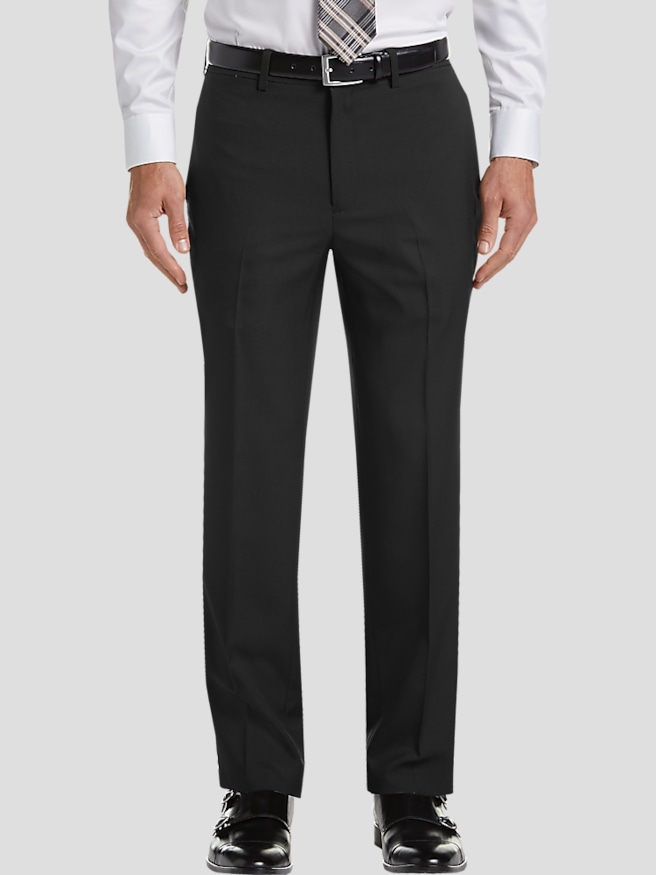
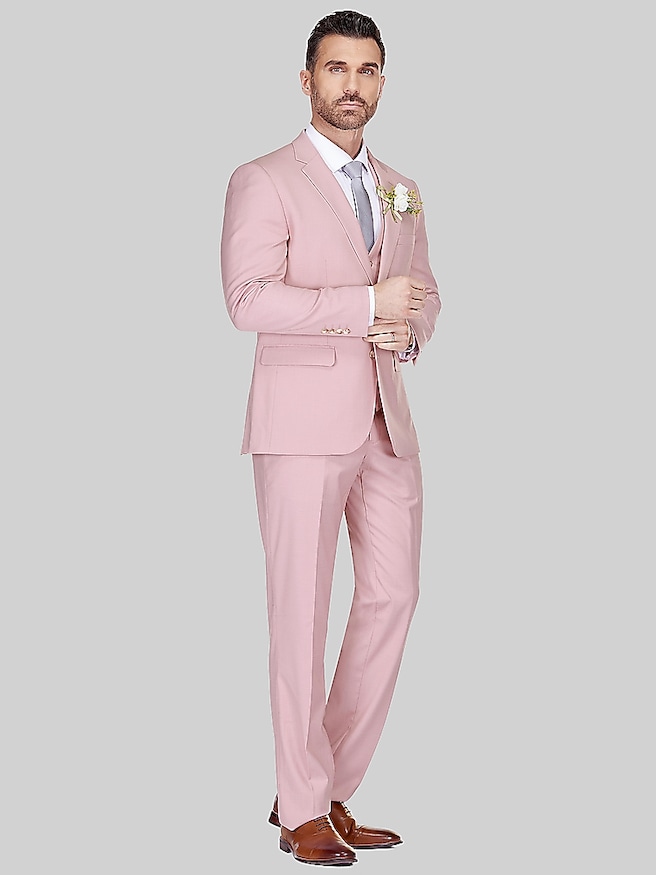
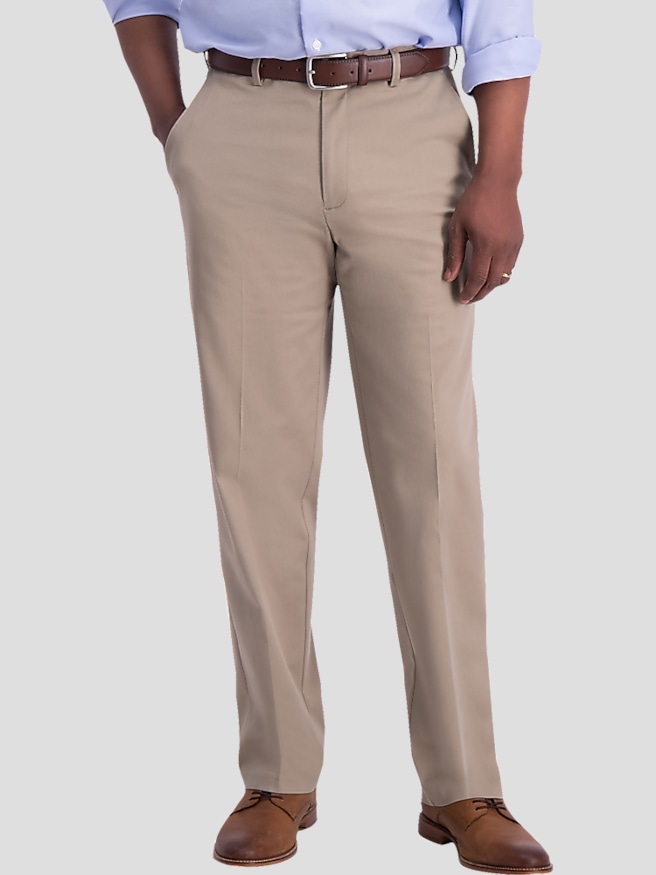
Pink formal pants bring color to tailored dressing without losing the clean lines and polished finish expected from dress trousers. The shade makes a substantial difference: pale blush reads softly against a white shirt, dusty rose has a more muted character, and saturated pink creates a stronger focal point. Salmon and coral tones lean warmer, while pinks with blue undertones can sit comfortably beside charcoal, navy, and cool gray. Beyond color, what makes trousers feel formal is the combination of fabric, fit, construction, and finishing details, such as a defined crease, a neat waistband, and a hem that works with dress shoes. These details make pink dress pants a distinctive choice for wedding guests, coordinated wedding parties, celebratory dinners, and professional events where expressive tailoring suits the setting. A white dress shirt and navy jacket keep the combination grounded; a charcoal jacket gives a deeper rose shade a restrained backdrop. Cream and light gray can create a softer overall effect, provided there is enough contrast to keep each piece distinct. When the trousers carry most of the color, a solid shirt and a quiet tie usually create a more balanced result than several competing patterns. A small-scale pattern can still work when its colors relate to the pants rather than trying to match them exactly. Brown or burgundy leather shoes often complement warmer pink tones, while black shoes can sharpen a combination built around charcoal or black accessories. For a coordinated look beyond the trousers, explore Pink Formal Wear. The occasion still sets the boundaries: colorful dress separates may suit a creative reception, but a strict black-tie invitation generally calls for a tuxedo. When pink trousers are intended to form part of a suit, matching fabric, shade, and texture matter more than simply pairing two pieces described with the same color name.
The fit of pink formal pants should look composed while allowing comfortable movement through a full event. A slim silhouette follows the leg closely, but it should not pull across the pockets, grip the thighs, or catch at the calves when standing up. A straight leg offers a cleaner vertical line with more room through the lower leg, while a fuller cut can create an elegant drape when the waist and seat fit correctly. The waistband should sit securely at the intended rise without relying on a tightly cinched belt. A higher rise can help a tucked shirt stay in place and create a longer-looking leg line; a lower rise changes those proportions and needs enough room through the seat to remain comfortable when seated. Flat-front trousers have a smooth appearance, while pleats can provide additional room through the hips and thighs when properly fitted. Pleats should lie closed at rest rather than spreading open. At the hem, little or no break produces a crisp finish, while a slight break adds a more traditional touch. Excess fabric pooling over the shoes can obscure the shape of the trousers, regardless of the cut. Fabric contributes just as much to the result. Wool dress cloth can provide a refined surface and fluid drape, with performance that varies by weight and weave. Wool blends may combine that character with other qualities, such as added resilience or stretch. Cotton generally has a more matte appearance and can develop visible creasing, making the overall construction especially important for dressier use. Linen has a distinctive texture and natural wrinkles that create a more relaxed impression. Synthetic fibers can contribute shape retention and resistance to wrinkling, though composition alone does not determine quality. A small amount of elastane may add ease for sitting, walking, and dancing, but stretch cannot compensate for trousers that are too tight. Lining, pocket construction, and fabric density also deserve attention, particularly in pale pink, where pocket outlines or strong contrasts underneath may be more noticeable.
Long-term wear depends on both construction and care. Secure stitching at pocket openings, a stable waistband, and neatly finished seams help dress trousers withstand repeated use, while sufficient ease reduces strain at the seat and upper thighs. For someone who spends much of an occasion seated, the ability to sit comfortably without the waistband digging in matters as much as the standing silhouette. For a wedding-party member moving between photographs, dinner, and the dance floor, freedom through the knees and seat can make the outfit feel considerably less restrictive. Alterations are often useful for refining the waist and hem, but major changes to the rise or overall shape are more complicated; starting with suitable proportions gives a tailor a stronger foundation. Care should always follow the garment label rather than a blanket rule for all dress pants. Some fabrics require professional dry cleaning, while others permit washing under specified conditions. Excessive heat can damage fibers, affect stretch, or leave an unwanted shine, so pressing temperature and technique should suit the material. A pressing cloth helps protect the surface, and following the established crease avoids creating competing lines down the leg. Emptying pockets after wear prevents keys, phones, and wallets from distorting the fabric during storage. Hanging trousers neatly on an appropriate hanger helps preserve their shape, while allowing them to air between wears can reduce unnecessary cleaning. Spills deserve prompt attention: gentle blotting is generally preferable to rubbing, and unfamiliar stain treatments can leave marks or alter the color. Pink formal pants can also make a thoughtful gift for someone who enjoys tailored clothing with personality, especially when the recipient’s preferred shade, rise, and leg shape are already known. Whether worn for one important celebration or incorporated into a regular rotation of dress separates, their appeal rests on the same essentials: a considered color, comfortable proportions, and a finish that stays neat throughout the occasion.