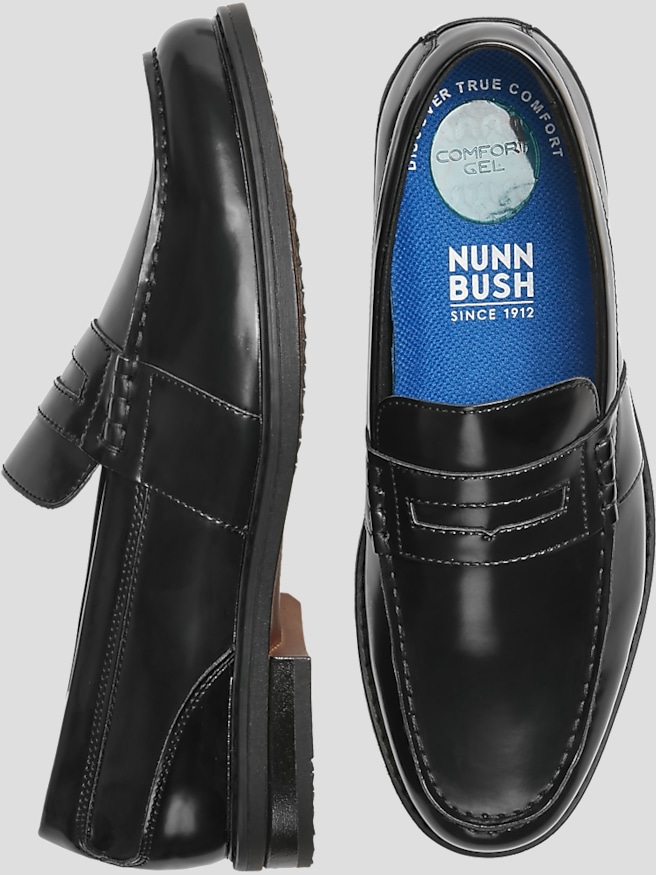
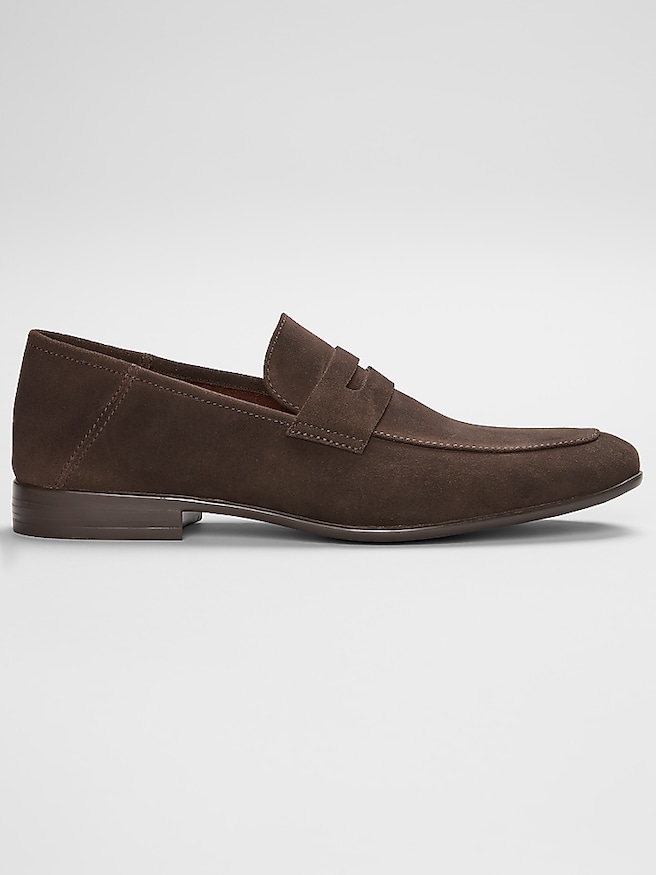
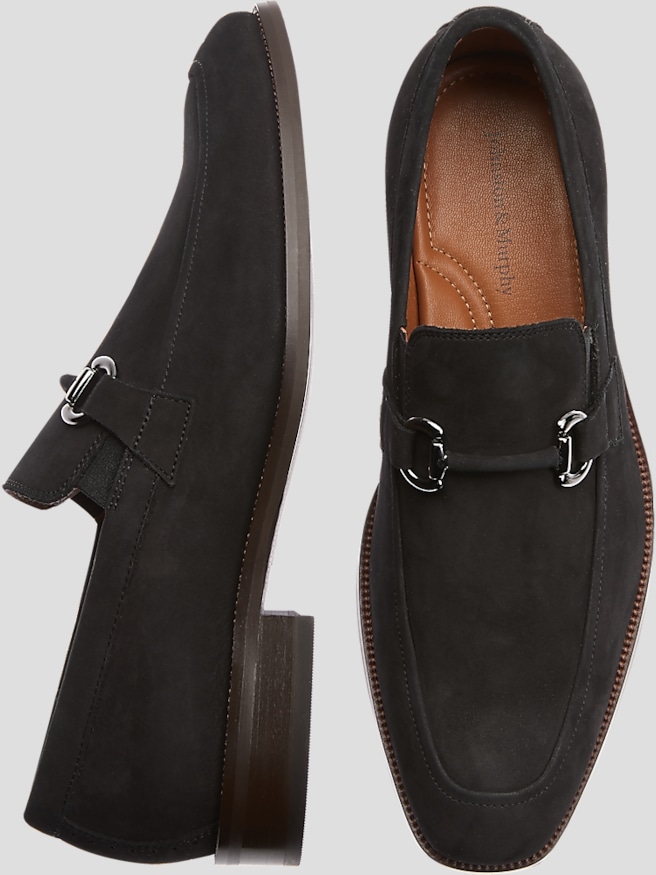
Penny loafers are low-heeled, slip-on shoes distinguished by a strap across the instep with a small, usually diamond-shaped cutout. That strap, often called a saddle, gives the silhouette its recognizable look, while a raised, moccasin-style seam typically traces the toe. Unlike lace-up dress shoes, penny loafers have a clean, uninterrupted profile that feels polished without looking overly formal. Their name is associated with the custom of tucking a penny into the saddle opening, a detail closely tied to their popularity on American college campuses in the mid-20th century. Today, the appeal extends well beyond collegiate style: men’s penny loafers work with office clothing, weekend separates, and many dressed-up occasions where a tuxedo is not required. Smooth leather brings definition and a subtle sheen to wool trousers or a softly tailored suit, while suede introduces a brushed texture that complements chinos, corduroy, and dark denim. The shape makes a difference, too. A gently rounded toe has an easy, traditional character; a more tapered toe can look sharper beneath slim or straight tailored trousers. Substantial soles lend visual weight to heavier fabrics, whereas a low-profile sole keeps the shoe understated. Black penny loafers create a crisp finish with charcoal or navy, brown shades sit comfortably alongside earth tones, and burgundy adds depth without becoming the focal point of an outfit. For a typical workday that moves from a desk to a lunch meeting and then dinner, this balance of structure and ease is especially useful. The same basic silhouette can look relaxed beneath cuffed chinos or more refined beneath trousers with a clean hem. Although penny loafers bridge casual and dress clothing, they are not a substitute for every formal shoe; the occasion’s dress code still matters. Their strength lies in giving everyday outfits a considered finish without requiring elaborate styling.
Materials and construction influence how penny loafers feel on the foot, how they age, and where they make the most sense. Smooth leather can develop attractive creasing and character with wear, though its softness and finish vary. Suede offers a softer-looking surface with a visible nap, making it particularly natural with textured clothing during the cooler months. Neither material should be assumed waterproof, and a sleek leather sole is not designed to provide the traction of a weather-focused shoe on wet or icy sidewalks. Rubber outsoles can add grip and flexibility, but tread pattern and construction matter as much as the material itself. For someone whose commute includes several blocks on foot, sole traction, cushioning, and heel stability deserve as much attention as color. A leather outsole offers a traditional appearance and can feel firm at first; flexibility depends on the shoe’s overall build. Linings and interior seams also affect comfort, especially across the instep and around the heel. Because penny loafers have no laces to adjust, fit is particularly important. The saddle should hold the midfoot securely without pressing painfully into it, the toes should have room to lie naturally, and the heel should not lift excessively with each step. Slight movement can occur in a new loafer, but a shoe that repeatedly slips off is not simply waiting to be broken in. Leather may soften and give somewhat across the width, yet it will not reliably correct a shoe that is too short. Trying loafers with the socks intended for regular wear gives a more useful sense of fit than testing them with an unusually thick or thin pair. Fine dress socks maintain a neat line with tailored trousers, while moderately heavier socks can complement casual clothing if the shoe has enough room. For a bare-ankle look, discreet liner socks can help manage moisture and friction. Anyone spending long stretches standing should consider underfoot support and usable interior space, including room for an orthotic if needed. A handsome silhouette works best when it remains comfortable beyond the first few minutes.
Penny loafers fit naturally into a wardrobe built around clothing that can move between settings. At an office with a business-casual dress code, a smooth leather pair works with pressed chinos, an oxford shirt, and an unstructured jacket. For a family dinner or an evening gathering, suede loafers beneath dark jeans and a textured sweater offer a relaxed finish that still looks intentional. Trouser length helps set the tone: a hem that falls neatly near the top of the shoe keeps the saddle visible, while excess fabric pooling over the vamp can obscure the shape. Dressier celebrations call for closer attention to finish and proportion. For prom outfits where the dress code permits loafers, Leather Penny Prom Loafers connect this classic silhouette with occasion dressing; a polished leather finish generally looks more formal than a soft suede surface. Penny loafers can also make a thoughtful graduation or birthday gift for someone building a work wardrobe, provided the recipient’s size, width, and preferred fit are known. Their lasting usefulness depends partly on routine care. Dust and grit should be removed before they settle into seams or scuff the finish. Smooth leather benefits from an appropriate cleaner and occasional conditioning according to the maker’s instructions, with polish used when suitable for the leather. Suede needs its own brush and care products rather than ordinary shoe polish, and any protective treatment should be tested in an inconspicuous spot first. After wear, allowing shoes to dry fully between outings helps limit moisture buildup. Cedar shoe trees can help maintain shape, while damp loafers should air-dry away from radiators and other direct heat. Worn heels, loose stitching, and thinning soles are worth addressing early; whether resoling is possible depends on construction. With a secure fit, suitable materials, and consistent care, penny loafers can remain a dependable part of everyday dressing, carrying their distinctive saddle detail from tailored weekday clothing to relaxed weekend outfits.