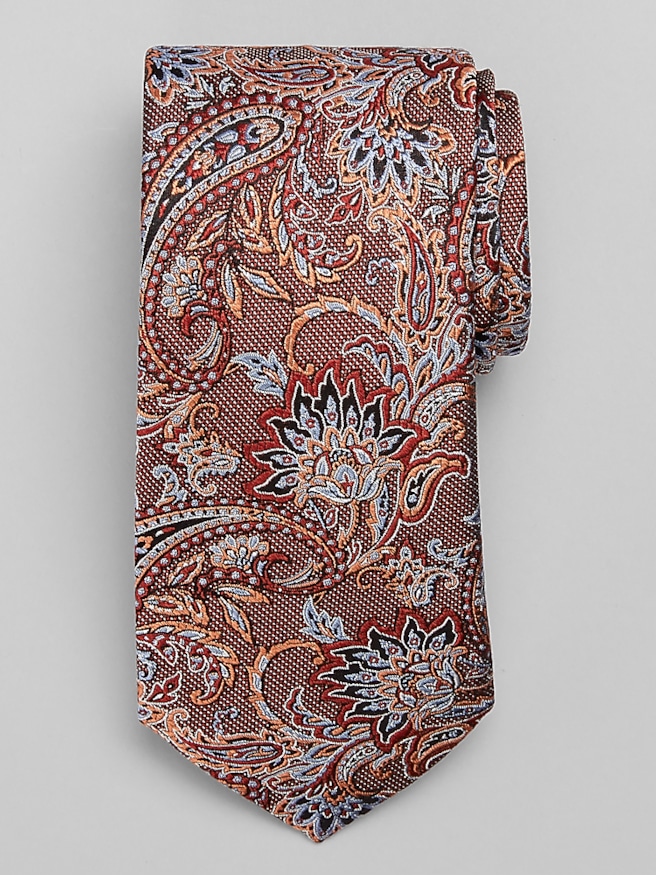
Peach ties add a soft pink-orange accent to suits, sport coats, and dress shirts, bringing color to an outfit without the intensity of bright coral or red. The shade can lean toward pale apricot, muted salmon, or a pinker blush, so its effect depends on both the fabric and the clothing beside it. Against a white shirt, peach looks crisp and clearly defined; against ivory, the combination feels softer and more tonal. A pale blue shirt offers gentle contrast, especially beneath a navy suit. Charcoal and medium gray give the color a restrained backdrop, while tan and brown tailoring emphasize its warm undertones. These combinations make peach a versatile choice for wedding parties, graduation celebrations, anniversary dinners, and workplaces where a colored tie fits the dress code. A groom might choose a solid peach necktie to echo a detail in the wedding flowers, while wedding guests can use a small-scale pattern to bring the same color into an outfit without looking like part of the coordinated party. For a business presentation, a subdued peach tie with a navy jacket and white shirt adds personality while keeping the overall impression professional. Pattern changes the effect as much as shade does: a solid places the focus on color and texture, a fine stripe introduces structure, and a small repeating motif adds detail that becomes more noticeable up close. When a shirt already has a visible check or stripe, a quieter tie usually gives the outfit a clearer focal point. Larger patterns can work well with solid shirts because the two pieces do not compete for attention. Peach also pairs comfortably with subtle blue, cream, and brown accents within a pattern. The most cohesive combinations let one element lead, allowing the tie to stand out without requiring every accessory to match its exact shade.
Fabric and construction influence how a peach tie looks, knots, and holds its shape. Silk can give the color depth and a gentle luster, although the finish varies considerably with the weave. A smooth satin weave reflects more light and can make peach appear luminous, while a textured weave breaks up reflections for a quieter appearance. Silk should not automatically be associated with high shine; some woven finishes have a restrained surface that works well with everyday tailoring. Polyester ties can offer resilience and straightforward maintenance, but their care requirements still depend on the finished fabric and construction. Linen and cotton bring visible texture and a less polished character, often pairing naturally with softly structured jackets. Blended fabrics can balance surface texture, drape, and ease of care. Beyond the fiber label, a well-proportioned tie should hang cleanly, with edges that lie flat and a blade that does not noticeably twist. The lining contributes body, affecting both the fullness of the knot and the way the tie falls against a shirt. A thick fabric combined with substantial lining creates a larger knot, while a lighter construction generally produces a smaller one. That relationship matters when matching a tie to a collar: a narrow opening can look crowded by an oversized knot, whereas a broad spread collar can accommodate more volume. Tie width should also feel balanced with jacket lapels and the wearer's proportions rather than follow a single rule for every outfit. Length deserves equal attention. After tying, the front tip generally sits near the belt buckle or the top of the waistband, with the narrow blade secured neatly behind it. Taller wearers, larger neck sizes, and fuller knots may call for additional length. A peach tie that hangs at the right point and sits comfortably beneath the collar will look more polished than one chosen for color alone.
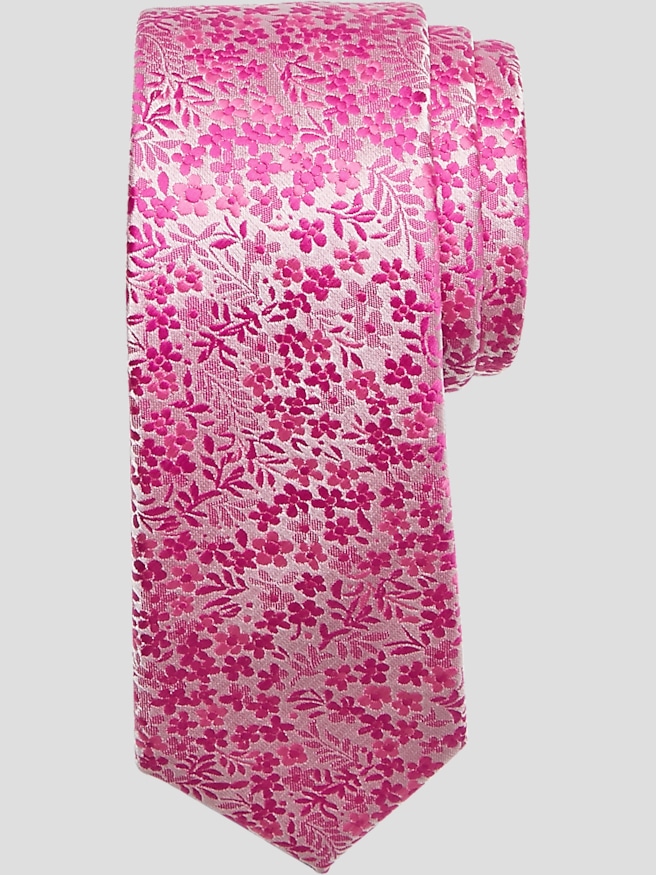
Everyday handling plays a meaningful role in how long a tie keeps its shape and finish. Carefully reversing the knot after wear puts less strain on the fabric than pulling the narrow end through a tight knot, and storing a tie loosely rolled or draped over a suitable rack helps avoid deep creases. A tie should have room in a drawer or travel case rather than being compressed beneath heavier clothing. For spills, gentle blotting is generally preferable to rubbing, which can spread a mark or disturb the surface. Cleaning, steaming, and pressing should always follow the care label, particularly with silk or textured fabrics that may react poorly to moisture or direct heat. Professional cleaning may be appropriate when the label recommends it or a stain needs specialized attention. These small habits help preserve the qualities that make a tie appealing in the first place: an even surface, a clean drape, and a knot that looks intentional rather than crushed. Peach ties can also make thoughtful gifts for someone building a collection of dress accessories, preparing for a milestone event, or adding variety to a wardrobe dominated by navy and gray. The most useful choice reflects the recipient's usual clothing, preferred tie width, and comfort with pattern. A restrained solid can complement a collection of patterned shirts, while a softly patterned tie can add interest for someone who usually wears plain shirts. For a related color direction with a more decorative surface, pink floral ties bring botanical detail to a similarly gentle palette. Finishing touches need not repeat the tie exactly: a white pocket square offers a clean contrast, and a patterned square can pick up a small amount of peach alongside other colors. With balanced proportions, compatible textures, and thoughtful care, a peach tie becomes an expressive accessory for both meaningful celebrations and ordinary days that call for tailored clothing.