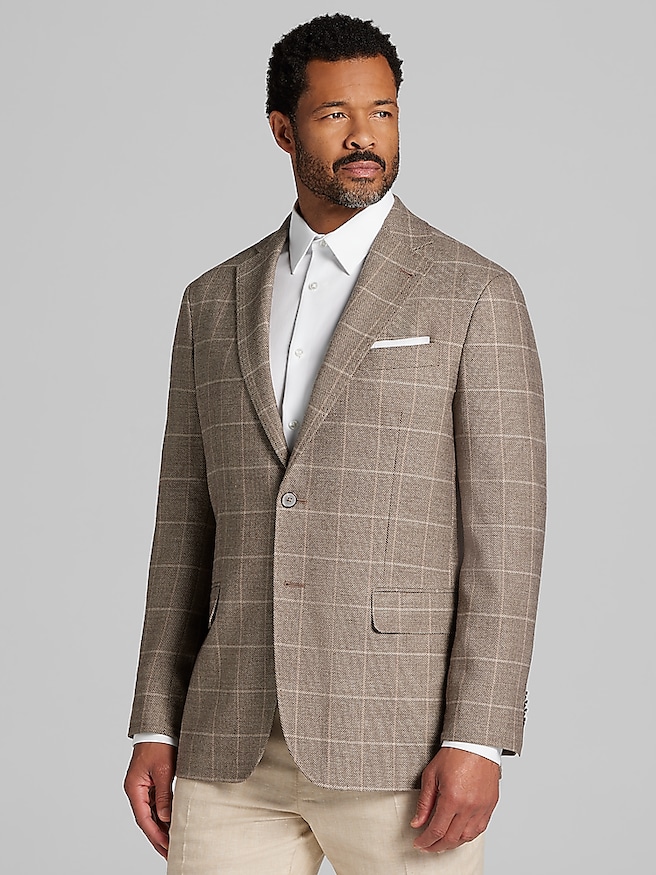
Patterned sport coats for rehearsal dinners bring personality to an occasion that calls for looking polished without necessarily wearing a matching suit. A well-chosen pattern gives a jacket visual interest while leaving room for a simple shirt, tailored trousers, and the small details that make an outfit feel personal. Checks, plaids, windowpanes, herringbone weaves, and floral prints each create a distinct impression. A fine check can read almost like a solid from across the table, revealing its detail during conversation. An open windowpane creates a more pronounced outline, while a tonal plaid adds depth without becoming the center of attention. Herringbone offers a quieter effect through its repeating, angled weave; floral motifs make a more expressive choice when the invitation and venue allow it. Navy, gray, brown, and muted blue provide versatile foundations, especially when the pattern includes a color that can be echoed in a shirt or trousers. The setting matters as much as the pattern itself. A private dining room with linen-covered tables may call for sharper tailoring and a dress shirt, while a relaxed restaurant gathering can suit softer construction and an open collar. The invitation’s dress code remains the clearest reference: a patterned sport coat works well for many dressy-casual and cocktail settings, but it does not replace formal attire when that is specifically requested. For a groom, it can distinguish the rehearsal dinner from the wedding ceremony without making the evening feel ordinary. For groomsmen, relatives, and invited guests, it offers a considered middle ground between everyday clothing and a full suit. Coordinating with any guidance from the couple helps keep the group visually cohesive without requiring everyone to wear the same jacket. Pattern scale also affects the mood: compact designs tend to feel restrained, while broad checks and high-contrast motifs have a stronger presence in photographs and around the dinner table.
Fabric and construction shape how a patterned jacket looks, moves, and holds up through an evening of greetings, seated courses, and toasts. Wool is valued for its drape and resilience, and wool blends can combine those qualities with other fibers selected for texture, strength, or flexibility. Cotton often creates a more relaxed surface, while linen contributes distinctive texture and a naturally rumpled character rather than a perfectly smooth finish. Blends containing synthetic fibers may improve wrinkle resistance or durability, depending on their composition and construction. A small amount of stretch can add give, though it cannot compensate for a jacket that is too tight across the back or chest. Breathability depends on the weave, fabric weight, and lining as well as the fiber content, so the composition label tells only part of the story. A lightly structured sport coat can follow the body with an easy silhouette; a more structured chest and shoulder can create a defined profile. Neither approach is inherently more appropriate for a rehearsal dinner. The better choice is the one that supports the intended level of dress and feels comfortable through the event. Fit is especially noticeable when a pattern creates clear horizontal or vertical lines. Shoulder seams should sit near the natural shoulder edge, the collar should rest neatly against the shirt collar, and the lapels should lie flat rather than bow outward. With the jacket fastened, pronounced pulling around the button or across the back suggests that more room may be needed. Sleeve length should allow a small amount of shirt cuff to show, and the jacket should provide balanced coverage through the seat. Side or center vents help accommodate movement, but they should not flare open while standing naturally. Sitting comfortably at dinner, reaching for a glass, and greeting another guest all require practical ease. Tailoring can refine sleeve length and shape through the waist, while a sound shoulder fit provides the strongest starting point.
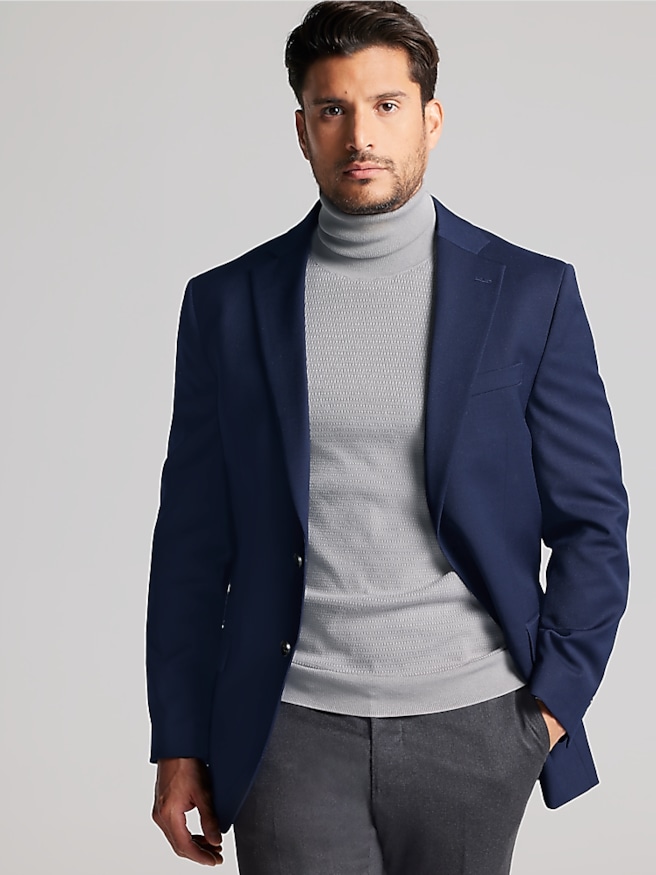
Styling patterned sport coats for rehearsal dinners usually works best when the surrounding pieces give the jacket room to stand out. A solid white or pale blue shirt creates a clean background for checks and plaids, while a fine-textured shirt can add depth without introducing another competing motif. When both the shirt and jacket carry patterns, a clear difference in scale helps keep the combination readable. Trousers should look intentionally separate rather than almost matching: gray trousers with a navy windowpane jacket, for example, create a clear contrast that feels composed. A muted brown plaid can pair naturally with cream or charcoal trousers, depending on the colors woven into the cloth. A tie adds definition when the gathering leans dressier, while an open collar can soften the same jacket for a more relaxed dinner. Pocket squares work best as a supporting detail rather than an exact duplicate of the tie. Polished leather shoes and a compatible belt complete the outfit without drawing attention away from the tailoring. Beyond the rehearsal dinner, a versatile pattern can suit anniversary dinners, engagement celebrations, and other occasions that call for tailored separates. That broader usefulness can also make a sport coat a thoughtful gift when the recipient’s measurements and style preferences are known. Care helps preserve both its appearance and its usefulness. Following the garment’s care label is essential, since fabric blends, linings, and internal construction can require distinct treatment. A suitable clothing brush can lift surface dust, a shaped hanger supports the shoulders, and space in the closet helps prevent crushing. Prompt attention to spills and cleaning appropriate to the label help protect the fabric; repeated unnecessary cleaning can be harder on a jacket than routine airing and careful storage. For related occasion dressing, explore Men's Fall Wedding Patterned Sport Coats. A balanced pattern, comfortable fit, and thoughtful coordination give a rehearsal dinner jacket a place in a wardrobe well beyond one evening.