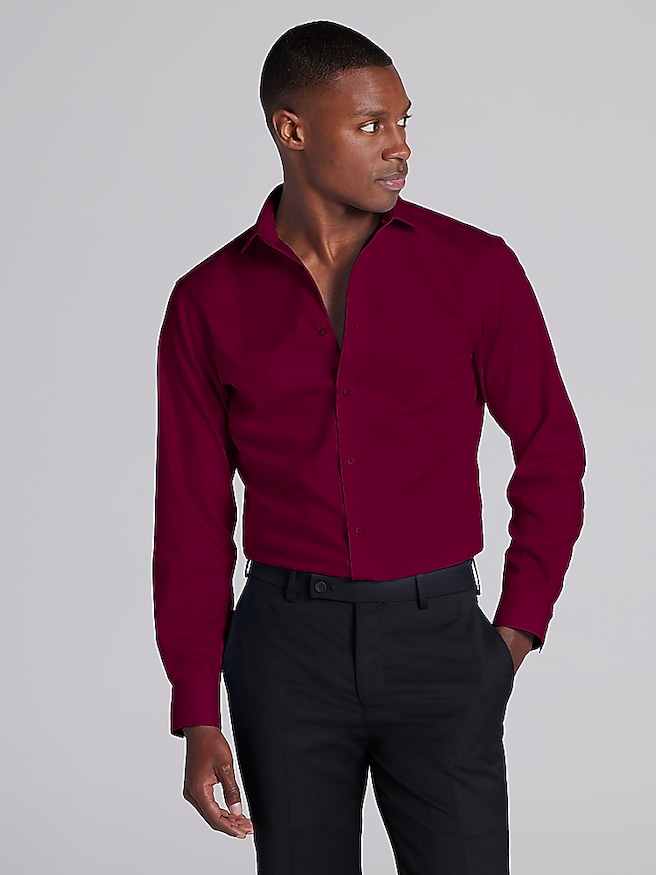
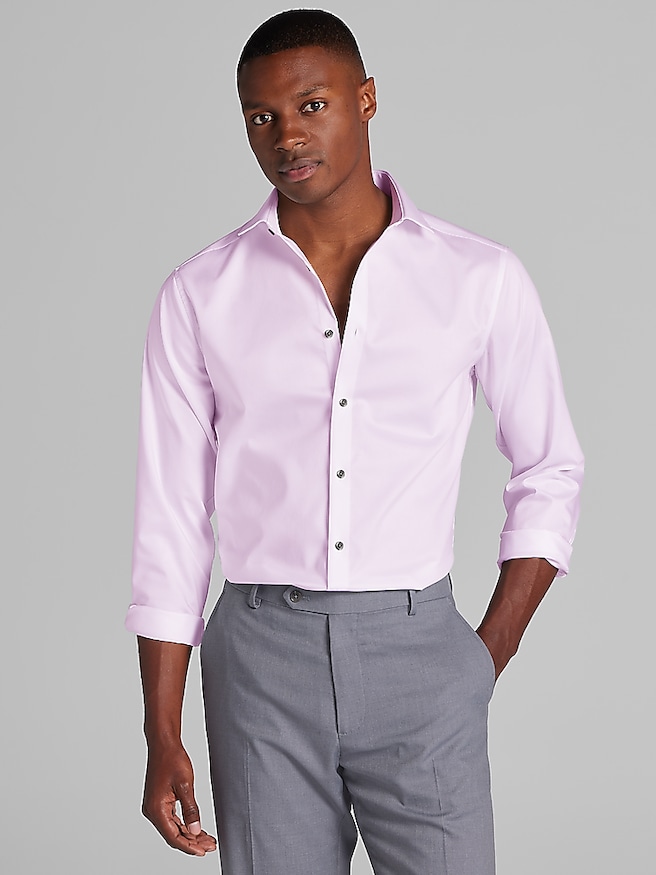
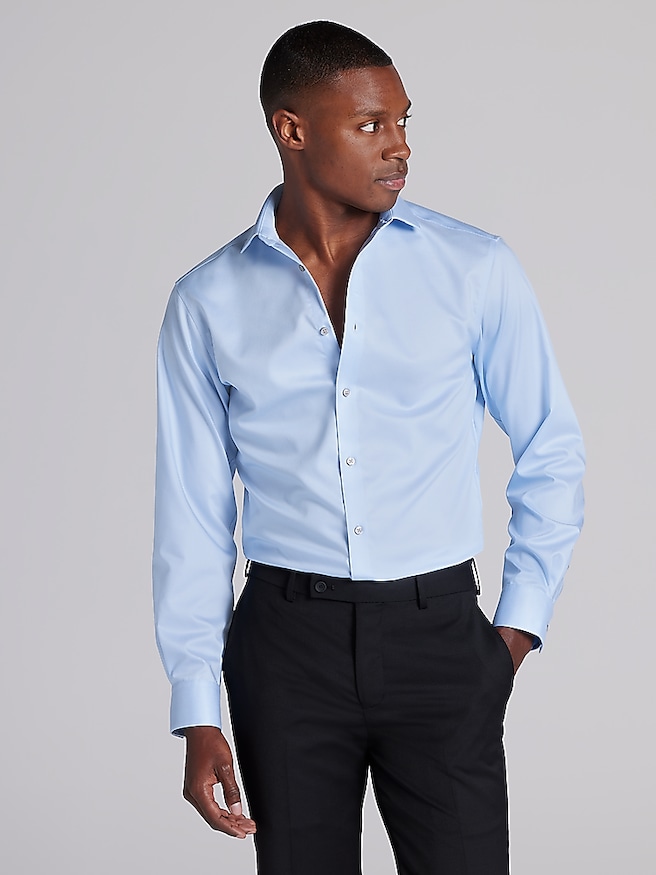
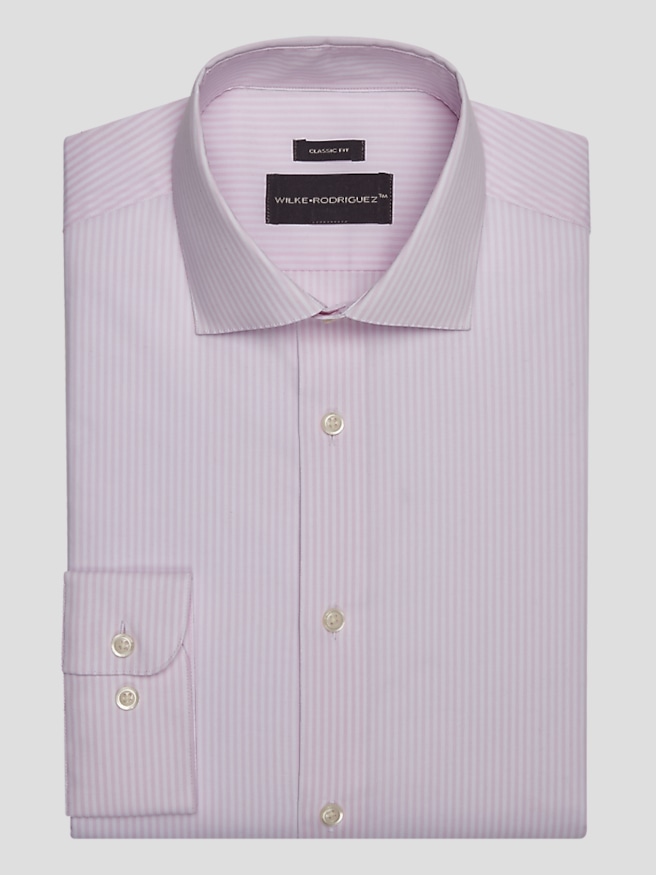
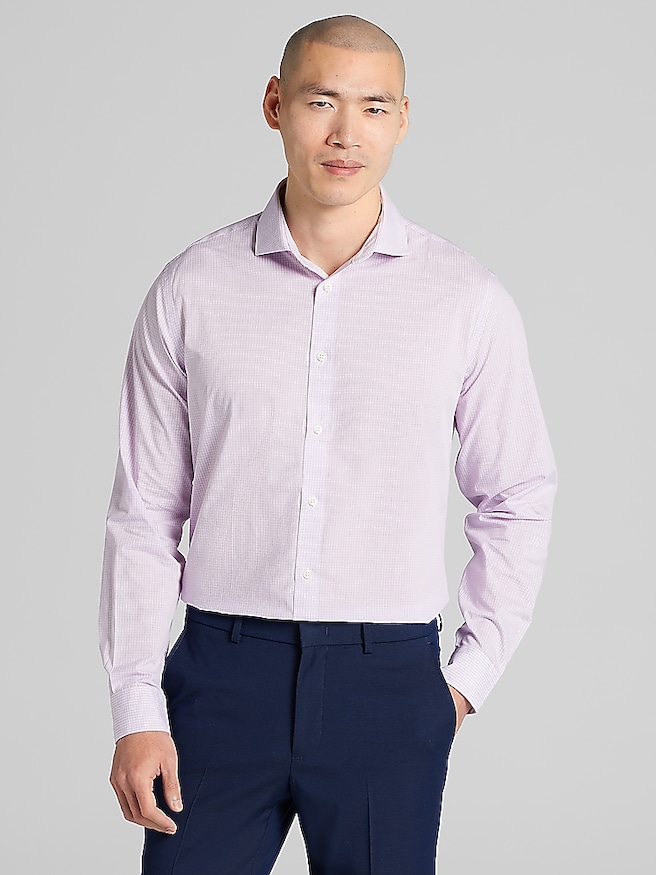
Pastel dress shirts bring subtle color to tailored clothing, offering an alternative to white without the intensity of deeper, more saturated shades. Powder blue, blush pink, lavender, mint, and pale yellow all belong to this light-toned palette, though each creates a slightly different impression. Pale blue feels familiar in a business setting, soft pink adds warmth beside gray tailoring, and lavender introduces a distinctive note while remaining understated. Their versatility comes from the balance between color and restraint: a pastel shirt can brighten the space beneath a jacket while leaving the overall outfit polished and composed. Against navy, these shades create a crisp contrast; with charcoal, they soften the look of dark tailoring. Medium gray, brown, and tan also provide useful foundations, especially when the shirt is the main source of color. A powder blue shirt beneath a navy suit can move comfortably from a client presentation to dinner, while a pale lavender shirt with gray trousers gives a dressed-up gathering a more personal touch. For more ways to work with blush and rose tones, explore Pink Shirts. Pastels also pair well with patterned accessories, including a small-scale geometric tie or a pocket square that echoes one color rather than matching it exactly. A navy or burgundy tie can add definition when an outfit needs a more formal finish, while a textured tie creates interest without introducing another busy pattern. Solid pastel dress shirts are especially useful beside checked jackets and striped suits because they give those patterns room to stand out. Subtle shirt stripes or small checks can offer a similar softness with additional visual texture. For weddings, business events, celebrations, and everyday office wear, the appeal is straightforward: a light touch of color makes familiar tailoring feel more individual without overwhelming it. The result can be expressive or conservative depending on the collar, accessories, and trousers surrounding it.
Fabric and construction influence how a pastel dress shirt looks as much as its color. Cotton is a familiar choice for its breathability and comfortable feel, while cotton blends can combine that character with properties such as easier wrinkle management or added resilience, depending on their composition. Stretch fabrics offer some give through movements such as reaching across a conference table or sitting through a long event, but fabric flexibility does not replace a well-proportioned fit. Weave matters, too. Poplin typically has a smooth surface that gives pale colors a clean, even appearance. Twill has a diagonal texture and often a slightly fuller drape, while pinpoint and fine Oxford weaves add subtle texture that can work with both suits and less formal trousers. Because light shades can reveal what is underneath, fabric opacity deserves attention, particularly across the chest and beneath strong indoor lighting. An undershirt close to the wearer’s skin tone is often less noticeable than bright white beneath a pale dress shirt. Fit should leave enough room for comfortable movement without excessive fabric gathering around the waist or pulling across the buttons. A slim cut generally follows the torso more closely, while a classic cut usually provides more room; a modern or tailored fit may fall between them, though these labels vary. Shoulder seams should sit near the natural shoulder line, and sleeves should reach the wrist without covering the hand. A buttoned collar needs breathing room, especially when worn with a tie. Spread collars frame a tie knot with a wider opening, point collars create a narrower frame, and button-down collars lend a more relaxed character. Barrel cuffs suit many everyday settings, while French cuffs introduce cufflinks and a dressier finish. For a shirt intended to stay tucked in, adequate length helps keep the hem secure when sitting, standing, or reaching.
Long-term wear depends on more than the first impression on a hanger. Even stitching, neatly finished seams, secure buttons, and well-constructed collar and cuff edges are useful details in a dress shirt that will see repeated use. A higher thread count alone does not establish durability or comfort; yarn quality, weave, finishing, and construction all contribute to how a fabric performs. Pastel colors also make routine care particularly worthwhile because marks around the collar and cuffs can be easier to notice against a light background. The care label should determine washing, drying, and pressing methods, since cotton, blends, stretch fabrics, and special finishes may have different requirements. Separating light colors from dark fabrics helps reduce the risk of dye transfer, and addressing a small stain promptly with a fabric-appropriate treatment can prevent it from becoming harder to remove. Excessive heat may affect color, shape, or stretch fibers, so drying and ironing settings should follow the garment’s instructions. Removing a washable shirt promptly after its cycle and smoothing the collar, placket, and cuffs can make finishing easier. Wrinkle-resistant fabric may reduce pressing time, but it is not necessarily wrinkle-free under every condition. These practical details matter for someone building a dependable office wardrobe, preparing for a wedding weekend, or keeping a few polished options ready for interviews and important dinners. Pastel dress shirts can also make thoughtful gifts for a graduate starting a professional role, a partner who enjoys tailoring, or a family member whose wardrobe centers on neutral suits. Knowing the recipient’s neck size, sleeve length, preferred fit, and usual dress requirements makes the choice more personal and useful. A familiar shade such as pale blue offers broad versatility, while pink, lavender, or mint can reflect an established color preference. With the right fabric, proportions, and care, a pastel dress shirt becomes a repeatable part of a wardrobe rather than something reserved for a single occasion.