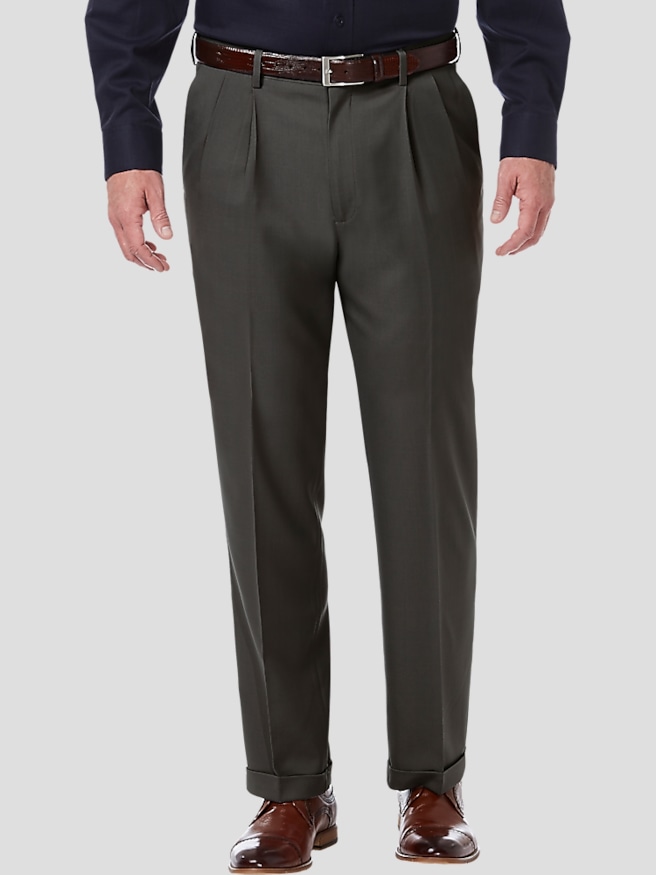
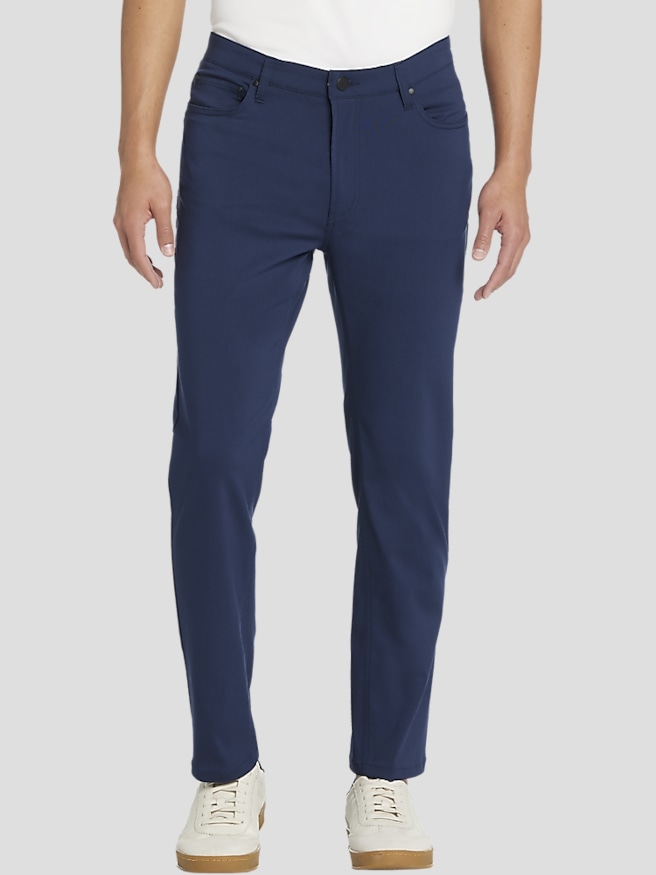
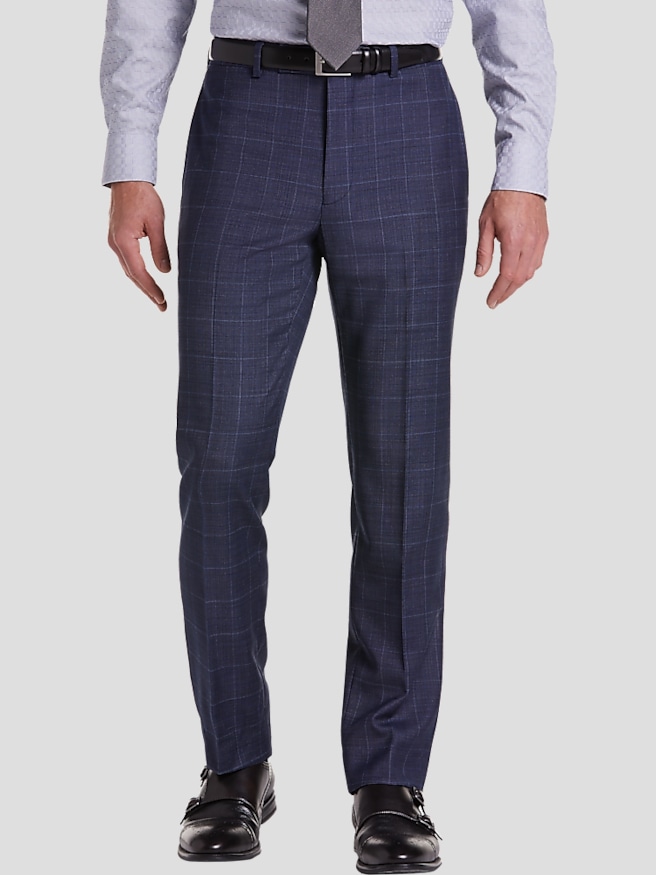
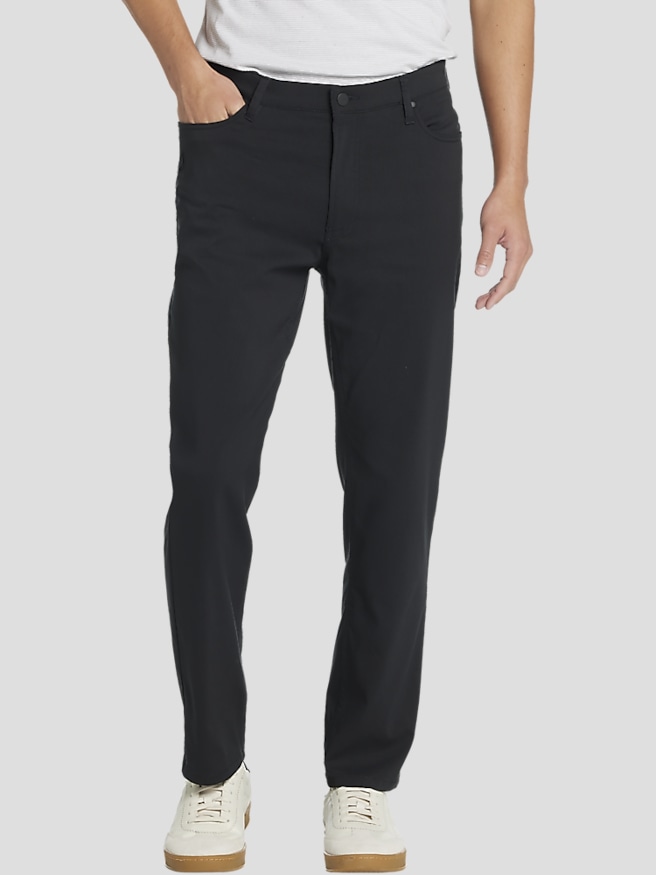
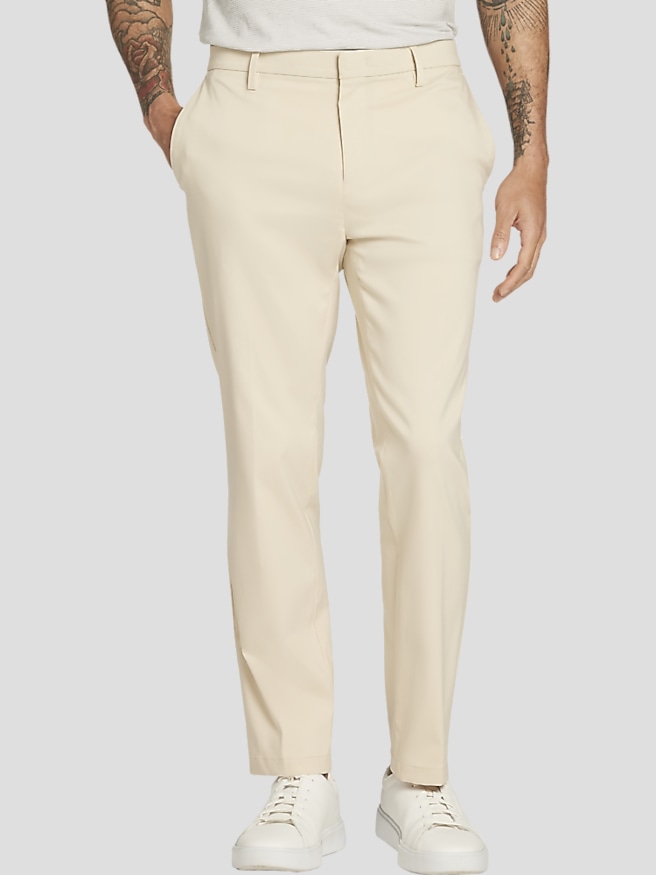
Pants for slim men generally work best when they follow the body without clinging, with enough room through the seat and thighs and a gradual taper toward the ankle. A smaller waist size alone does not create that fit: the rise, seat, thigh, and leg opening all affect how a pair of pants sits on a lean frame. Slim fit is also not the same as skinny fit. A slim cut typically creates a close, shaped outline while leaving space for everyday movement, whereas a very narrow cut can pull across the thighs or make the lower leg feel restricted. For men with a slender waist and more developed thighs, a little extra room above the knee can produce a cleaner result than an extremely narrow silhouette. Men with leaner legs throughout may prefer a consistent, gentle taper that avoids excess fabric behind the knees. The goal is balanced proportions, not simply the smallest possible measurements. A waistband that rests comfortably without being cinched tightly by a belt helps the front lie flat, while side pockets that remain close to the body contribute to a neat profile. Rise matters just as much: a mid-rise shape can provide balanced coverage and make a tucked shirt look settled rather than crowded at the waist. Length finishes the picture. A slight break can complement dress shoes, while a hem that just meets the top of a low-profile sneaker creates a cleaner casual line. Too much length can collect around the ankles and obscure an otherwise well-proportioned cut. Comfortable pants should also accommodate sitting at a desk, climbing stairs, and reaching for something on a low shelf without pulling sharply across the seat. The most useful fit feels composed standing still and remains comfortable once the day gets moving. Because body proportions vary even among men who wear the same waist size, the relationship between the waist and inseam measurements is only a starting point; the shape through the rest of the garment determines the finished look.
Fabric gives slim pants much of their character, influencing both their appearance and how they feel after hours of wear. Cotton twill has a defined weave and a familiar, substantial hand that suits chinos and other everyday trousers. A smoother cotton finish can look polished with a button-down shirt, while more visible texture gives a casual outfit depth without requiring bold colors or patterns. Wool and wool-blend dress trousers can provide a fluid drape that follows the leg without looking rigid, making them useful for office settings and occasions that call for a sharper finish. Denim offers a more casual structure, and its weight and construction affect whether the leg feels firm or flexible. Stretch fibers can add give at the knees and seat, but stretch does not replace an appropriate cut; fabric that stays under tension can still feel restrictive and distort the line of the pants. Materials with good recovery help a garment regain its shape after movement, particularly around the knees. Fabric weight also changes the visual effect. A cloth with some substance can fall more smoothly over a slim frame, while an excessively stiff material may stand away from the body. Construction details deserve equal attention. Secure stitching at pocket openings, a smoothly finished waistband, and neatly sewn hems contribute to a polished appearance and help support repeated wear. Pocket placement matters, too, since bulky contents can interrupt the line of a close-fitting pair. Care should follow the garment label rather than a single rule for every fabric. Some cotton and synthetic blends permit machine washing, while certain dress fabrics require professional cleaning. Excessive dryer heat can affect dimensions or stretch performance, and pressing should match the fabric’s care requirements. Hanging trousers neatly or folding them along an established crease helps limit unnecessary wrinkling. Allowing pants to rest between wears and addressing small repairs early can also help preserve their shape and finish, making thoughtful care part of their long-term usefulness.
For everyday dressing, Men's Slim Pants offer a streamlined foundation that can support a range of outfits without making every setting feel equally formal. At an office with a business-casual dress code, tailored chinos with a tucked Oxford shirt and loafers create a composed look that still feels approachable. Dress trousers with a fine-gauge knit or a blazer bring more definition to presentations, client meetings, and dinners where denim would feel too relaxed. For a wedding guest outfit or another celebration, a clean trouser line helps the jacket and shoes look connected rather than competing with excess fabric at the hem. Casual combinations benefit from the same attention to proportion. A straight-hanging T-shirt, an open overshirt, and simple sneakers can complement slim pants without making the entire outfit look tight. Slightly more room in the shirt or jacket provides contrast, especially when the pants have a pronounced taper. Color also affects versatility: navy, gray, khaki, and black can anchor repeated combinations, while muted earth tones introduce variety without demanding a completely separate wardrobe. Subtle texture can add interest when the rest of an outfit stays simple. The best choice depends on the wearer’s routine as much as the occasion. A man who spends much of his day seated may value ease through the waist and thighs, while someone moving between meetings and errands may appreciate fabric that maintains a tidy appearance through frequent movement. For a student preparing for interviews, a recent graduate establishing a work wardrobe, or a recipient who prefers a close but comfortable fit, pants can also be a practical gift when measurements and style preferences are known. Familiar waist and inseam measurements help, though a well-liked existing fit offers useful context about rise and taper. Across these uses, a successful pair balances shape, movement, and fabric rather than relying on narrowness alone, creating a silhouette that looks intentional and feels natural to wear.