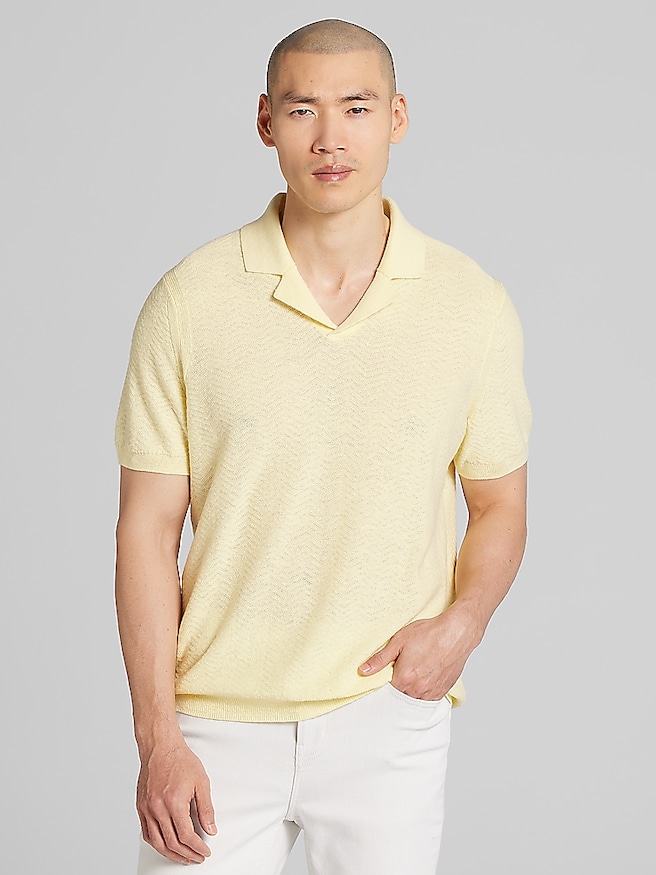
Office casual sweaters bring the clean lines of workwear to comfortable knit layers, making them a natural fit for offices where a full suit is not the everyday standard. A business casual sweater typically has a relatively fine knit, a neat silhouette, and restrained detailing that works with collared shirts, tailored trousers, and chinos. The effect is polished without looking overly formal: a navy V-neck frames a pale blue shirt, a charcoal crewneck adds texture above pressed trousers, and a button-front cardigan gives an open-collar outfit a more finished outline. Solid colors are especially versatile because they leave room for a subtle shirt pattern or a textured sport coat. Heathered yarns and understated stitch patterns add visual depth without competing with the rest of an outfit. Neckline and closure make a meaningful difference in how a sweater looks at work. A V-neck leaves space for a shirt collar and, where the dress code calls for one, a tie. A crewneck creates a simpler frame, either over a collared shirt or with a clean, unobtrusive base layer. Quarter-zip sweaters offer an adjustable neckline, while cardigans provide an open-front option that can be worn buttoned for a defined shape. With any of these styles, a shirt collar should sit naturally rather than bunching beneath the knit or spreading awkwardly across the shoulders. Fine-gauge sweaters generally layer more smoothly under a jacket than bulky knits, which can add unwanted volume through the chest and arms. The right pairing depends on the workplace: flat-front chinos and loafers suit an everyday desk schedule, while tailored trousers and a sport coat bring more structure to a client lunch or presentation. Dark, clean-finished denim can also work where the office dress code permits it. For someone moving between a morning meeting, focused desk work, and an informal dinner with colleagues, an understated sweater can keep the outfit cohesive without requiring a complete change of clothes. That versatility makes office casual sweaters useful well beyond a single dress code or job title.
Material influences a sweater’s texture, drape, care requirements, and how comfortably it layers over a shirt. Merino wool is known for its relatively fine fibers and can produce a smooth, lightweight knit suited to a tailored outfit. Cashmere offers a soft hand and a subtle surface texture, though it benefits from gentle handling and thoughtful storage. Cotton provides a non-wool option with a familiar feel; depending on the yarn and construction, it can have a smooth finish or a more substantial, textured character. Blended yarns combine fiber characteristics, sometimes adding resilience, stretch, or easier care, but the fiber label and care instructions provide a clearer picture than the material name alone. Knit density matters as much as composition. A compact, even knit generally looks more refined over a dress shirt, while pronounced cables and chunky ribs create a more relaxed impression. Fit should support the same balance between comfort and polish. Shoulder seams on a traditional set-in sleeve should sit near the shoulder’s natural edge, and the body should follow the torso without stretching tightly across the chest or gathering in loose folds at the waist. There needs to be enough room for the intended base layer, especially across the upper back and underarms. When seated at a desk or reaching across a conference table, the sweater should allow movement without pulling sharply at the neckline. Sleeves that finish around the wrist keep the hands clear, and a hem that rests around the hip generally works neatly with trousers. Ribbed cuffs and hems help define the outline, but they should not grip so tightly that the fabric balloons above them. Even stitching, tidy seams, secure buttons, and a smoothly operating zipper are useful construction details to examine. Around the neckline, a flat, resilient edge helps the sweater retain a composed appearance after repeated wear. These practical details distinguish a knit that simply looks good on a hanger from one that feels appropriate throughout a working day.
Thoughtful care helps office casual sweaters maintain their shape and surface, particularly when they are worn regularly over shirts or beneath jackets. The care label should always determine whether a knit is machine washable, suitable for hand washing, or intended for professional cleaning. A washable cotton blend and a delicate cashmere knit may look equally understated, yet their maintenance needs can be quite different. For pieces labeled for hand washing, gentle handling is important; twisting or wringing can distort the knit. When flat drying is specified, reshaping the garment and supporting its full weight helps prevent stretched shoulders and an uneven hem. Folded storage is often preferable to hanging, especially for softer or heavier knits that can lengthen under their own weight. Friction at the underarms, along the sides, or beneath a bag strap can cause pilling, even in well-made sweaters. Careful removal with a tool appropriate for the fabric can improve the surface without pulling at the yarns. Rotating between wears and addressing small snags or loose buttons promptly can also help extend useful wear. For a compact work wardrobe, complementary colors make repeated combinations feel intentional rather than identical. A gray sweater can sit comfortably with navy trousers and a white shirt, while a deep blue knit pairs naturally with tan chinos and brown leather shoes. Keeping the sweater relatively simple allows a textured belt, a patterned shirt, or a softly structured jacket to provide the detail. The same approach carries into office celebrations and relaxed social plans, where Holiday Casual Wear offers a related direction for outfits that feel dressed with care rather than overly formal. Office-friendly sweaters can also make practical gifts for a graduate beginning a professional role, a partner building a more versatile work wardrobe, or someone whose schedule regularly includes both meetings and casual gatherings. Familiarity with the recipient’s size, preferred neckline, fiber sensitivities, and willingness to follow particular care instructions makes that choice more personal. The most useful sweater is one that fits naturally into the wearer’s routine, combining an appropriate appearance with comfortable movement and manageable upkeep.