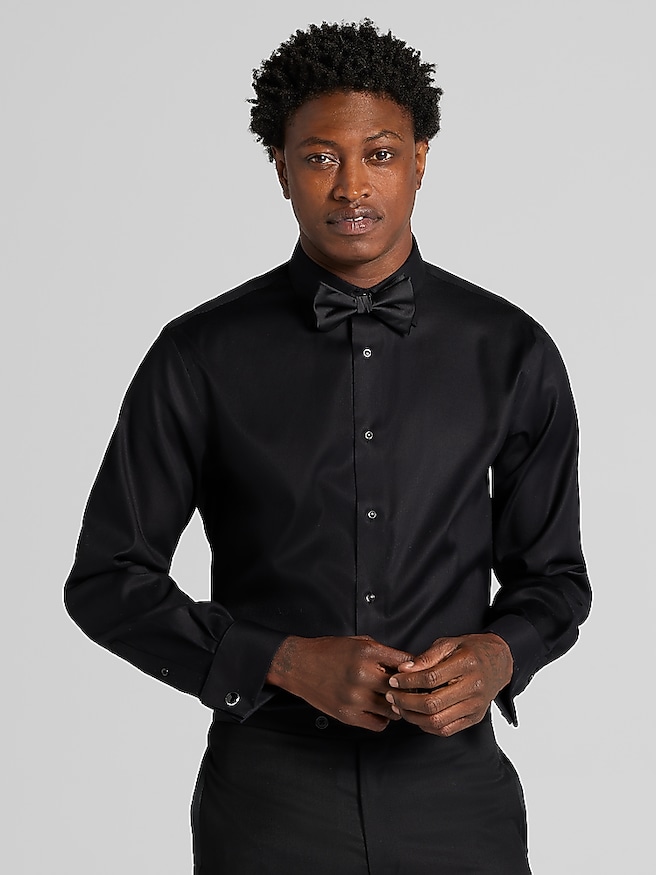
Late-fall wedding attire for men combines the structure of suits and tuxedos with fabrics, colors, and layers suited to celebrations that may move between crisp outdoor settings and heated reception spaces. The dress code remains the starting point: black tie generally calls for a tuxedo, while formal and cocktail celebrations leave more room for a dark suit and thoughtfully coordinated accessories. For a groom, the distinction might come from a three-piece silhouette or a more formal shirt and tie combination; for a guest, a well-fitted two-piece suit can feel appropriately dressed without competing with the wedding party. Charcoal, navy, and deep brown offer a grounded backdrop for the season, while burgundy and forest green can add depth through a tie, vest, or pocket square. A dark navy suit with a white shirt and textured burgundy tie feels at home beneath the timber beams of a lodge reception, while a charcoal suit with a restrained silk tie works naturally in a city hotel ballroom. Evening ceremonies often suit darker tones and smoother finishes, whereas a daytime gathering can accommodate softer texture and less pronounced contrast. Venue matters as much as the calendar: an outdoor ceremony followed by an indoor dinner calls for layers that can be removed without making the outfit feel unfinished. A vest adds coverage beneath a jacket and keeps the shirt-and-trouser combination looking deliberate once dancing begins. An overcoat provides a clean outer layer for arrivals, photographs, and the walk between buildings without crowding the shoulders of the suit underneath. For wedding parties, coordinated fabric and color create continuity, but identical proportions rarely flatter every build. Matching the overall level of formality while allowing suitable jacket and trouser fits helps each person look comfortable within the group. The result is occasionwear that belongs in wedding photographs yet still feels practical through a ceremony, dinner, speeches, and several hours on the dance floor.
Fabric makes a noticeable difference in how wedding clothing looks and feels over a long celebration. Worsted wool typically offers a smooth surface, a clean drape, and enough versatility for both daytime and evening events. Wool flannel has a softer, more visibly textured finish that can complement a rustic venue or a less formal dress code, while heavier cloth may provide welcome warmth during outdoor portraits. Fabric weight deserves consideration alongside fiber content, since a densely woven suit can feel substantial even when its surface looks sleek. Wool blends vary in softness, resilience, and breathability, and a small amount of stretch can make sitting and moving more comfortable without replacing the need for proper fit. Velvet brings a richer texture to evening dressing, particularly in a dinner jacket, although the invitation’s level of formality should still shape the overall outfit. Linings also influence comfort: a fully lined jacket has a different feel from a partially lined one, especially in a crowded reception room. Across these materials, the shoulder is a useful reference point for fit. A jacket should sit cleanly rather than extending noticeably beyond the natural shoulder, and its front should close without pulling sharply across the middle. Slim silhouettes offer a closer line through the torso and legs, while more relaxed cuts provide additional room; neither should restrict an easy handshake, a seated meal, or a turn on the dance floor. Shirt collars need enough space to remain comfortable when buttoned, and sleeves should allow a small amount of shirt cuff to show beneath the jacket. Trousers look more balanced when the waistband stays in place and the hem meets the shoe without excessive pooling. A vest should cover the trouser waistband rather than expose a strip of shirt between the two. Trying the full combination together, including the intended shirt and shoes, makes these relationships easier to judge than evaluating each piece separately.
Finishing pieces give late-fall wedding outfits their individual character while keeping the overall impression cohesive. A textured tie can soften the appearance of a smooth suit, and a silk tie with a subtle pattern can add interest without becoming the focal point of every photograph. Pocket squares work best when they relate to the outfit rather than duplicate the tie exactly; a white square provides a quiet contrast against dark tailoring, while a muted patterned version can pick up one of the wedding colors. For traditional black-tie dressing, a bow tie and formal shirt maintain a more consistent level of formality than everyday business accessories. Footwear also changes the tone: sleek black leather shoes complement a tuxedo or dark formal suit, while dark brown leather can pair naturally with navy or brown tailoring when the dress code allows. Comfortable socks, broken-in shoes, and a belt or suspenders suited to the trousers matter during a celebration with long stretches of standing. Accessories can also make considered gifts for groomsmen or a close relative attending the wedding, especially when the recipient’s preferred colors and usual occasions are known. Beyond the event itself, understated suits and separates can serve at anniversary dinners, dressier family gatherings, and other celebrations. Related inspiration in Elegant Thanksgiving Outfits For Men offers another setting for seasonal tailoring, though wedding dress codes may call for a more formal combination. Thoughtful care supports that longer useful life. Following the garment’s care label, brushing suitable wool fabrics gently, and allowing clothing to air after wear can help preserve its appearance between cleanings. Shaped hangers support jacket shoulders, while breathable storage helps protect clothing without trapping moisture. Prompt attention to stains and professional pressing when needed help maintain clean lines, making well-chosen wedding attire useful well beyond a single invitation.