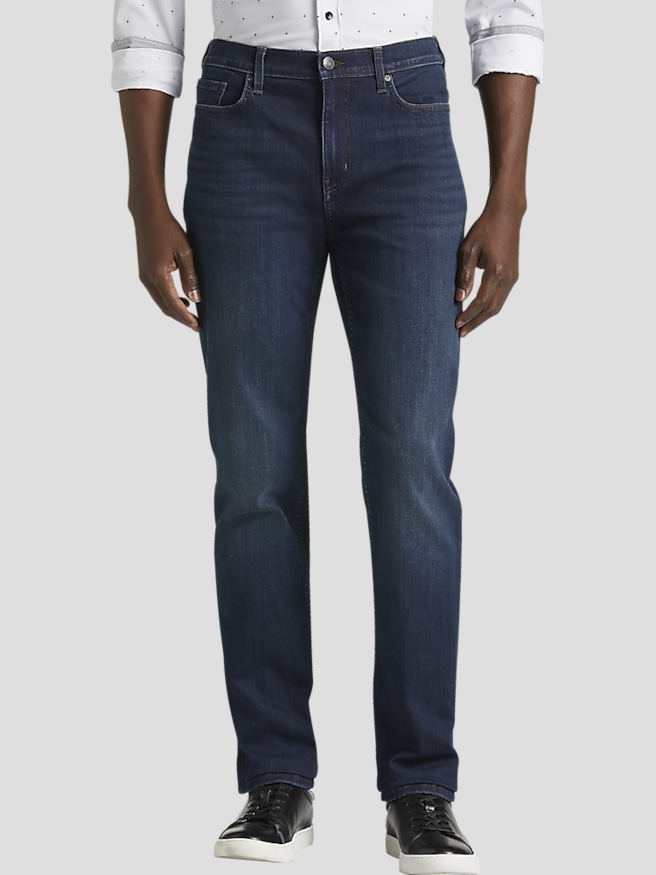
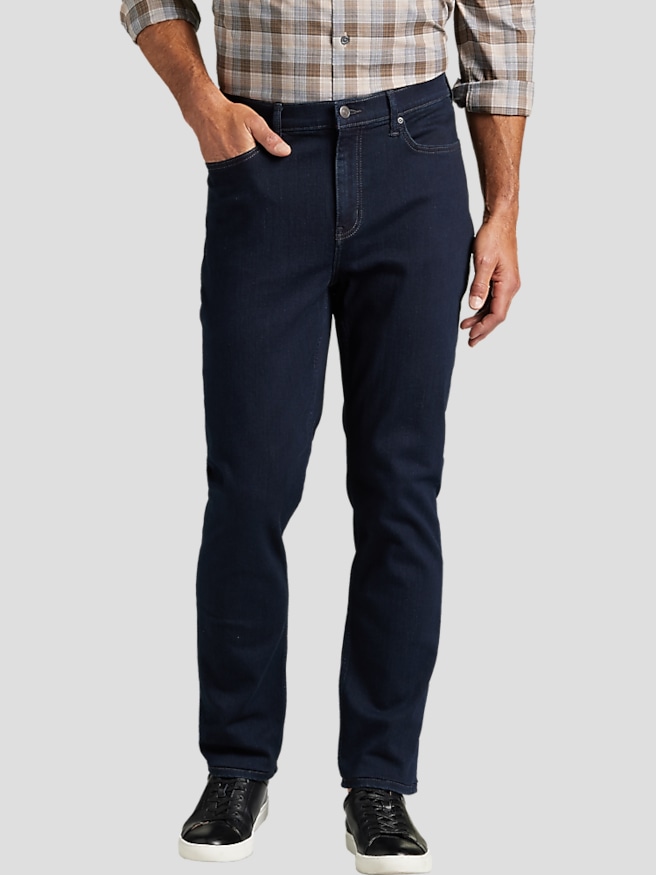
Must-have jeans for men typically include a dark-wash pair with a clean finish, a medium-wash pair for everyday wear, and black denim for a versatile alternative to blue. Together, these options cover much of a casual wardrobe without requiring a closet full of similar pairs. Dark indigo jeans with minimal fading have a polished appearance that works with an Oxford shirt, a knit polo, or an unstructured sport coat. A straight or gently tapered leg keeps the outline neat without making an outfit feel overly dressed. Medium-blue denim brings a more relaxed character, pairing naturally with a plain T-shirt, a button-down worn open, or a textured sweater. Black jeans offer a sharper contrast with lighter shirts and can create a streamlined look when paired with a black belt and dark shoes. These are useful foundations rather than rigid requirements; the best denim rotation reflects the clothes a man actually wears and the places he goes. Someone whose week includes a casual office, dinner with friends, and time spent running errands may get more use from clean, darker washes than heavily distressed denim. A man who favors laid-back outfits may appreciate visible fading, a softer finish, and a roomier cut. Light washes also have a place in a casual wardrobe, particularly when a pale blue shade suits the rest of the outfit. The important distinction is how each pair functions, not simply how many washes are represented. Jeans intended for an office with a denim-friendly dress code generally benefit from an even color, intact fabric, and restrained details. Pairs worn for informal gatherings can have more texture and character. Denim can support a smart-casual outfit, but it does not replace dress trousers when an occasion calls for more formal clothing. Shoes help establish that boundary: clean leather sneakers keep denim relaxed, while loafers or simple boots give the same pair a more finished appearance.
Fit determines whether jeans become dependable favorites or stay folded on a shelf. A well-fitting waistband should sit securely without digging in, and the seat should provide enough room to sit comfortably without sagging or pulling tight. Straight-fit jeans maintain a relatively consistent line through the leg and work well for men who prefer a classic shape. Slim fits sit closer through the thigh and leg, while tapered fits narrow toward the ankle; those descriptions are not interchangeable, and the amount of room varies between cuts. Athletic builds may benefit from additional space through the seat and thighs with a narrower opening below the knee. Relaxed fits provide more room overall and can be especially useful for men who dislike close-fitting denim or spend much of the day moving between standing and sitting. The rise matters, too, because it affects where the waistband rests and how the jeans feel when bending or taking a seat. Length should complement the footwear rather than leave excessive fabric gathered at the ankle. A small break over the shoe creates a clean finish, while a deliberate cuff can suit a casual outfit when the inseam allows it. Fabric composition is equally important. All-cotton denim generally has a more structured feel and may soften with repeated wear. Denim blended with a modest amount of stretch fiber can provide easier movement, although comfort also depends on fabric weight, construction, and cut. More stretch does not automatically mean a better fit, and sizing down to compensate can create unnecessary strain at the waistband and seams. For men who spend long stretches at a desk or behind the wheel, comfortable jeans for men should balance flexibility with enough structure to retain a tidy shape. Checking the fabric label and considering ordinary movements—sitting, climbing stairs, reaching into a pocket—gives a more useful sense of comfort than judging the jeans only while standing still.
Durability comes from the relationship between fabric, construction, fit, and care. Denim with a substantial feel can stand up well to regular wear, but weight alone does not establish quality. Even stitching, secure belt loops, neatly finished seams, and reinforced areas around pocket openings all contribute to a dependable pair. Jeans that pull sharply across the thighs or seat can place extra stress on the fabric, while hems that drag under shoes may fray before the rest of the garment shows much wear. Choosing an appropriate length and allowing comfortable movement helps avoid both problems. Care should begin with the garment label, since fiber blends, dyes, and finishes can require different treatment. Washing jeans inside out in cold water with similar colors often helps limit visible fading, and a mild detergent is generally a sensible choice when permitted by the care instructions. Dark indigo denim may transfer color, especially early in its wear, so care is useful around light upholstery, pale shirts, and light-colored footwear. Cleaning small marks when practical can reduce unnecessary full washes, but jeans still need laundering when soiled or after substantial perspiration. Air-drying, when appropriate for the garment, limits exposure to dryer heat; if machine drying is permitted, follow the recommended setting rather than assuming high heat is harmless. Denim also makes a practical gift when the recipient’s preferences are familiar. A favorite pair can provide clues about waist size, inseam, rise, and preferred leg shape, though the same labeled size may fit differently across cuts. For someone who wears jeans almost daily, a familiar silhouette in a useful wash is often more thoughtful than an unfamiliar trend. The strongest denim wardrobe is built around pairs that feel comfortable, work with existing shirts and shoes, and suit everyday routines. Clean dark denim, easy medium-blue jeans, and a well-fitting black pair can each earn their place through repeated wear rather than novelty.