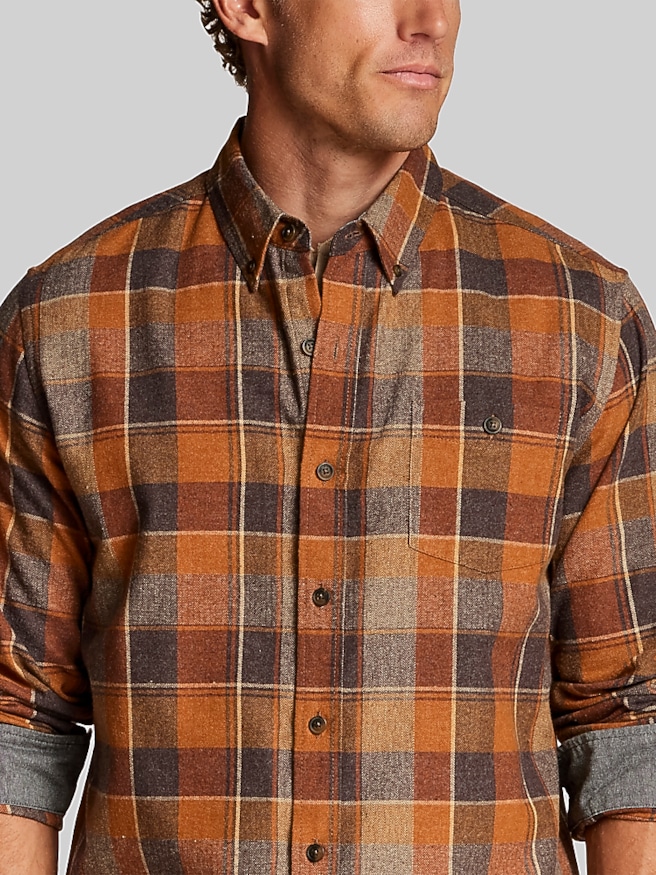
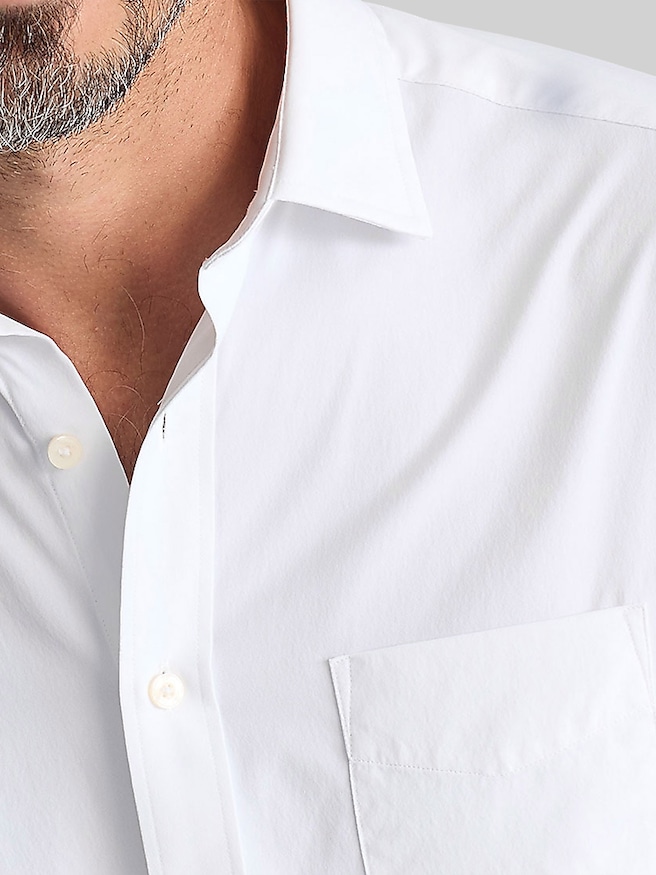
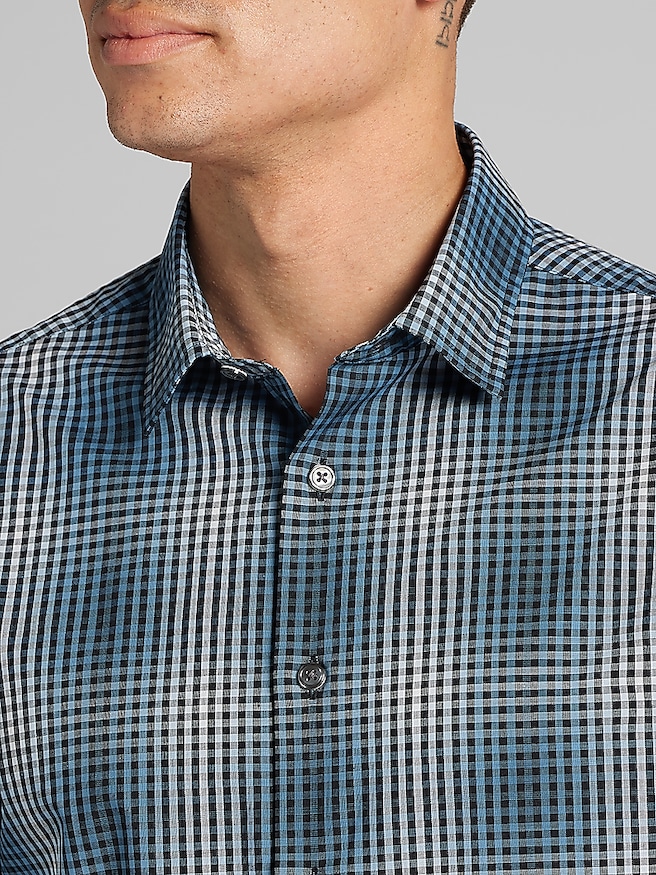
Modern flannel shirts bring the familiar softness of brushed fabric into cleaner silhouettes, more restrained patterns, and versatile everyday outfits. The defining feature is the cloth, not the check: flannel is a woven fabric with a softly raised surface, while plaid describes a pattern that can appear on many kinds of fabric. That distinction matters when comparing shirts, because a crisp plaid button-front will not necessarily have the same soft hand as brushed flannel. Cotton flannel is a familiar choice for its breathable feel and comfortable texture against the skin. Cotton blended with lyocell can have a smoother drape, while a small amount of elastane can add stretch; the fabric composition and construction determine how noticeable those qualities are. Wool flannel has its own distinctive feel and care requirements, so checking the fiber label is more useful than judging by appearance alone. Fabric weight also changes how a shirt wears. A lighter construction tends to tuck more easily and sit neatly beneath a jacket, while a substantial fabric can give an untucked shirt more structure. Brushing may appear on one or both sides, affecting both the outer texture and the feel inside the shirt. Neither weight nor initial softness tells the whole story about quality. An even weave, secure seams, neatly finished buttonholes, and firmly attached buttons offer more practical clues to lasting construction. Modern styling can come from a narrow check, a muted color combination, or a solid fabric that lets the brushed texture stand out. Navy, charcoal, olive, and burgundy are approachable choices for pairing with denim and chinos, while a larger contrasting check makes the shirt a stronger focal point. The result is a category rooted in practical casual clothing but broad enough for a relaxed office, a family lunch, or an evening out where a traditional dress shirt would feel too formal.
Fit gives modern flannel shirts much of their character, and a contemporary look does not have to mean a tight cut. A slim fit generally follows the torso more closely, a tailored fit aims for shape without excessive fullness, and a relaxed fit leaves more room through the body and sleeves. Those terms vary between makers, making garment measurements and the intended way of wearing the shirt important. For a conventional set-in sleeve, the shoulder seam should sit near the shoulder edge rather than pulling inward or dropping far down the upper arm, unless the shirt is deliberately designed with a dropped shoulder. With the buttons fastened, the front should lie reasonably flat without gaps across the chest or tension lines around the midsection. Reaching forward, sitting down, and bending the elbows can reveal restrictions that are easy to miss while standing still. Someone planning to wear a T-shirt underneath will need enough room for that extra layer without bunching at the upper arms. Hem length deserves equal attention. A shorter, gently curved hem often looks intentional untucked, while a longer shirttail provides more fabric to stay secured inside trousers. The right choice depends on torso length as well as the shirt’s proportions. For an everyday combination, a small-scale check with straight-leg dark denim and leather sneakers feels polished without becoming dressy. Tucking a subdued flannel into chinos and adding a simple belt can work for an office with a casual dress code; it is not a substitute for business-formal clothing. Worn open over a plain crewneck, a roomier flannel creates an easy, less structured outfit for a coffee stop or a relaxed dinner with friends. Keeping the base layer close to the body helps the open shirt hang cleanly. Pattern scale offers another way to adjust the effect: compact checks tend to read more quietly, while broad blocks of color draw attention. For another view of check patterns and color combinations, Stylish Plaid Shirts offers a related category, though plaid alone does not indicate a brushed flannel finish.
The details that make a flannel shirt satisfying to wear often become clearer after a full day rather than at first glance. A collar that sits comfortably against the neck, cuffs that close without squeezing the wrist, and a placket that stays flat all contribute to a neat appearance. Button-down collar points can help keep the collar positioned, while a spread or point collar creates a less anchored line. Chest pockets add a casual note and may be useful for a small everyday object, although overfilling them can distort the fabric. For frequent wear, reinforced stress points and tidy interior seams matter more than decorative stitching alone. Flannel’s raised fibers can gradually develop surface fuzz or pilling where friction is greatest, such as beneath a bag strap or along the sides of the torso. That change is not necessarily evidence of poor construction, but gentle care can help preserve the finish. The sewn-in care label should take priority, especially for wool or blended fabrics. When machine washing is permitted, washing with similar colors, using an appropriate gentle cycle, and avoiding abrasive garments in the same load can reduce unnecessary wear. Cotton may shrink with heat, and a blend is not automatically shrink-resistant; drying method and any preshrinking treatment also influence dimensional stability. Follow the recommended drying instructions, remove the shirt promptly when finished, and smooth the collar, placket, and cuffs before putting it away. If ironing is allowed, use the temperature specified for the fibers and avoid heavy pressure that could flatten the brushed surface. Rotating between shirts also gives each garment a break from repeated friction and laundering. These practical qualities make flannel appealing to commuters in casual workplaces, people who favor textured clothing over crisp shirting, and anyone building a wardrobe around easy combinations. As a gift for a father, partner, brother, or friend, a flannel shirt is most personal when its fit and colors reflect what the recipient already enjoys wearing. A familiar silhouette, a comfortable fabric, and a pattern that works with existing pants can turn a thoughtful choice into a shirt that gets worn repeatedly.