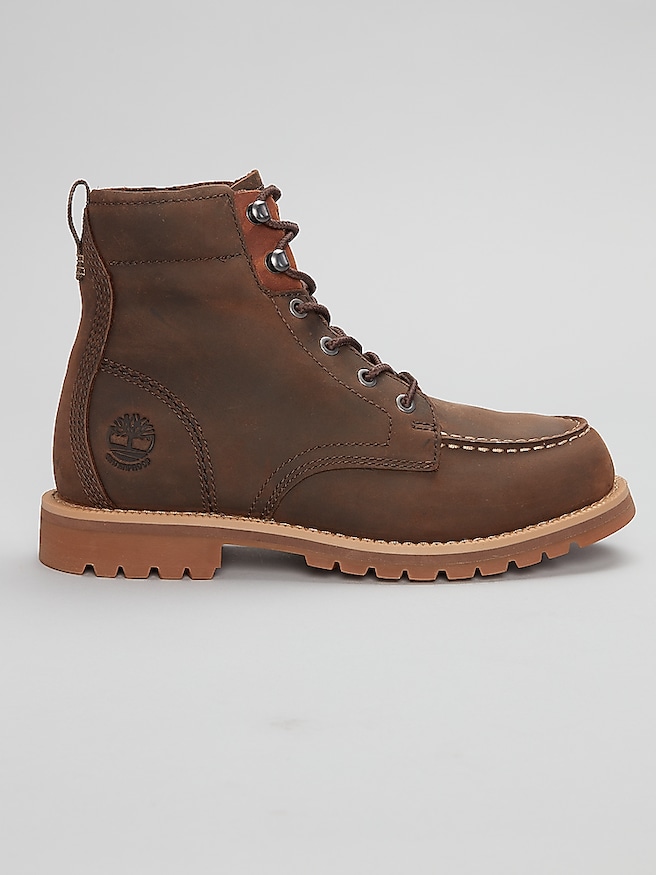
Moccasin boots are boots with moccasin-style construction or a distinctive moc-toe seam, bringing a relaxed shape and visible stitching to an ankle-height or taller silhouette. Their design roots lie in the diverse footwear traditions of Indigenous peoples of North America, whose materials and construction methods varied by community and intended use. In traditional moccasin construction, flexible hide wraps beneath and around the foot, often joining a separate upper panel across the toes. Modern moc-toe boots may borrow that recognizable apron-shaped seam while using a separate insole, midsole, and outsole. That distinction matters: a moccasin appearance does not necessarily mean a soft sole, minimal cushioning, or wraparound leather construction. The category spans supple, close-fitting designs and more structured boots with substantial soles. Leather and suede are common upper materials, each bringing its own texture and care requirements. Smooth leather offers a clean surface that can develop creases and patina with wear, while suede has a velvety nap that gives the same basic shape a softer, more casual character. Full-grain leather retains the hide’s natural grain and can provide lasting strength when appropriately maintained, though thickness, stitching, and overall construction also influence durability. Supple leather can feel accommodating across the forefoot, but softness alone does not establish how much support a boot provides. Unlined interiors emphasize the feel of the upper material, while fabric or leather linings change how the boot feels against socks and how easily the foot slides inside. Padded collars, flexible shafts, and tongue construction can also affect comfort around the ankle. For everyday dressing, the appeal is often the balance between a boot’s coverage and a moccasin’s easygoing character. The raised toe seam adds definition without the formality of a polished dress boot, making moccasin boots a natural companion to denim, chinos, textured shirts, and relaxed layers. Subtle variations in seam placement, toe shape, and sole thickness can make the overall impression streamlined, rustic, or distinctly casual.
Fit and sole construction help determine where moccasin boots feel most at home. A comfortable fit generally leaves room for the toes to move without allowing the foot to slide forward, with the heel held securely and no concentrated pressure across the instep. The stitched apron can make a toe box look broad even when its interior dimensions are fairly close, so appearance alone is not a dependable measure of width. Leather may soften and conform with use, but a boot that pinches the toes or presses sharply against the top of the foot should not depend on stretching to become wearable. Trying footwear with the type of socks intended for regular wear gives a more useful sense of volume, especially when comparing an unlined design with one that has a padded interior. Anyone who uses an orthotic also needs sufficient interior depth and, when necessary, a removable footbed. Underfoot, soft leather soles offer flexibility and ground feel but are generally better suited to indoor settings or limited light use than repeated contact with abrasive pavement. Rubber outsoles provide a more substantial barrier between the foot and the ground, while tread patterns, sole thickness, and rubber composition influence flexibility, grip, and wear. Crepe soles can contribute a cushioned feel and a casual profile; deeper lug patterns create a more rugged appearance and may suit uneven surfaces, depending on the complete design. Neither a chunky outsole nor a moc-toe seam establishes that a boot meets workplace protection standards or is intended for demanding trails. For commuting, casual office settings, or an afternoon spent moving between shops and restaurants, the useful combination is a secure fit, appropriate cushioning, and a sole suited to those surfaces. Durability also depends on reinforced stress points, sound stitching, and how the upper connects to the sole. Some constructions allow professional resoling, while others are not designed for that kind of repair. Visually substantial boots can still vary considerably in weight and flexibility, both of which become more noticeable over several hours of wear.
Moccasin boots work especially well in outfits that leave their shape and texture visible. Straight-leg jeans can fall neatly over the shaft without hiding the entire upper, while a modest cuff can frame the boot rather than leave excess fabric gathered around the ankle. Chinos with a clean, relaxed break provide another easy pairing, particularly when the boot has a relatively smooth upper and a restrained sole profile. Suede brings texture alongside corduroy, denim, and knitwear; smooth leather creates a slightly cleaner contrast with an Oxford shirt or an unstructured jacket. For a lower-cut alternative with a similarly relaxed character, explore Moccasin Sneakers. Keeping either silhouette looking its best depends on care suited to the actual materials rather than treating every leather surface alike. Loose dirt can work into seams and creases, so gentle cleaning after wear helps preserve both appearance and flexibility. A soft brush is useful for lifting debris from stitching, while suede benefits from a brush designed to restore its nap without flattening or scuffing the surface. Smooth leather generally responds to an appropriate cleaner and occasional conditioning, following the footwear maker’s directions; heavy oils or creams can darken some finishes and are not suitable for every upper. Any treatment is best checked on a discreet area first. Boots should dry naturally away from direct heat, and storing them with support inside can help maintain their shape. Alternating footwear gives interiors time to air out, while checking laces, seams, and outsole wear can reveal small problems before they affect comfort. As a gift, moccasin boots can suit a dad, partner, sibling, or friend who gravitates toward comfortable, understated footwear with visible texture. Familiarity with the recipient’s size, preferred width, usual socks, and everyday routine is more useful than choosing by appearance alone. Someone who spends hours walking on pavement may value cushioning and a substantial outsole, while someone seeking relaxed footwear for home may prefer a lighter, more flexible construction. The strongest match connects the boot’s feel and function with the way it will actually be worn.