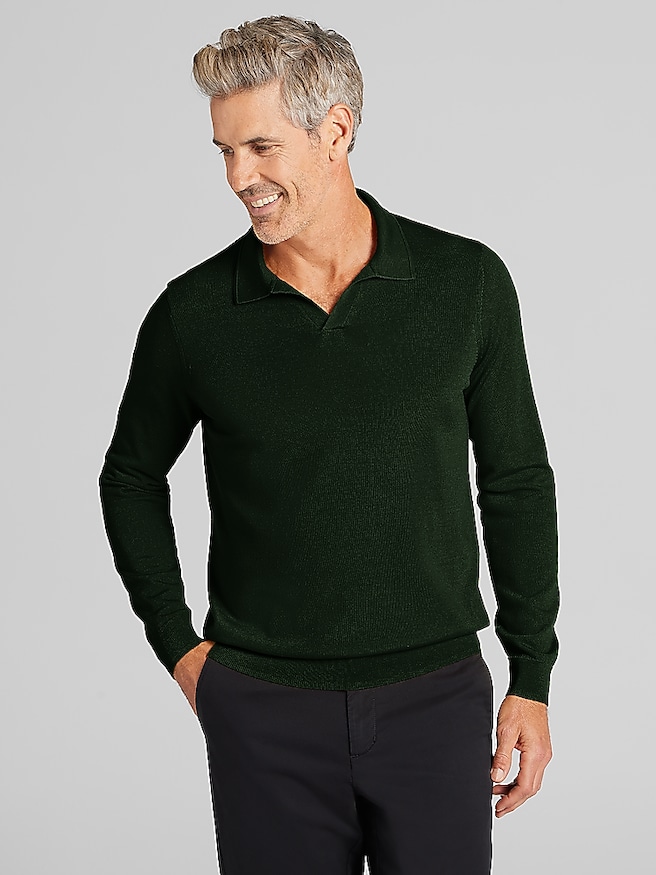
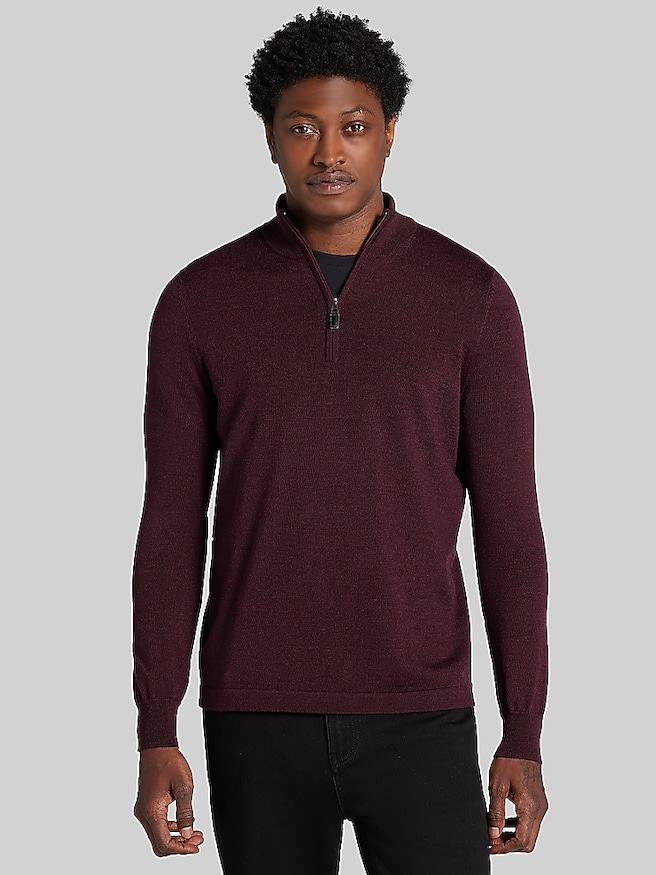
Merino wool clothing brings together a soft feel, breathable warmth, and a polished appearance that works for everyday dressing. Sourced from merino sheep, the wool has finer fibers than many coarser wool varieties, allowing it to bend more easily against the skin. That flexibility contributes to its smooth feel, although comfort still depends on fiber quality, fabric construction, and individual sensitivity. The fibers have a natural crimp that helps trap insulating air, while their ability to absorb and release moisture vapor helps manage the warm, humid feeling that can build up beneath clothing. These qualities make merino useful during the cooler months, especially when a day moves between a brisk walk outside, a crowded commute, and a heated office. Lightweight merino can provide warmth without the bulk of a heavy knit, but its performance depends on fabric weight and the layers worn with it; no single weight suits every temperature. Merino wool also naturally resists odor buildup, which can be helpful on long workdays or trips with limited packing space. It is not odorproof, and clothing still needs appropriate cleaning, particularly after heavy perspiration. For everyday use, the appeal is the combination of practical comfort and a refined surface: a fine knit can sit neatly beneath tailoring, while a more substantial texture gives casual clothing depth without needing a bold pattern. The fabric often drapes softly rather than standing stiffly away from the body, helping an outfit look composed without feeling rigid. Merino wool clothing can suit office routines, relaxed dinners, travel days, and outdoor walks, with weight and construction determining where each garment works best. Its versatility comes less from any one performance claim than from how comfortably it bridges settings, providing a layer that feels appropriate at a desk, across a dinner table, or beneath a coat on the way home.
Fabric composition and fit shape the experience as much as the fiber itself. Pure merino emphasizes wool’s natural feel and moisture-handling properties, while blends can add characteristics such as stretch, strength, or easier maintenance, depending on the accompanying fibers and how the fabric is made. A blend is not automatically warmer or more durable than pure wool; knit density, yarn quality, and construction matter, too. Fine-gauge fabrics tend to create a smooth, understated look and slip comfortably beneath a jacket, whereas thicker knits offer more texture and insulation. For someone who spends most of the day indoors, a lighter layer may be more useful than a substantial knit that feels too warm once the coat comes off. Someone with a longer outdoor commute may appreciate extra loft and enough room for another layer underneath. A good fit leaves space to move across the shoulders, chest, and upper arms without excessive fabric gathering at the waist. Shoulder seams should sit where the garment’s design intends, sleeves should allow easy bending at the elbows, and the hem should provide comfortable coverage when sitting or reaching. A close fit can look clean beneath tailoring, but fabric that pulls across the chest or grips the arms may limit movement and place unnecessary stress on the knit. When layering over a collared shirt, a little extra ease helps prevent the shirt’s seams and buttons from showing through. Proportions also matter: additional width does not necessarily provide the sleeve or torso length a taller frame needs. Big And Tall Merino Wool offers a focused category for shoppers considering those proportions. Color and texture can then support the intended use, with understated shades fitting easily into a work wardrobe and textured knits bringing a relaxed feel to off-duty outfits. For travel, coordinating colors make it easier to repeat a layer across several combinations without packing a separate outfit for every stop.
Thoughtful care helps merino wool clothing retain its shape, softness, and appearance over time. The care label is the starting point because pure wool, treated wool, and wool blends can have distinct cleaning requirements. Some garments permit machine washing on a specified gentle cycle, while others call for hand washing or professional cleaning. When washing is allowed, follow the stated water temperature and use a detergent suitable for wool; heat, vigorous agitation, and unsuitable cleaning products can damage fibers or cause shrinkage. Avoid assuming that every merino garment can go into a dryer simply because another wool piece can. For clothing that requires flat drying, gently remove excess water without wringing, reshape the garment, and lay it on a clean towel or appropriate drying surface away from direct heat. Supporting the fabric while it dries helps prevent stretched shoulders and elongated hems. Between cleanings, airing clothing in a ventilated space may refresh it after light wear, though spills and visible soil need prompt attention according to the care instructions. Fold knitted clothing for storage when hanging could stretch it, and put it away clean and fully dry. Merino’s fine fibers deserve some consideration during wear as well: repeated friction from a shoulder strap, a rough bag, or a desk edge can contribute to surface fuzz and pilling. Pilling is not always a sign of poor quality, but careful handling and suitable pill removal can help maintain a tidy finish. Rotating frequently worn layers also gives clothing time to air and recover between uses. With realistic care expectations, merino can be a practical choice for someone building a versatile wardrobe rather than reserving wool for special occasions. It can also make a thoughtful gift for a frequent traveler, an office commuter, or anyone who appreciates lightweight warmth, provided the size, preferred fit, and cleaning routine suit the recipient. The most useful choice is one that matches daily habits: comfortable against the skin, easy to combine with familiar clothing, and suited to the temperatures and activities it will encounter.