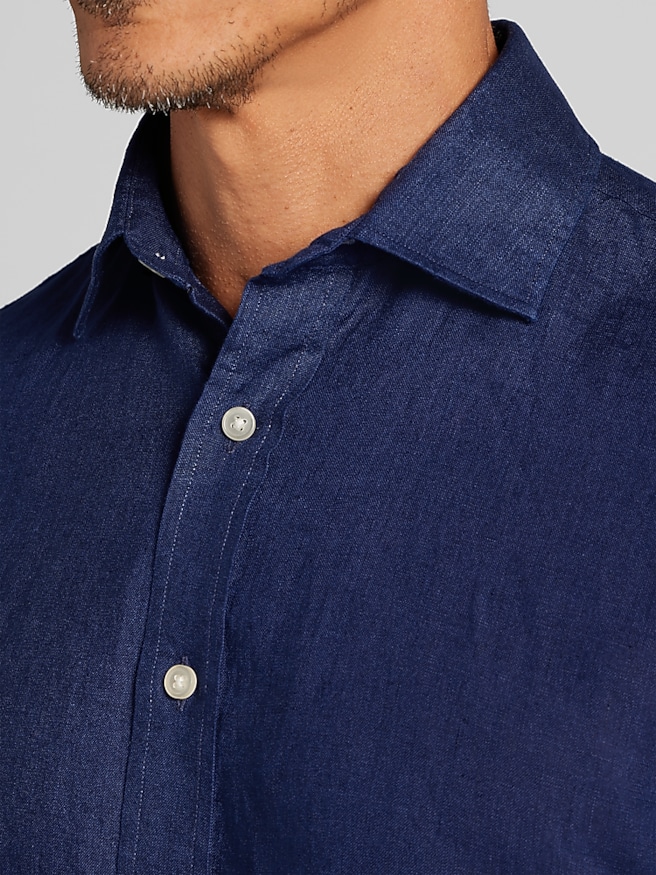
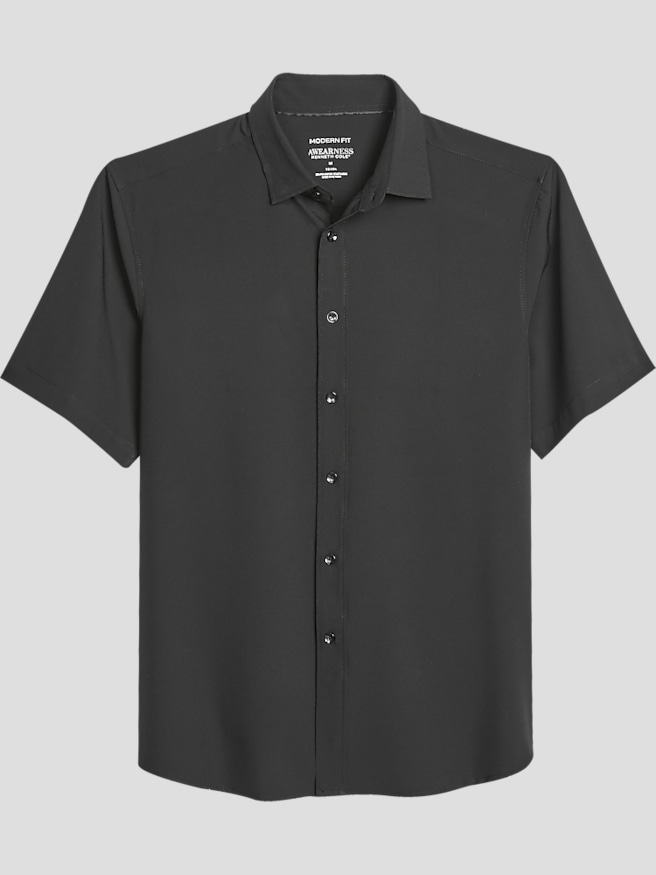
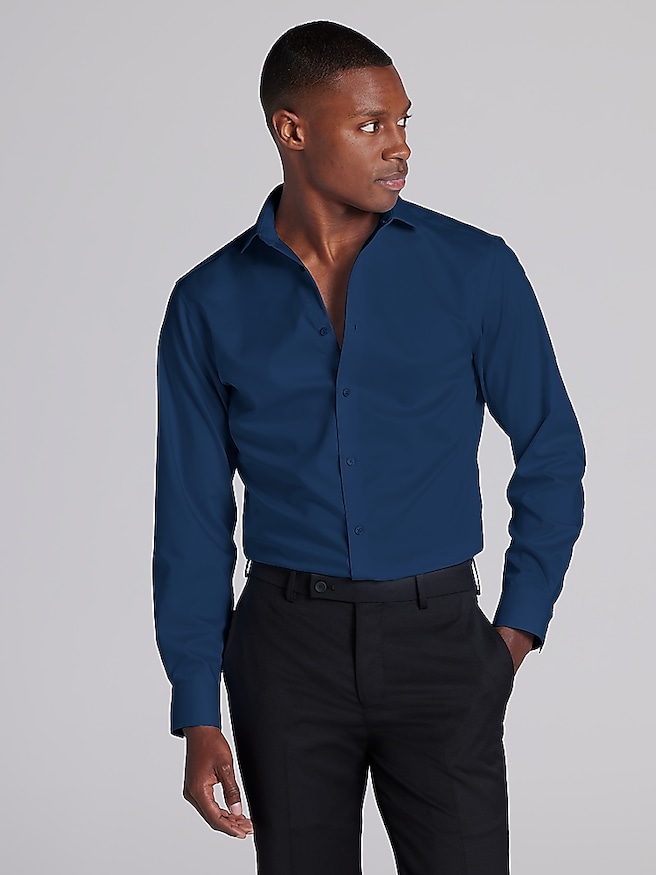
Men's XXL linen shirts bring distinctive texture and an easy drape to everyday outfits, casual office dressing, and occasions that call for a polished look without a stiff finish. Linen is made from flax fibers, and its characteristic slubs—the small variations in yarn thickness—give the fabric subtle depth rather than the perfectly smooth surface associated with some dress shirts. Those variations are part of its appeal, especially in solid colors where the weave becomes a visible detail. Breathability and moisture absorption also contribute to linen's comfortable feel, although the weight and density of the fabric matter as much as the fiber name. An open, lightweight weave feels different from a more substantial linen cloth, even when both carry the same fiber content. Pure linen generally has a crisp hand at first and develops a softer feel with wear and appropriate laundering. Linen blends offer another interpretation: cotton can add a familiar, softer touch, while viscose can create a more fluid drape. A blend's performance depends on its proportions and construction, so wrinkle resistance, stretch, and softness should not be assumed from the word “blend” alone. The styling details give each shirt its character. A pointed collar and buttoned cuffs can sit comfortably beneath an unstructured jacket, while a camp collar creates a more relaxed neckline that works well worn open over a simple T-shirt. Short sleeves leave the forearms uncovered and emphasize an informal silhouette; long sleeves offer more coverage and the option of a neat cuff roll. White, cream, and pale blue lend themselves to understated combinations with chinos or tailored trousers, while deeper shades create a stronger contrast against lighter pants. Stripes and small-scale patterns introduce visual interest without requiring elaborate styling. Fabric opacity deserves attention, particularly with pale colors and finer weaves: a discreet undershirt can provide coverage, but its neckline and sleeve length should remain unobtrusive beneath the shirt.
The right XXL linen shirt balances space through the torso with a shoulder line, sleeve length, and hem that suit the wearer. XXL is a size designation, not a universal set of measurements, and it does not automatically mean the same thing as a big or tall size. A standard XXL may provide the needed chest room without the extra body or sleeve length associated with a tall cut. Likewise, two shirts marked XXL can fit quite differently if one is designed with a straight body and the other narrows toward the waist. Comparing chest, neck, sleeve, and body-length measurements is more useful than relying on the size letters alone. When a size chart lists body measurements, those figures describe the person the shirt is intended to fit; garment measurements describe the shirt itself and include whatever room its cut provides. A well-fitting shirt already in the closet offers a practical reference when measured according to the same method. For a conventional set-in sleeve, the shoulder seam generally sits close to the edge of the shoulder, unless the design intentionally uses a dropped shoulder. Across the chest and abdomen, the button placket should lie reasonably flat rather than pulling into gaps when the wearer sits, reaches forward, or folds his arms. Linen without stretch needs enough ease for those ordinary movements, but excess fabric can gather beneath a jacket or billow around the waist. Hem shape and length affect styling, too. A shorter, straighter hem often looks balanced untucked, while a longer curved hem provides more fabric to keep secured inside trousers. Sleeve cuffs should close comfortably without restricting the wrist, and rolled sleeves look more deliberate when folded evenly rather than pushed into a tight bunch. The broader XXL Men's Shirts collection offers another point of comparison for shirt styles, while each garment's cut and measurements remain the deciding factors in fit.
Linen's gently rumpled appearance is part of its character, but there is a meaningful difference between a relaxed finish and a shirt that looks neglected. A few soft creases across the sleeves or torso can complement denim and loafers; a tidy collar, smooth placket, and clean cuffs make the same fabric look more composed with tailored pants. For an office that permits business-casual clothing, a long-sleeve linen shirt in a restrained color can work with chinos and a leather belt. For a dinner reservation or a celebration with a relaxed dress code, a textured shirt beneath an unstructured jacket adds interest without needing a bold pattern. At a wedding, the invitation's dress expectations should determine whether linen shirting is appropriate, rather than the fabric alone. It also makes a thoughtful gift for someone who favors natural fibers, textured fabrics, or an uncomplicated button-front wardrobe, especially when his preferred fit and usual shirt measurements are known. Keeping that shirt in good condition begins with the care label, because pure linen, blends, dyes, and garment finishes can require different treatment. When machine washing is permitted, a gentle cycle, mild detergent, and room to move in the drum help limit unnecessary abrasion and heavy creasing. High dryer heat can contribute to shrinkage, so drying methods and settings should follow the garment's directions rather than a general rule for all linen. Prompt removal and reshaping can make the finish easier to manage. If ironing is permitted, working while the fabric is slightly damp usually makes creases easier to smooth; a steamer can soften wrinkles but may not produce the same crisp collar or cuff. Durability depends on more than linen's reputation for strong fibers. Fabric weight, seam construction, reinforced stress points, and considerate care all influence how a shirt holds up. With attention to those details, an XXL linen shirt can become a familiar part of a wardrobe, valued for its texture, comfortable movement, and ability to look put together without appearing overly formal.