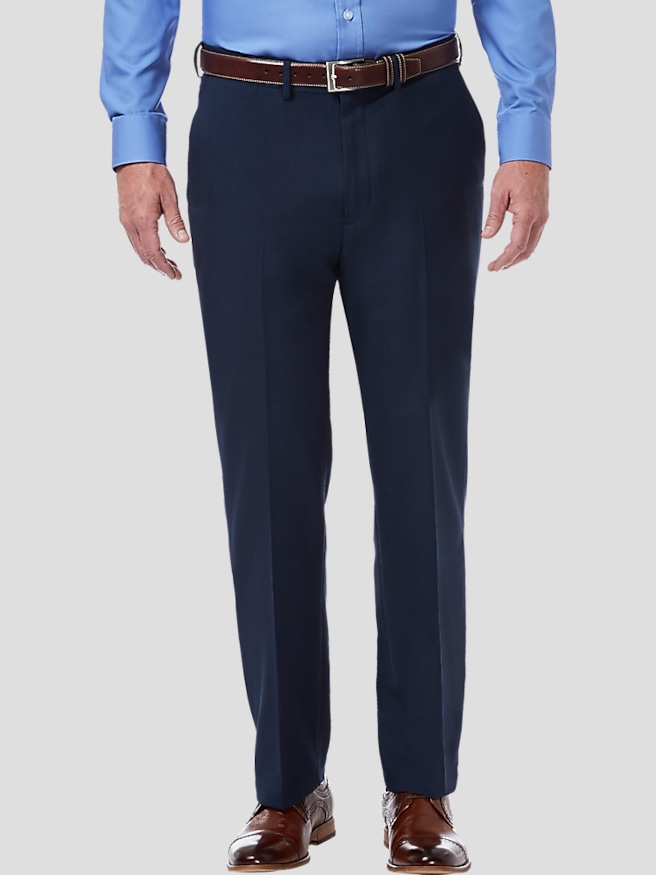
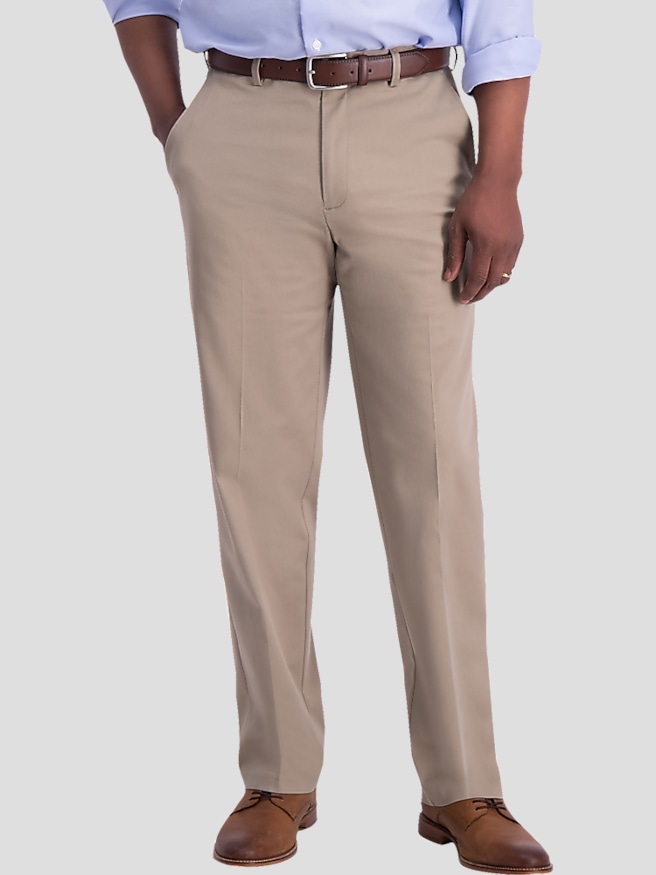
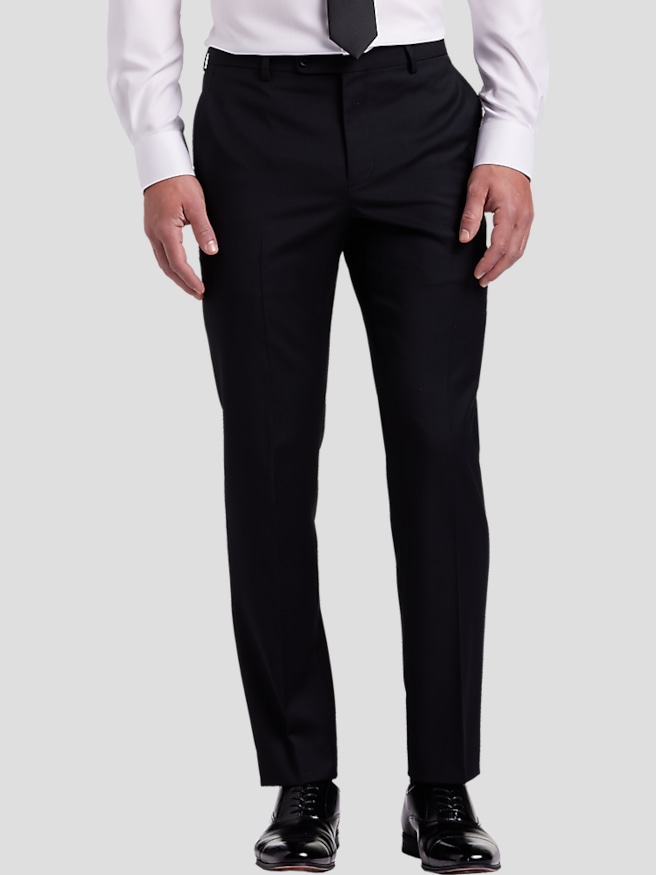
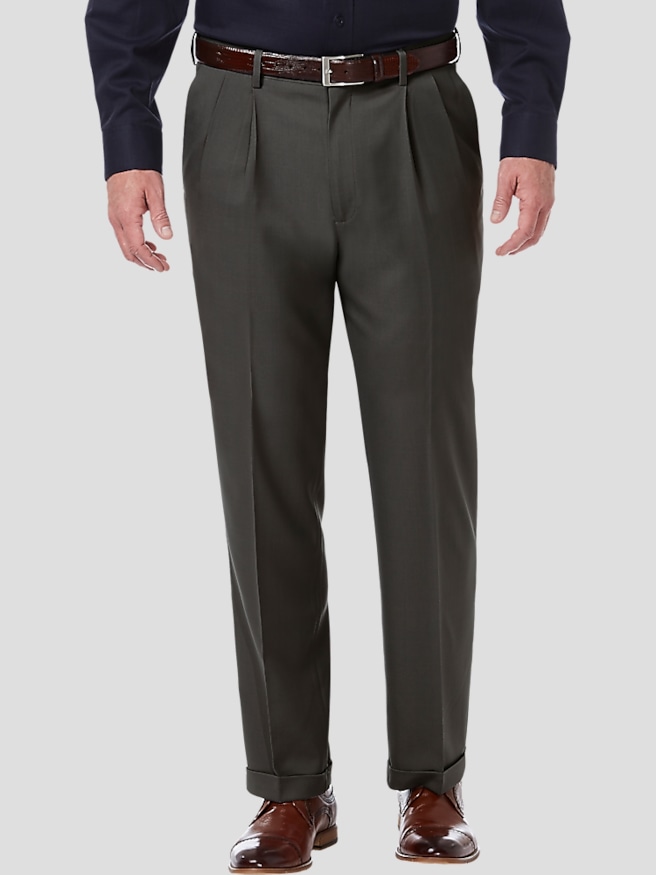
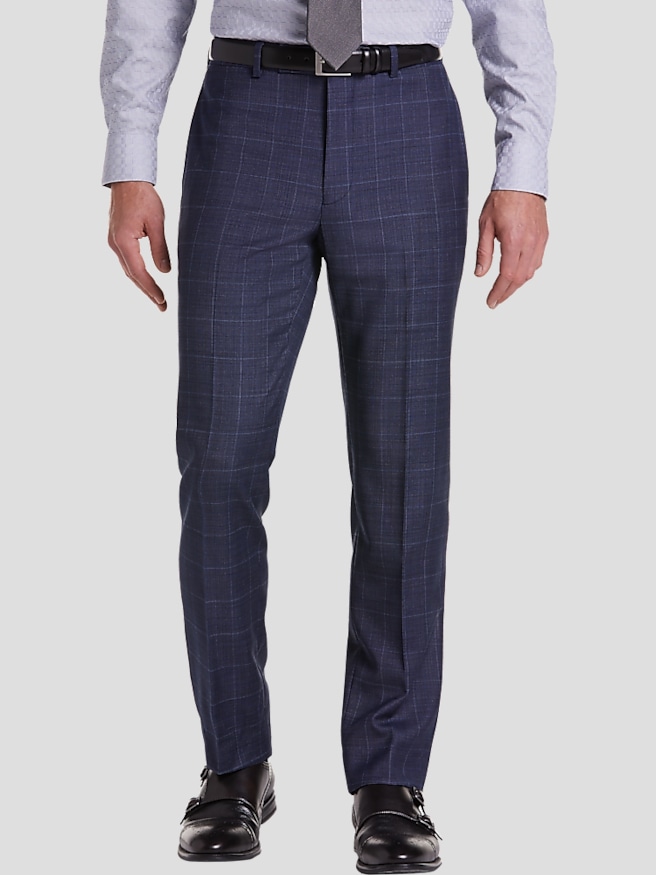
Men’s wrinkle-resistant suit pants bring together the clean lines of tailored trousers and fabrics designed to resist creasing during ordinary wear. They suit days that move from a commute to a desk, from a client meeting to dinner, or from a packed suitcase to a presentation. Wrinkle resistance means the fabric is less prone to holding unwanted folds; it does not mean every crease disappears or that pressing is never necessary. The effect can come from the fiber blend, the construction of the fabric, a finishing treatment, or a combination of those elements. Wool has natural resilience that helps it recover from light creasing, while polyester can contribute shape retention and resistance to wrinkles. Blends containing viscose or rayon can lend a softer feel and fluid drape, and a small amount of elastane or spandex can add give through the seat and knees. Cotton-rich trousers often have a more structured hand, though their ability to resist wrinkles depends on the blend and finish rather than cotton content alone. Stretch and wrinkle resistance are separate qualities: a fabric may offer one without the other, and four-way stretch should not be assumed unless it is specified. The same distinction applies to moisture management, stain resistance, and machine washability. These are useful features when present, but none follows automatically from a wrinkle-resistant description. Fabric weight and texture also influence how the pants look in use. A smooth, fine surface generally complements a coordinating suit jacket, while a subtle woven texture can give trousers enough visual depth to work with a sport coat. Good drape allows the cloth to fall cleanly from the hip rather than cling to the leg. For someone who spends hours seated, then needs to stand and look composed, that balance of resilience, movement, and a tailored finish is the central appeal.
Fit gives wrinkle-resistant suit pants their polished appearance just as much as the fabric does. Even a resilient material can develop tension lines when the waistband, seat, or thighs are too tight. A comfortable waistband stays in place without digging in when seated, pockets lie close to the body, and the front remains smooth rather than pulling across the hips. Slim-fit suit pants typically follow the leg more closely, with a narrower opening that works well with streamlined dress shoes. Straight and classic fits generally leave more space through the thigh and leg, although the exact proportions vary by cut. A clean silhouette does not require a close fit everywhere; enough room to sit, climb stairs, and reach into a pocket makes the trousers more practical throughout the day. The rise matters, too, because it determines where the waistband rests and how comfortably the pants move between standing and sitting. Flat-front construction creates an uninterrupted line across the front, while pleats can provide additional room and a more traditional tailored character. Neither is automatically more formal, and both depend on the overall shape and accompanying jacket. At the hem, a slight break gives the fabric a small fold where it meets the shoe, while little or no break creates a shorter, sharper finish. Excess length can collect around the ankles and undermine an otherwise neat appearance. Waistband construction, pocket placement, and lining deserve attention alongside the silhouette. Stretch waistbands can provide extra flexibility when specified, and shirt-gripping details may help a tucked shirt stay in position, but those features are not universal. Overfilled pockets can interrupt the drape regardless of fit. For a complete suit, coordinating trousers and a jacket should match in fabric, color, and finish; two pieces described as navy may still look noticeably unlike each other. Worn separately, navy, charcoal, and gray trousers offer a versatile foundation for dress shirts, fine-gauge knits, and tailored jackets.
Care determines how well wrinkle-resistant dress pants maintain their appearance over repeated wear. The care label is the most reliable starting point because similar-looking fabrics can require very different cleaning methods. Some trousers are machine washable, while others need professional dry cleaning; wrinkle resistance alone does not establish which method is appropriate. For washable styles, following the specified cycle, water temperature, and drying instructions helps protect the fabric and finish. Prompt removal after laundering can reduce the time folds have to settle into the cloth, while smoothing the legs before hanging helps preserve their line. Pants that require pressing should be treated at the recommended heat setting, with a pressing cloth when appropriate to reduce the risk of surface shine. Steam may help release light creases when the care instructions permit it, but it is not a substitute for cleaning. Between wears, a suitable trouser hanger and enough closet space keep pants from being crushed against neighboring garments. For travel, folding along the existing crease and avoiding an overpacked bag can limit sharp compression marks. Unpacking and hanging trousers upon arrival gives the fabric a chance to relax before dressing. Durability depends on more than wrinkle performance: sound seams, secure closures, resilient pocketing, and a comfortable fit all contribute to dependable use. Alternating pairs can also reduce repeated friction at the seat, thighs, and hems. These considerations make easy-care suit trousers especially useful for office professionals, frequent business travelers, graduates building a work wardrobe, and anyone dressing for interviews or celebrations. As a gift, they are most practical when the recipient’s waist size, inseam, preferred rise, and usual fit are known. For shoppers comparing lighter fabric options within a dressed-up wardrobe, Men's Lightweight Wrinkle-Guard Formal Pants offer a related category to consider alongside fabric composition and care requirements. Whether paired with a coordinating jacket for a presentation or a neatly tucked shirt for dinner, well-fitting wrinkle-resistant suit pants support a composed appearance without requiring the wearer to remain perfectly still.