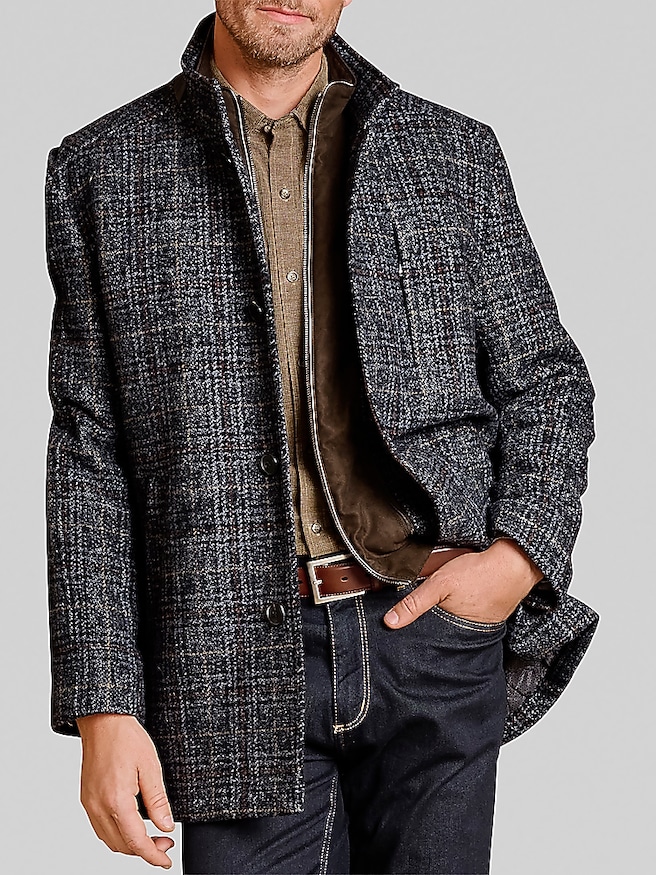
Men's work jackets combine durable fabrics, useful storage, and room to move, with designs that range from rugged layers for hands-on tasks to cleaner workwear-inspired styles for everyday professional settings. A jacket worn around a workshop has different demands than one worn between an office, a client visit, and a commute, but both benefit from thoughtful construction and a comfortable fit. Cotton duck and canvas have a substantial, tightly woven feel that suits repeated contact with work surfaces, tools, and equipment. These fabrics can feel firm at first and gradually become more flexible with wear, developing creases and character without losing their practical appeal. Cotton twill offers another familiar workwear texture, often with a smoother appearance that pairs easily with chinos or dark denim. Fabric weight matters as much as the fiber name: a substantial weave can feel reassuringly sturdy, while a lighter construction may be less restrictive during a day spent moving between tasks. Cotton-polyester blends can offer easier upkeep and help a jacket maintain a neat appearance, depending on the fabric and finish. Stretch fibers add flexibility for reaching across a counter, carrying a box, or bending to retrieve something from a lower shelf. Synthetic shells can offer a smooth surface and less bulk, though their suitability for demanding work depends on the complete garment construction rather than the fiber alone. Inside, a smooth lining helps sleeves slide over a shirt without pulling the cuffs toward the elbows. Reinforced seams, secure pocket attachments, and sturdy closures deserve equal attention, especially at points that experience repeated strain. Elbows, cuffs, pocket openings, and the area around the main zipper often reveal how a jacket handles regular use. Durability comes from the relationship between fabric, stitching, hardware, and care—not simply from a heavy feel. For daily wear, the most useful construction balances resilience with enough flexibility that the jacket feels comfortable throughout the workday.
Fit gives a men's work jacket much of its everyday usefulness. The shoulders should sit comfortably without pinching across the upper back, and the sleeves should allow a natural bend at the elbow. Enough space through the chest makes it possible to wear a work shirt or sweater underneath without straining the front closure. Extra room is helpful only when it supports movement; an overly loose body can bunch beneath a seat belt, catch on nearby objects, or make pockets awkward to reach. A quick reach forward, a seated position, and a bend at the waist reveal more about comfort than standing still in front of a mirror. Jacket length also changes how a style functions. A waist-length silhouette can feel less cumbersome while seated, while a slightly longer hem provides more coverage over an untucked shirt. Neither should pull sharply across the hips when fastened. Cuffs that sit close without squeezing help keep sleeves manageable, and adjustable details can refine the fit without requiring a bulky shape. Pocket placement makes a noticeable difference during a full day: chest pockets keep small essentials within reach, while lower pockets need enough depth and secure construction to hold their contents comfortably. Closures that can be operated easily are useful for frequent stops, and a collar that lies neatly can make a practical jacket look more polished. For a business-casual workplace, a simple front, restrained hardware, and a balanced silhouette can sit naturally over an Oxford shirt or knit polo. More pronounced utility pockets and visible reinforcement create a distinctly workwear-focused appearance. The setting should determine which details earn their place. Workwear styling alone does not establish protective performance, and fabric weight is not proof of safety certification. Tasks requiring flame resistance, high visibility, or other specialized protection call for garments with the appropriate labeling and workplace approval. An everyday work jacket should never be assumed to replace required protective equipment.
Care helps preserve both the appearance and working life of a jacket, particularly when it becomes part of a regular rotation. The care label is the starting point because a cotton shell, synthetic lining, stretch panel, and applied finish may each respond differently to washing and drying. Emptying pockets before cleaning prevents forgotten pens, receipts, and small hardware from damaging the fabric or leaving marks. Fastening closures as directed can help limit snagging, while prompt attention to surface soil keeps routine grime from becoming harder to remove. Stains may need treatment suited to the fabric, but aggressive scrubbing can alter color or texture, especially on a garment designed to develop a lived-in finish. High drying heat can affect fit, stretch recovery, and some finishes, so the labeled drying method matters as much as the wash cycle. A sturdy hanger supports the shoulders between wears, and putting a jacket away clean and fully dry helps keep it ready for its next use. Small repairs are worth addressing early: a loose button or lifting pocket seam is easier to manage before repeated movement adds strain. Appearance matters, too. Dark blue, charcoal, olive, and tan have a grounded quality that works with familiar wardrobe staples, while tonal stitching and understated hardware keep the overall look uncluttered. A textured jacket over a plain shirt and straight-leg pants can feel put together without looking overly formal. For a broader view of everyday outerwear, explore Best Men's Jackets with the same attention to fabric, fit, and intended use. A work jacket can also make a practical birthday, graduation, or new-job gift for someone who appreciates useful clothing. Knowing the recipient's usual size, preferred layers, and daily routine makes that choice more personal. The strongest match is a jacket that fits the actual workday, feels comfortable in motion, and remains easy to wear beyond it.