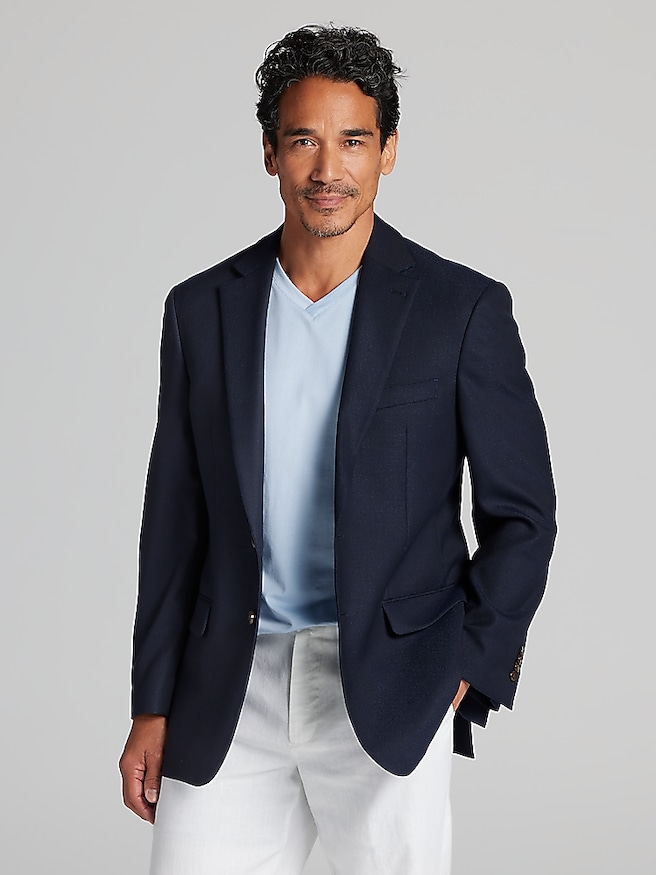
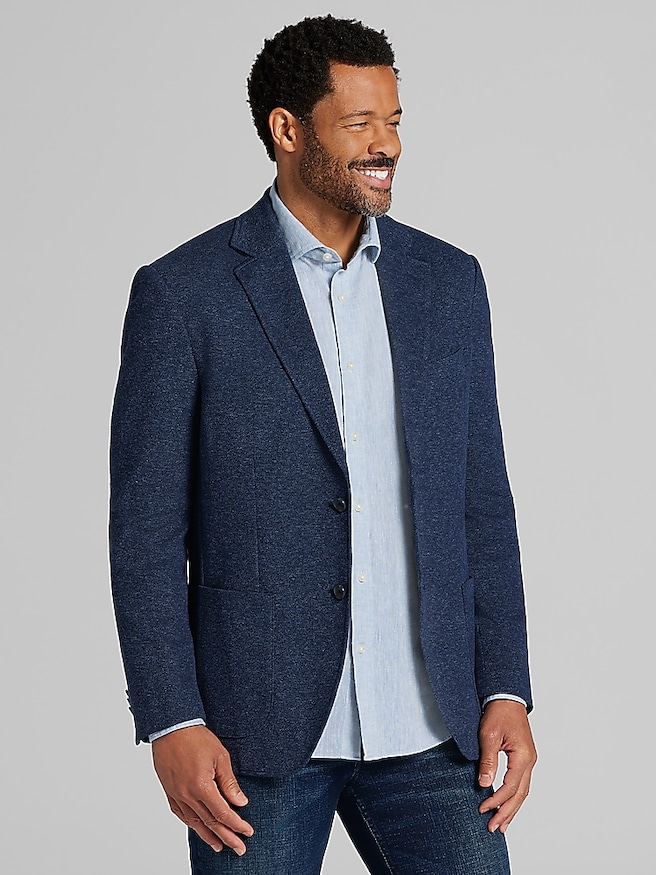
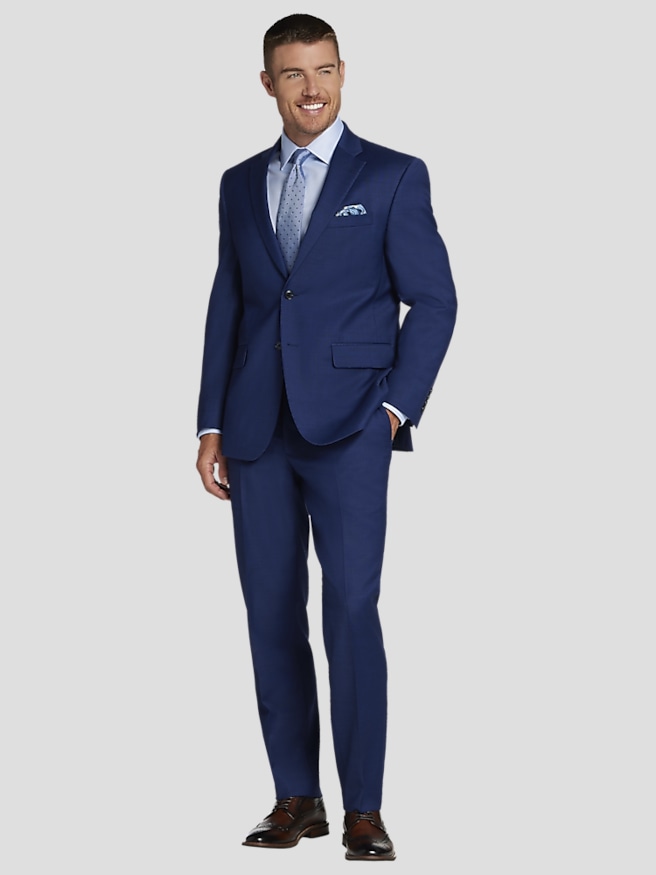
Men’s wool blazers bring together the polish of tailored clothing and the practical comfort of a warm, dependable layer. Wool fibers naturally help regulate temperature, making a blazer useful when the air turns crisp but a heavy winter coat feels excessive. For cooler conditions, look for substantial fabrics such as winter-weight wool, tweed, flannel, or a wool blend with a tightly woven surface. Fabric weight is one helpful indicator: options in the 12- to 20-ounce range generally offer more insulation and structure than lightweight tailoring, though the best choice depends on the climate, the amount of time spent outdoors, and the layers worn underneath. A soft wool-cashmere blend can provide a smooth hand and comfortable warmth, while a denser tweed or brushed wool often feels more protective against brisk wind. A touch of stretch may add ease when reaching for a steering wheel, carrying a bag, or moving through a long day. Construction matters as well. Look for a clean shoulder line, a jacket that sits smoothly across the chest, sleeves that allow a small amount of shirt cuff to show, and enough room to accommodate a fine-gauge sweater without pulling at the buttons. A single-breasted silhouette is especially versatile, working with dress trousers, chinos, dark denim, and layered knitwear. Details such as a well-shaped lapel, functional interior pockets, a smooth lining, and a balanced hem can make the blazer feel more comfortable and refined from the first wear through the end of the season.
Color and pattern have a significant effect on how often a wool blazer earns a place in your wardrobe. Navy is a dependable starting point because it pairs naturally with gray trousers, tan chinos, dark denim, and shirts in white, blue, burgundy, or subtle checks. Charcoal offers a more understated appearance and transitions easily from a business setting to an evening gathering. Dark brown, camel, olive, and textured heathered tones bring a relaxed autumnal character while remaining easy to coordinate with neutral layers. Tweed, herringbone, windowpane, and houndstooth patterns can add visual depth, particularly when the rest of an outfit is simple. For a clean office combination, wear a navy or charcoal blazer over an oxford shirt with wool trousers or pressed chinos, then finish with leather shoes or understated boots. On a casual day, a fine-knit crewneck, dark jeans, and suede or leather footwear create a comfortable look that still feels considered. A blazer with a slightly softer construction can be particularly useful for travel, dinners, outdoor gatherings, and informal celebrations where a full suit feels too formal. For a dressier setting, choose a smoother fabric, a restrained pattern, and trousers in a complementary shade rather than trying to match every piece exactly. During the cooler months, a wool blazer can also serve as the middle layer beneath a tailored overcoat. Keep the outer coat roomy enough for the blazer’s shoulders and sleeves, and choose a scarf or gloves in a simple texture so the outfit remains balanced rather than crowded.
These blazers can be useful purchases for men building a more flexible wardrobe, professionals who move between meetings and social plans, and anyone who prefers clothing that looks composed without feeling overly formal. They also make thoughtful gifts for a father, partner, brother, friend, graduate, or colleague when you have a good sense of his size, preferred colors, and daily routine. A classic navy or charcoal style is generally easier to give than a bold pattern, while a textured brown or earth-toned option may suit someone whose wardrobe already includes plenty of traditional tailoring. When choosing a size, compare the blazer’s measurements with a jacket he already wears well, paying close attention to chest, shoulder, sleeve, and jacket length. A blazer should close without strain, sit flat at the lapels, and allow comfortable movement through the upper back. If he regularly wears sweaters, consider a little extra room without sizing up so far that the shoulders lose their shape. Proper care helps preserve the fabric and fit: use a sturdy hanger with broad shoulders, allow the blazer to air after wear, brush away surface lint, and follow the care label before cleaning. Avoid storing wool in a cramped space, and keep it protected from prolonged dampness. For trips to milder destinations or days when a lighter layer is more practical, explore Men's Lightweight Travel Blazers For Warm Weather. For chilly-weather dressing, a well-fitting wool blazer remains a reliable bridge between a shirt and an overcoat, adding warmth, structure, and an easy sense of occasion whenever the temperature drops.