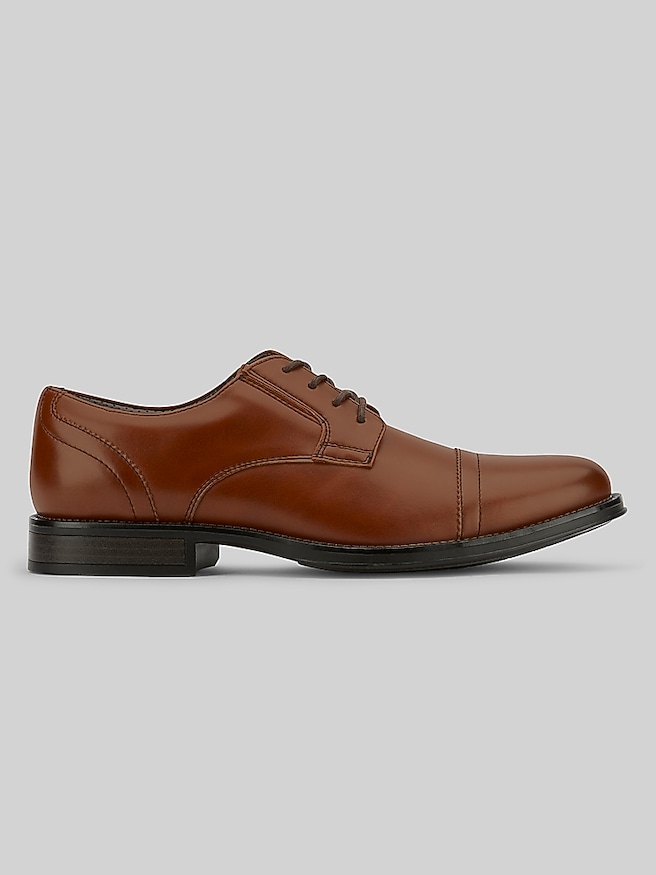
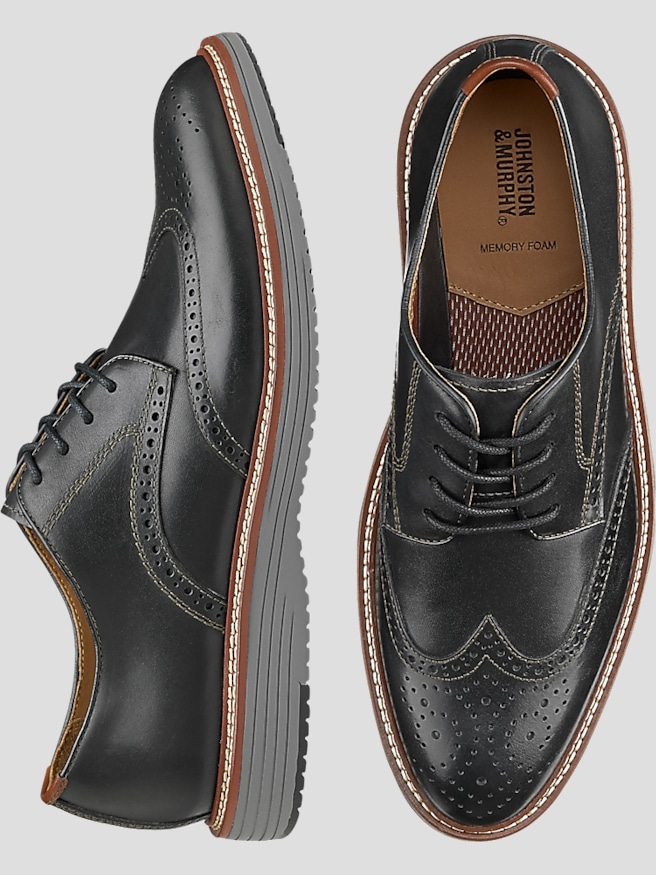
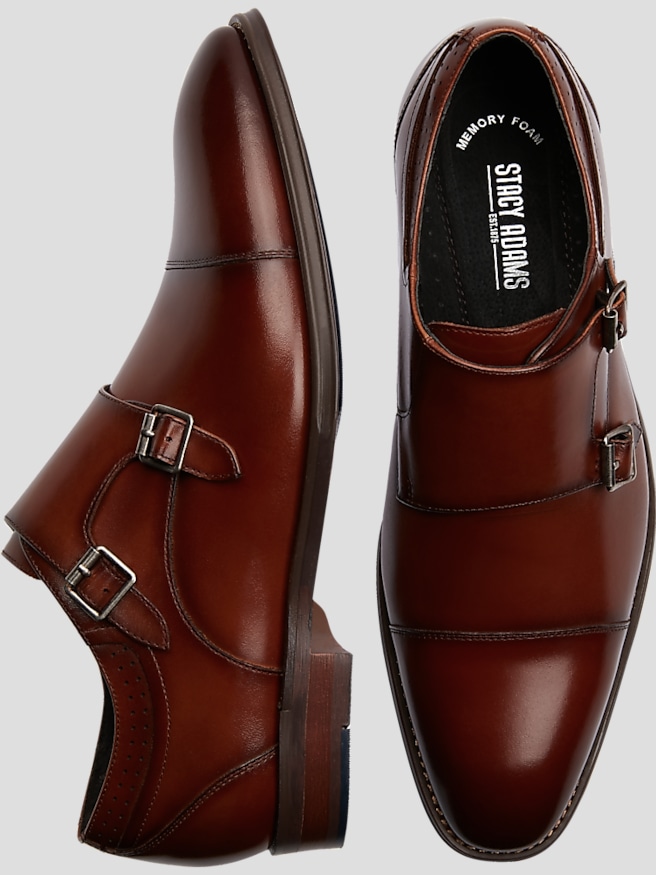
Men's wide width wingtip shoes combine the distinctive shape of a wing-shaped toe cap with a fit designed to provide more room across the foot than a standard-width shoe. The toe cap extends back along both sides of the upper, often accompanied by decorative perforations known as broguing. This detailing gives wingtips their recognizable character: polished enough for a tailored outfit, but with more visual texture than a plain-toe dress shoe. Wingtip describes the toe design rather than the lacing system, so both Oxford and derby constructions can feature it. An Oxford has closed lacing for a streamlined appearance, while a derby has open lacing that can allow greater adjustment across the instep. For someone whose dress shoes feel tight along the sides, a wide width can offer needed space without adding unnecessary length. That distinction matters because sizing up in a standard width may leave the heel loose while still failing to accommodate the widest part of the foot. A well-proportioned fit holds the heel securely, leaves room for the toes to move, and places the ball of the foot near the shoe's natural flex point. Width markings such as W, 2E, and 4E can help identify sizing categories, but their interpretation and the shape of the shoe vary by maker. A wide label alone does not establish how roomy the toe box is or how much space sits above the instep. Rounded and almond-shaped toes may feel noticeably different even when the stated size matches. Dress socks, foot shape, and any regularly worn inserts also affect the fit. Trying shoes with the socks and inserts intended for everyday use gives a more realistic sense of comfort. Leather may soften with wear, but a new pair should not depend on significant stretching to eliminate pinching. Secure heels, comfortable sidewalls, and a natural walking motion are more useful signs of a good match than the expectation that a tight shoe will eventually give way. The result should feel supportive through a seated meeting, a walk between buildings, and time spent standing at an event.
The appeal of wide width wingtips extends beyond traditional business dressing. Their patterned uppers bring definition to suit trousers, while the same detailing can make chinos and a sport coat feel more considered. Smooth black leather creates a crisp, restrained impression; brown tones tend to emphasize the seams and perforations, especially when paired with navy, gray, or textured fabrics. For a tailored outfit with a clean, coordinated finish, men's black wingtip shoes provide a classic point of reference. More pronounced broguing, contrasting soles, and suede uppers generally move the look toward dress-casual rather than highly formal attire. A wedding guest wearing a suit, a professional preparing for client meetings, or a graduate building a dependable dress wardrobe may all appreciate this balance of detail and versatility. The material and sole construction help determine how the shoes suit those occasions. Smooth leather can develop a softer feel and distinctive creasing over time, while suede offers a matte surface that complements less structured clothing. Synthetic uppers can provide a consistent appearance, although their flexibility, breathability, and care requirements depend on the material. Leather soles have a traditional profile, while rubber soles can add flexibility and traction; actual grip depends on the tread and the surface underfoot. Lightweight, hybrid constructions may feel less substantial than conventional dress shoes and work well with relaxed tailoring. For someone walking through a large office or standing through a reception, cushioning, lining comfort, heel stability, and forefoot flexibility deserve attention alongside appearance. A padded footbed can soften the step, but it cannot correct a shoe that is too narrow or poorly shaped for the foot. As a gift for a partner, parent, or graduate, wingtips are most practical when the recipient's length, width, and fit preferences are already known. Familiarity with the recipient's usual dress code also helps distinguish an everyday wardrobe addition from a pair reserved for occasional celebrations.
Lasting wear depends on the quality of the materials, the construction, and the attention the shoes receive between outings. Even stitching, neatly finished edges, and a securely attached sole contribute to a well-made feel, while comfortable linings help reduce distracting friction inside the shoe. Welted construction can make resoling possible, depending on the design and the condition of the upper; other constructions may prioritize low weight or flexibility instead. No single construction suits every wearer, and a substantial sole is not automatically more comfortable than a lighter one. The right balance reflects how often the shoes will be worn and whether the day involves mostly sitting, frequent walking, or long stretches on foot. Regular care preserves both the appearance and the shape of wide width wingtip dress shoes. A soft brush lifts dust from the brogue pattern, where buildup can dull the contrast between the leather and its decorative detailing. Smooth leather benefits from cleaning and occasional conditioning with products appropriate for its finish, followed by a compatible cream or polish when needed. Small amounts are generally easier to control around perforations and stitched edges than heavy layers. Suede requires a different approach, usually involving a suede brush and care products intended for its nap rather than conventional leather polish. Cedar shoe trees can help support the uppers and absorb some interior moisture after wear, while rotating pairs gives linings time to dry. Shoes that become damp should dry naturally away from direct heat, which can damage leather and adhesives. A shoehorn helps preserve the heel counter instead of crushing it underfoot. Over time, worn heel edges, thinning soles, loose stitching, or a change in stability can signal the need for professional attention. With an accommodating fit and consistent care, wide width wingtips can remain a dependable part of a dress wardrobe, offering recognizable craftsmanship and enough character to finish an outfit without overwhelming it.