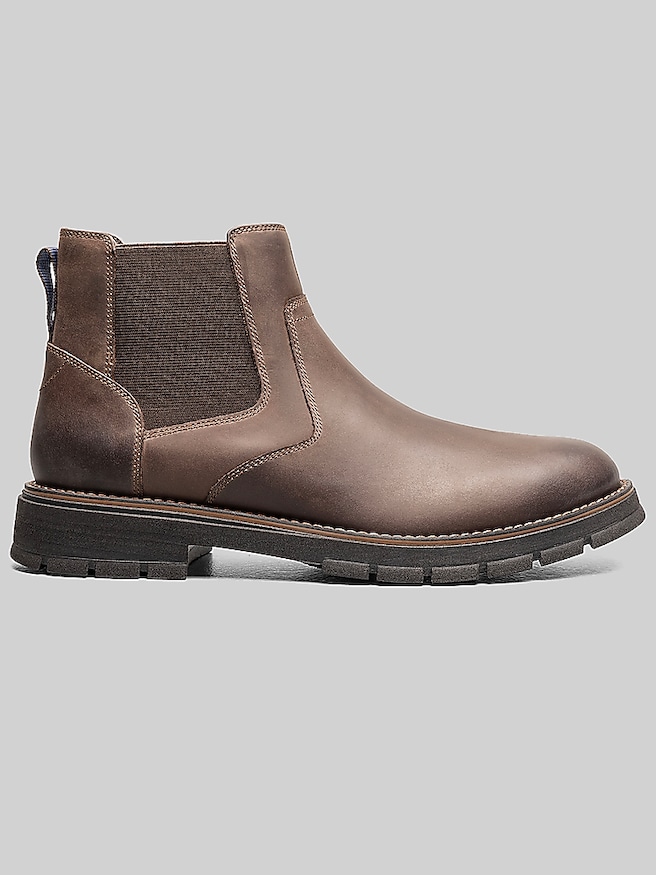
Men's wide boots provide additional room across the foot without relying on extra length to create a comfortable fit. That distinction matters for anyone whose usual boots pinch at the ball of the foot, press against the little toe, or feel restrictive through the instep. A wide fit is not simply a larger toe box: the shape of the forefoot, the volume above the foot, and the way the heel is held all contribute to how a boot feels. Width markings such as EE or 2E commonly indicate wide sizing, while 4E often indicates extra-wide sizing, though these designations are not identical across manufacturers. The last—the foot-shaped form used to construct footwear—also influences whether a boot feels rounded, tapered, shallow, or generous. A broad foot with a low instep may need a different shape than a broad foot with a high instep, even when both measure the same width. The right fit leaves room for the toes to rest naturally while keeping the heel and midfoot comfortably supported. Sizing up in length to compensate for tightness can leave excess space at the front and allow the foot to slide. Measurements of both feet, taken while standing and wearing the socks intended for the boots, provide a more useful starting point than a familiar size alone. The larger foot generally sets the fit requirement. Lace-up boots allow adjustments across the instep, while pull-on styles depend more heavily on the relationship between the opening, instep, and heel. Elastic side panels can make entry easier, but they do not replace a properly shaped wide fit. Ankle or shaft room is another separate consideration; a wide foot does not necessarily require a wide calf. Whether the goal is a polished dress boot or an everyday casual pair, width should work together with length and overall shape rather than compensate for a mismatch elsewhere. Comfortable fit should be evident from the start, without expecting the boot to stretch enough to relieve concentrated pressure.
Materials and construction give men's wide-width boots much of their character, from the clean finish of smooth leather to the softer texture of suede. Smooth leather can develop creases and a patina with wear, while suede has a more relaxed appearance that pairs naturally with textured fabrics. Neither material guarantees comfort or durability on its own; leather thickness, lining, stitching, and the structure beneath the foot all play a role. A substantial upper may feel firm initially, but firmness should not be confused with a fit that squeezes the toes or creates persistent pressure. Breathable linings and well-finished interior seams can make a noticeable difference during a day that includes a commute, time at a desk, and several stretches of walking. Underfoot, cushioning softens the immediate feel, while the footbed and sole construction influence support and flexibility. A thicker cushion does not automatically mean a better fit, particularly if it reduces usable space inside the boot. Removable footbeds can be useful for someone who wears an insert, provided the replacement does not crowd the instep or lift the heel too high. Outsole choice also affects the experience: a low-profile sole keeps the silhouette refined, while a more pronounced tread gives a casual boot a sturdier appearance. Traction depends on the sole material and the surface, so an assertive tread pattern alone should not be treated as proof of slip resistance. Welted construction may permit resoling when the boot's design and condition allow it, whereas other construction methods can prioritize flexibility or lighter weight. Consistent care helps preserve those materials. Loose dirt is best removed before it works into seams, leather care products should suit the finish, and suede benefits from a dedicated brush rather than standard leather polish. Allowing boots to dry naturally after cleaning, away from direct heat, helps protect the upper. Following the manufacturer's care directions and checking heel wear, stitching, and sole edges periodically can keep small maintenance needs from becoming larger problems.
The appeal of wide boots extends beyond extra room: the right proportions can bring an entire outfit together without making footwear feel like a compromise. A streamlined leather boot with a restrained toe shape works well beneath tailored trousers for an office setting, a dinner reservation, or a gathering where polished clothing feels appropriate. The trouser opening should fall cleanly over the shaft rather than catch on it, and the hem should leave a neat break without excessive fabric collecting at the ankle. Chinos and dark denim offer a more relaxed setting for lace-up boots, especially when the upper has visible grain, understated stitching, or a slightly heavier sole. A rounded toe can look balanced with a straight-leg silhouette, while a sleeker shape suits a narrower trouser opening, provided it still leaves adequate room for the foot. Wide sizing does not have to mean a bulky appearance; much depends on the last and the balance between upper and sole. For someone who spends substantial time standing or walking, secure heel placement, manageable weight, and natural flex through the forefoot deserve as much attention as appearance. Casual and dress boots should not be assumed to provide the protective features required for industrial work; occupational use calls for footwear with the appropriate verified safety ratings. Boots can also make a thoughtful gift for someone who appreciates practical wardrobe pieces, although the recipient's measurements, preferred socks, and usual footwear shape matter more than guessing from another pair's size. Familiarity with those preferences makes a gift more personal and more likely to become part of a regular rotation. Alongside Men's Wide Shoes, wide boots offer another way to build outfits around footwear that respects the shape of the foot. The most useful pair is one that suits the wearer's daily routine, feels secure without restriction, and complements the clothing already worn most often.