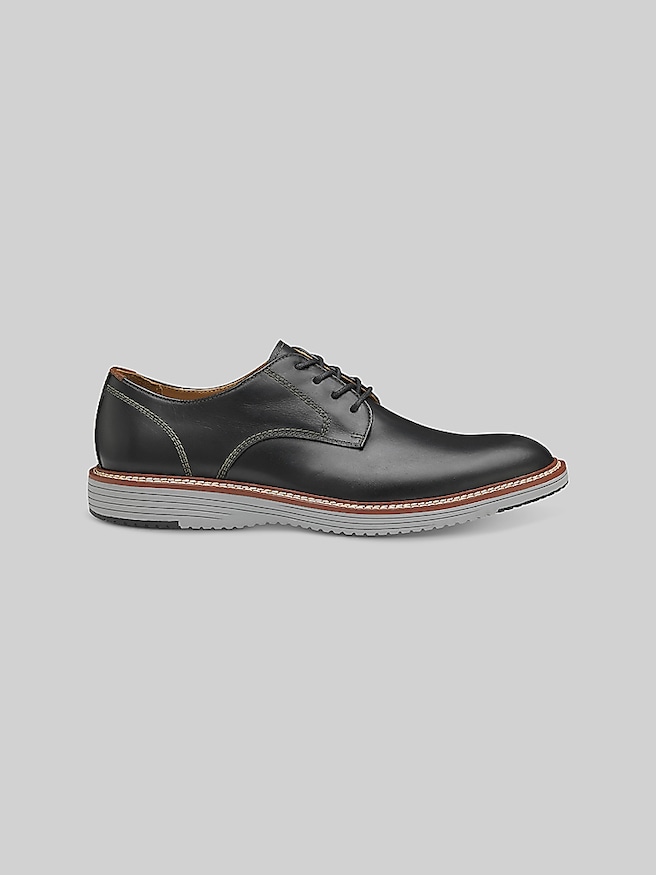
Men's wedding footwear works best when the shoes match the event's dress code, the color and fabric of the suit or tuxedo, and the setting of the celebration. Black patent leather shoes are a traditional choice with a tuxedo, while highly polished black leather lace-ups can also complement formal evening attire. For a suit, smooth leather oxfords offer a clean, dressy appearance, with closed lacing that creates an uninterrupted line beneath the trouser hem. Derby shoes have open lacing and a slightly more relaxed character, making them a versatile companion to many wedding suits. Loafers can suit a less formal celebration when their shape, finish, and detailing feel appropriately polished; a streamlined leather pair reads differently from a heavily textured, casual design. Within the Men's Shoe For Wedding collection, these distinctions help connect footwear to the overall outfit rather than treating shoes as an afterthought. Black shoes make a natural match for black and charcoal tailoring and can give a navy suit a particularly crisp finish. Dark brown or burgundy leather can bring depth to navy, gray, and earth-toned suits when the invitation allows a less formal approach. Lighter brown shoes create more contrast and generally feel more relaxed, so their suitability depends on the occasion rather than suit color alone. Decorative perforations, prominent stitching, substantial soles, and pronounced texture also tend to make footwear look less formal. For a groom, the right balance may be a sleek silhouette that looks composed at the altar and beneath a seated trouser leg. For groomsmen, coordinated shoe colors and comparable levels of polish can create a consistent appearance without requiring every foot to fit the same shape. Fathers of the couple and wedding guests benefit from the same attention to proportion: the footwear should belong with the outfit, respect the invitation, and feel comfortable through a ceremony, photographs, dinner, and time on the dance floor.
Materials and construction influence both the appearance of wedding shoes and the way they feel over a long celebration. Smooth leather offers a classic surface that can be conditioned and polished, helping maintain its appearance through repeated wear. Full-grain leather retains its natural grain and may develop character with use, while more heavily finished leathers can have a more uniform look. Neither a glossy surface nor a soft feel alone establishes quality; secure stitching, neatly finished edges, a supportive heel, and a sole suited to the occasion all deserve attention. Patent leather has a distinctive reflective finish associated with formal dressing and needs care appropriate to its coating. Suede provides a softer, matte texture that generally suits less formal tailoring, though it needs its own cleaning tools and protection. Inside the shoe, smooth linings, well-placed cushioning, and seams that do not rub can make a meaningful difference during hours of standing and walking. Fit begins with enough space for the toes to lie naturally without feeling squeezed from the sides or pressed against the front. The heel should feel secure, with no persistent lifting that creates friction, and the widest part of the foot should align comfortably with the widest part of the shoe. A longer size is not always a solution for a shoe that feels too narrow; a more suitable width or shape may provide a better fit without leaving excess space at the toe. Dress socks also affect fit, especially when the ceremony outfit calls for a thinner sock than everyday footwear. Any orthotics intended for the celebration need sufficient room without raising the foot uncomfortably against the upper. Leather may soften with wear, but a painful shoe should not be expected to transform simply through breaking in. Brief wear indoors before the event can reveal pressure points and provide time to resolve fit concerns before the first photograph. Comfort is especially valuable when the schedule includes standing through a receiving line, walking between ceremony and reception spaces, or spending much of the evening greeting guests.
The venue adds another layer to the choice of men's wedding shoes, particularly where the celebration includes several surfaces. A sleek leather sole creates a traditional dress-shoe profile, while a discreet rubber outsole may offer useful grip and cushioning without looking overly substantial. Traction varies by construction and surface, so an elegant appearance alone does not establish how securely a shoe will feel on polished flooring, stone steps, or a gravel path. Broad, stable heels and a comfortable flex through the forefoot can make moving between those spaces easier. Shoe shape matters visually, too: an excessively long toe can overwhelm a narrow trouser opening, while a bulky sole may interrupt the clean lines of finely tailored pants. A balanced silhouette allows the trouser hem to settle neatly and keeps attention on the complete outfit. Matching a leather belt closely to the shoes, when the outfit calls for one, helps create continuity without requiring every accessory to have an identical finish. Beyond the wedding day, understated leather dress shoes can serve at anniversary dinners, formal celebrations, professional events, and other occasions that call for tailoring. That versatility can also make wedding footwear a thoughtful gift for a groom or another member of the wedding party, provided the recipient's size, width, preferred style, and outfit requirements are known. Lasting wear depends partly on maintenance. Dust and grit are best removed before conditioning or polishing smooth leather, using products appropriate to the material and finish. Suede benefits from a suitable brush, while patent finishes need compatible cleaning rather than ordinary leather polish. Allowing shoes to air out between wears, using properly sized shoe trees when appropriate, and storing them away from direct heat help preserve their shape and condition. Attention to worn heels, loose stitching, and thinning soles can keep small issues from affecting comfort. Together, thoughtful coordination, dependable fit, and material-specific care give wedding footwear a useful life well beyond one memorable walk down the aisle.